By Aldridge Dzvene
HARARE – The Government has introduced sweeping changes to Zimbabwe’s rental housing framework through Statutory Instrument 131 of 2026, a move that signals a shift towards encouraging private sector investment while responding to the country’s growing demand for housing.
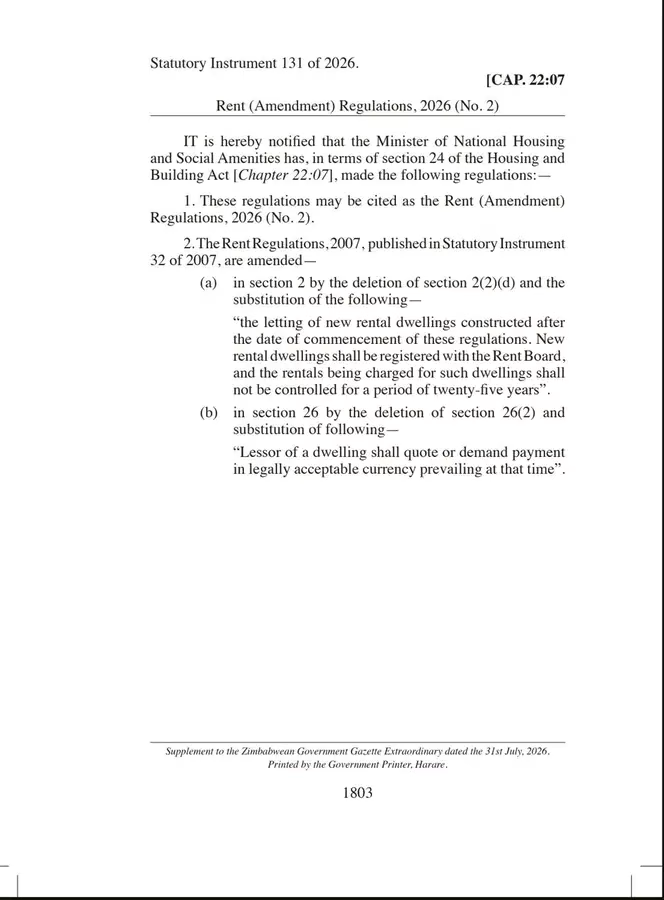
The Rent (Amendment) Regulations, 2026 (No. 2), issued by the Minister of National Housing and Social Amenities, amend the Rent Regulations of 2007 by introducing two significant reforms: newly constructed rental properties will be exempt from rent control for 25 years, and landlords will be permitted to charge rent in any legally acceptable currency.
Under the new regulations, all new rental dwellings constructed after the commencement of the statutory instrument must first be registered with the Rent Board. Once registered, however, the rentals charged for those properties will not be subject to rent control for a period of 25 years, providing investors and developers with greater certainty over future returns.
The reforms represent a notable policy shift aimed at stimulating investment in Zimbabwe’s housing sector, which has struggled for years to keep pace with increasing urbanisation and rising demand for rental accommodation.
For property developers, the removal of rent controls on new developments is expected to improve project viability by allowing market-based rental pricing. Analysts say predictable rental income is one of the strongest incentives for attracting long-term investment into residential construction, particularly from pension funds, institutional investors and private developers.
The second major amendment allows landlords to quote and demand rent in any legally acceptable currency prevailing at the time, replacing previous restrictions and aligning rental agreements with Zimbabwe’s current multi-currency framework.
The measure is expected to reduce uncertainty in lease agreements while providing flexibility for both landlords and tenants operating within the country’s evolving monetary environment.
From an economic perspective, the regulations seek to balance investment incentives with regulatory oversight. While rental prices for new developments will be deregulated for 25 years, the requirement for mandatory registration with the Rent Board ensures that Government maintains oversight of the expanding rental market.
The amendments also align with broader Government efforts to increase housing delivery, formalise the property sector and encourage private capital participation in addressing Zimbabwe’s housing deficit.
However, the success of the reforms will ultimately depend on whether the improved investment climate translates into increased construction of affordable rental housing rather than exclusively high-end developments. Housing experts have long argued that policy certainty, access to finance and attractive investment conditions are essential if Zimbabwe is to significantly expand its rental housing stock.
If the new regulatory framework succeeds in unlocking fresh investment, the country could witness accelerated residential development, expanded housing supply and stronger growth in the real estate sector, while supporting Government’s broader objectives of economic growth and urban development.