By Aldridge Dzvene
Zimbabwe’s strategy to position tourism as a major driver of economic growth continues to gain momentum, with improved air connectivity emerging as a critical pillar in unlocking international arrivals, investment and regional competitiveness under Vision 2030.
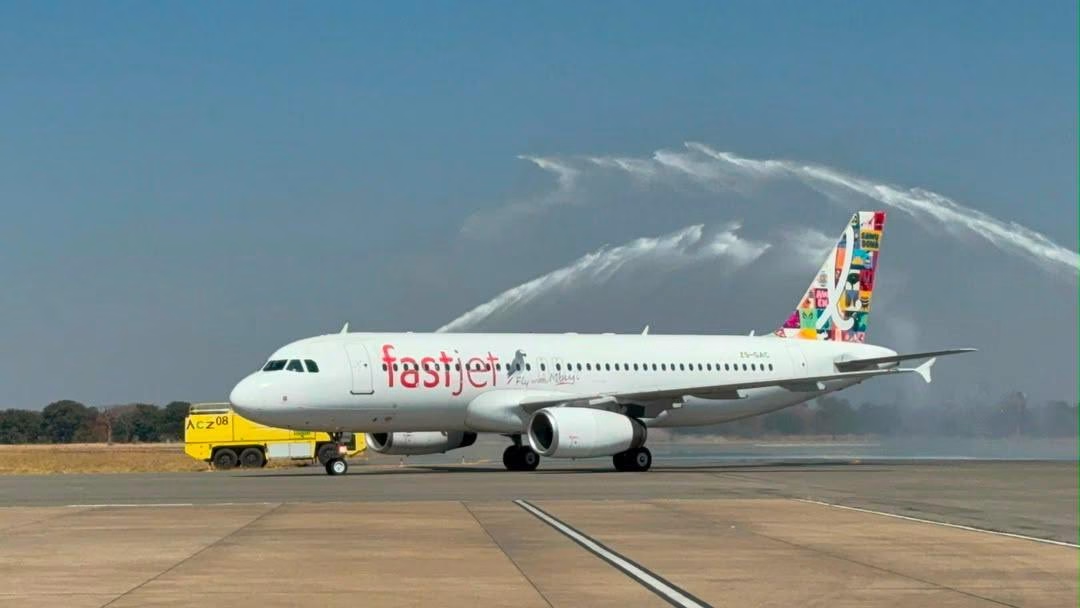
This was reinforced with the arrival of Fastjet Zimbabwe’s Airbus A320 at Victoria Falls International Airport, a development Government says aligns with President Emmerson Dambudzo Mnangagwa’s vision of modernising transport infrastructure and building an integrated tourism economy capable of competing with leading regional destinations.
Representing the Minister of Tourism and Hospitality Industry, Hon Barbara Rwodzi, Deputy Minister Hon Tongai Mafidi Mnangagwa said the introduction of the aircraft reflects growing investor confidence in Destination Zimbabwe while significantly strengthening regional air connectivity through the Victoria Falls–Johannesburg and Harare–Johannesburg routes.
The deployment of the 168-seat Airbus A320 comes at a time when Government is increasingly positioning aviation not merely as a transport service but as a strategic economic enabler. Globally, tourism growth is closely linked to the availability, affordability and reliability of air access. Improved connectivity reduces travel barriers, shortens journey times and expands destination choice, making countries more attractive to international visitors, conference organisers and investors.
For Zimbabwe, enhanced airlift capacity is expected to unlock greater tourism demand by increasing passenger volumes into Victoria Falls, the country’s flagship tourism destination and one of Africa’s premier natural attractions. Higher passenger capacity also provides greater scheduling flexibility for both leisure and business travellers, strengthening Zimbabwe’s competitiveness within the Southern African tourism market.
Deputy Minister Mnangagwa said every additional aircraft seat creates opportunities that extend far beyond the aviation industry itself. Increased tourist arrivals stimulate demand across accommodation facilities, restaurants, tour operators, transport services, craft markets, cultural enterprises and other small and medium businesses operating throughout the tourism value chain. The resulting multiplier effect generates employment, increases foreign currency earnings and strengthens local economic activity in host communities.
The investment is also expected to support Government’s strategy of diversifying tourism products beyond traditional leisure travel. Improved connectivity will facilitate the continued expansion of Meetings, Incentives, Conferences and Exhibitions (MICE) Tourism, Sports Tourism, Nature and Wildlife Tourism, Culture and Heritage Tourism, and Religious Tourism, sectors that have increasingly become important sources of visitor spending and economic diversification.
Beyond tourism, expanded regional connectivity strengthens Zimbabwe’s broader investment climate. Reliable aviation networks improve business mobility, facilitate trade missions, attract foreign direct investment and support regional economic integration. For international investors, improved accessibility is often viewed as an important indicator of infrastructure readiness and economic openness.
Government’s continued investment in transport infrastructure therefore reflects a broader development strategy that recognises connectivity as an essential component of national competitiveness. Modern airports, efficient airlines and expanded flight networks complement investments in roads, hotels, digital infrastructure and hospitality services, creating an integrated tourism ecosystem capable of supporting sustained growth.
Deputy Minister Mnangagwa reaffirmed Government’s commitment to upgrading airport infrastructure and intensifying collaborative destination marketing initiatives ahead of the Sanganai/Hlanganani Dzimbahwe World Tourism Expo 2026, which will be hosted in Masvingo. The expo is expected to showcase Zimbabwe’s diverse tourism offerings while strengthening partnerships with international buyers, investors and travel operators.
The arrival of the Airbus A320 therefore represents more than the expansion of an airline fleet. It reflects growing confidence in Zimbabwe’s tourism sector, reinforces Government’s infrastructure-led development agenda and strengthens the country’s capacity to leverage tourism as a key pillar of economic growth, employment creation and foreign currency generation under the National Development Strategy 2 and Vision 2030.