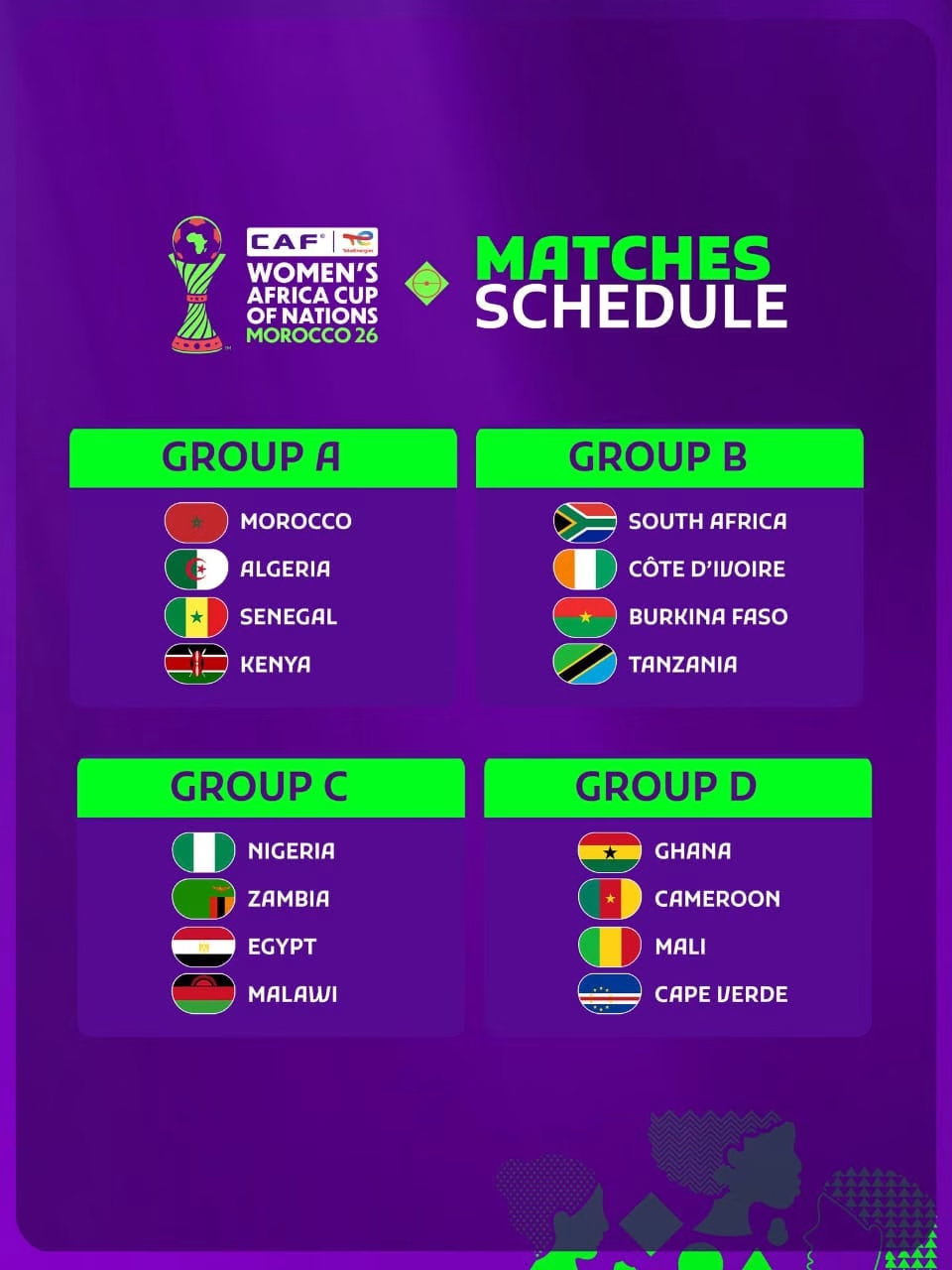
The Confederation of African Football (CAF) has released the schedule and groupings for the CAF Women’s Africa Cup of Nations Morocco 2026, setting the stage for a month of elite women’s football from 26 July to 16 August 2026.
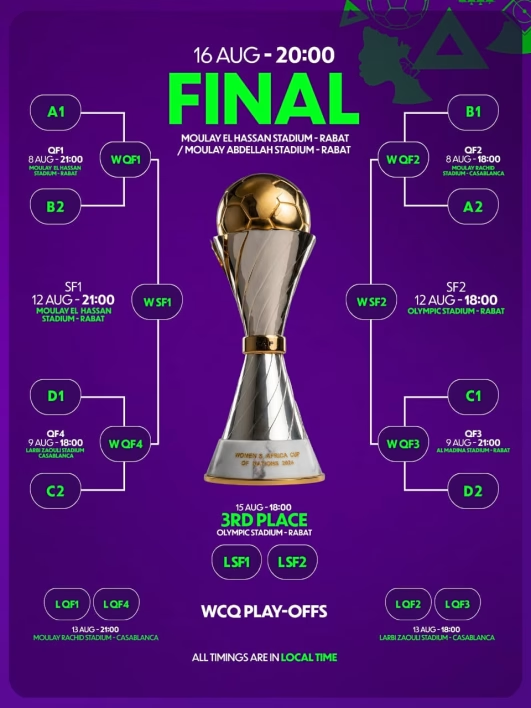
With defending champions and record winners Nigeria, hosts Morocco, one time winners South Africa and a rising Zambia all in the mix, this edition promises to be the most competitive yet.
THE CONTENDERS
Nigeria – The Super Falcons
The 10-time champions are the team to beat. Nigeria claimed a record 10th WAFCON crown in 2024 after defeating hosts Morocco in the final and come into 2026 as both record holders and one of the primary favourites. Expect experience, pace and a point to prove.
South Africa – Banyana Banyana
The one-time champions and five-time runner-up, South Africa know what it takes to win on this stage and will be desperate to win the trophy. Their blend of technical quality and tournament know-how makes them dangerous.
Morocco – Atlas Lionesses
Playing at home changes everything. Morocco reached the final in 2024 and will have the crowd behind them. With investment in the women’s game paying off, they are genuine contenders.
Zambia – Copper Queens
The dark horse turned powerhouse. Zambia’s rapid improvement over the last 4 years has made them one of Africa’s most feared attacking sides. They have the firepower to go all the way.
GROUPS TO WATCH
Group A: HOSTS UNDER PRESSURE
Morocco, Algeria, Senegal, Kenya
This is the headline group for North African bragging rights. Morocco will carry huge expectation as hosts, but they face a tricky opener against Algeria in what will be a fiery derby. Senegal bring physicality and tournament experience, while Kenya will be aiming to upset the order. Expect tight games and a lot of noise in the stands.
Group B: ONE TIME CHAMPIONS TESTED
South Africa, Cote d’Ivoire, Burkina Faso, Tanzania
On paper this looks like Banyana’s group to control, but don’t write off Cote d’Ivoire. The Ivorians have talent and can punish any slip. Burkina Faso and Tanzania are both improving and will play with nothing to lose. If South Africa want to defend their crown, they’ll need to start fast here.
Group C: GROUP OF DEATH
Nigeria, Zambia, Egypt, Malawi
This is it. The toughest group in the tournament. You have Nigeria and Zambia – two of the four favourites – in the same group, plus an Egyptian side with home-continent momentum and a Malawi team that never makes up the numbers. One of Nigeria or Zambia could face an early exit route. Goals, drama and World Cup-level intensity expected.
Group D: WEST AFRICAN BATTLE
Ghana, Cameroon, Mali, Cape Verde
A classic West/Central African showdown. Ghana and Cameroon have history and pedigree, Mali are organized and physical, and Cape Verde make their WAFCON debut with no pressure. Fine margins and set-pieces will decide this group. Whoever comes out on top will be battle-hardened for the knockouts.
Zimbabwe’s Mighty Warriors will not feature in Morocco. Zimbabwe’s qualifying campaign ended cruelly against Angola at Lucas Moripe Stadium in South Africa. After a 3-3 aggregate draw, including a 2-1 win in the second leg, Zimbabwe fell 5-4 on penalties and missed out on a return to WAFCON.
With the tournament expanding in quality and profile, WAFCON 2026 in Morocco is set to be a landmark edition. The mix of established giants like Nigeria and South Africa, ambitious hosts in Morocco, and rising forces like Zambia means no team can take a game off.
Kickoff is on 26 July 2026, with the final set for 16 August. One thing is certain: Africa’s best will be fighting not just for a trophy, but for global recognition ahead of the next World Cup cycle.