By Aldridge Dzvene
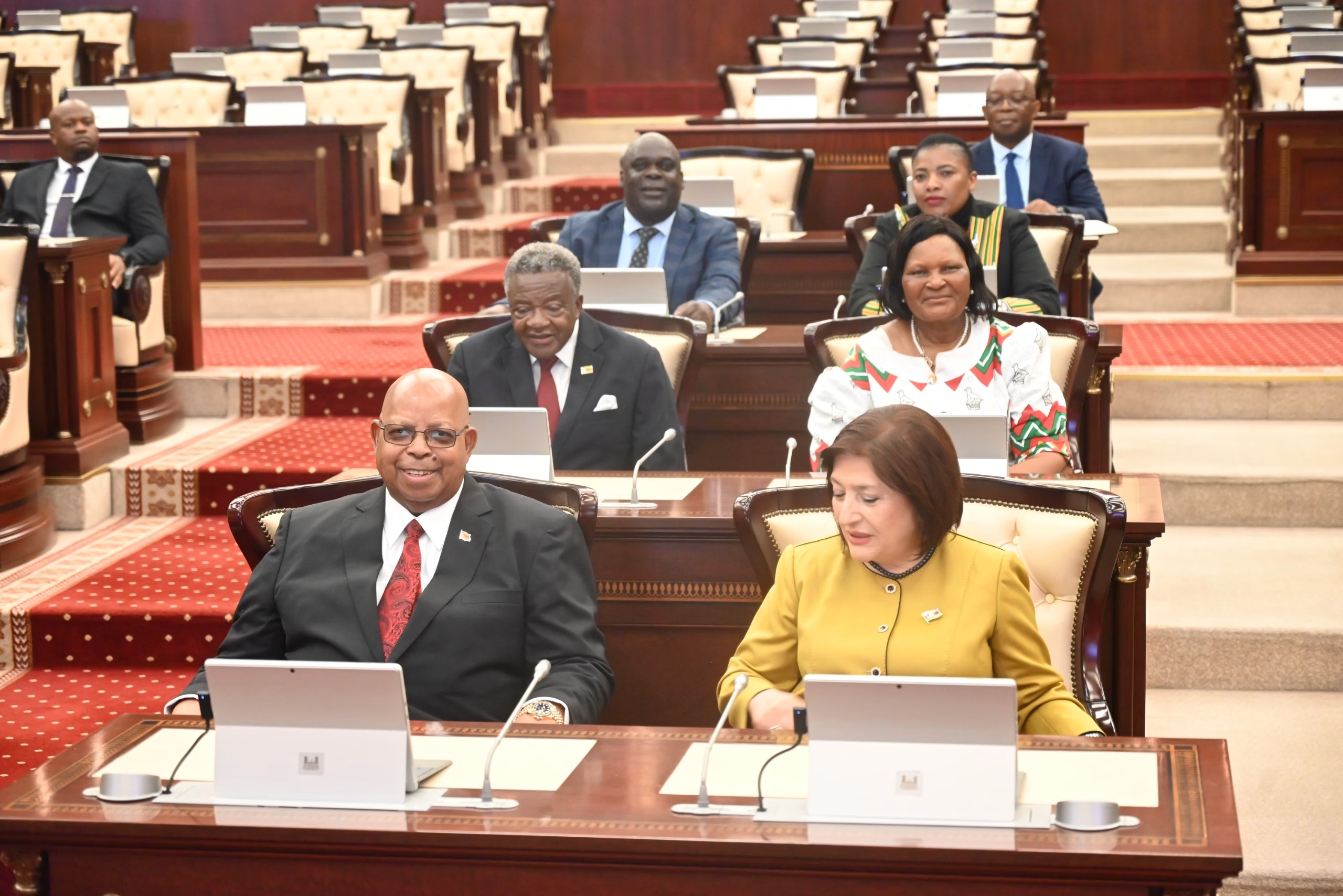
BAKU, AZERBAIJAN – Speaker of Parliament, Honourable Advocate Jacob Francis Nzwidamilimo Mudenda, has positioned Parliament at the centre of Zimbabwe’s economic diplomacy through high-level bilateral engagements in Azerbaijan aimed at unlocking investment, energy cooperation, technology transfer and new markets critical to the country’s industrialisation agenda.
While parliamentary visits are traditionally viewed as legislative exchanges, the Baku engagements reveal a broader strategic shift in Zimbabwe’s foreign policy in which Parliament is increasingly functioning as an economic diplomacy institution that complements the Second Republic’s engagement and re-engagement agenda.
The discussions with Speaker of the Milli Majlis, Honourable Professor Sahiba Gafarova, senior parliamentary committees and Government officials went beyond parliamentary procedure. They focused on creating institutional frameworks capable of facilitating cooperation in strategic sectors including energy, mining, education, digital transformation, infrastructure and trade, sectors that remain central to the successful implementation of the National Development Strategy 2.
Of particular strategic significance was the shared commitment to establish resident diplomatic missions in Harare and Baku. While presented as a diplomatic objective, the proposal carries profound economic implications. Permanent diplomatic representation reduces transactional barriers between countries, strengthens investor confidence, facilitates business engagement and provides an institutional platform for expanding bilateral trade and investment.
The visit also reflects Zimbabwe’s deliberate diversification of international partnerships. As global economic influence continues shifting eastwards, Azerbaijan occupies an increasingly strategic position at the intersection of Europe and Asia, serving as a transport, logistics and energy corridor linking major international markets. Strengthening relations with Baku therefore presents Zimbabwe with opportunities that extend beyond bilateral cooperation into wider Eurasian economic networks.
Energy cooperation featured prominently throughout the engagements. Azerbaijan’s globally recognised expertise in oil, gas and renewable energy development offers Zimbabwe practical opportunities for technical collaboration as the country accelerates energy infrastructure investment to support mining, manufacturing and industrial growth. For Zimbabwe, energy security remains a prerequisite for achieving sustainable economic transformation.
Speaker Mudenda’s proposal for cooperation in Artificial Intelligence and digital parliamentary systems equally reflects an appreciation that future economic competitiveness will increasingly depend on technological innovation. His presentation of Zimbabwe’s Parliamentary Committee of the Future demonstrates a policy orientation that seeks to anticipate emerging technological trends rather than merely respond to them.
Equally important were proposals to strengthen cooperation between universities and research institutions. Knowledge diplomacy has become an important pillar of modern international relations, with research collaboration, skills development and innovation increasingly determining national productivity and industrial competitiveness.
The discussions on mining governance, environmental stewardship and sustainable resource management further align with Zimbabwe’s strategy of moving beyond primary resource extraction towards value addition, beneficiation and responsible exploitation of critical minerals, an area expected to define global economic competition over the coming decades.
Beyond the immediate outcomes, Speaker Mudenda’s engagements illustrate the evolution of parliamentary diplomacy from ceremonial interaction into an instrument for advancing national economic interests. Parliament is increasingly becoming a gateway for promoting investment, influencing international policy cooperation and creating institutional relationships that support national development priorities.
As Zimbabwe advances the implementation of the National Development Strategy 2 and Vision 2030, the Baku engagements demonstrate that economic transformation is no longer driven solely through executive diplomacy. Parliamentary diplomacy has emerged as a complementary pillar of statecraft, expanding Zimbabwe’s strategic partnerships while positioning the country to benefit from emerging geopolitical and economic realignments.