By Aldridge Dzvene
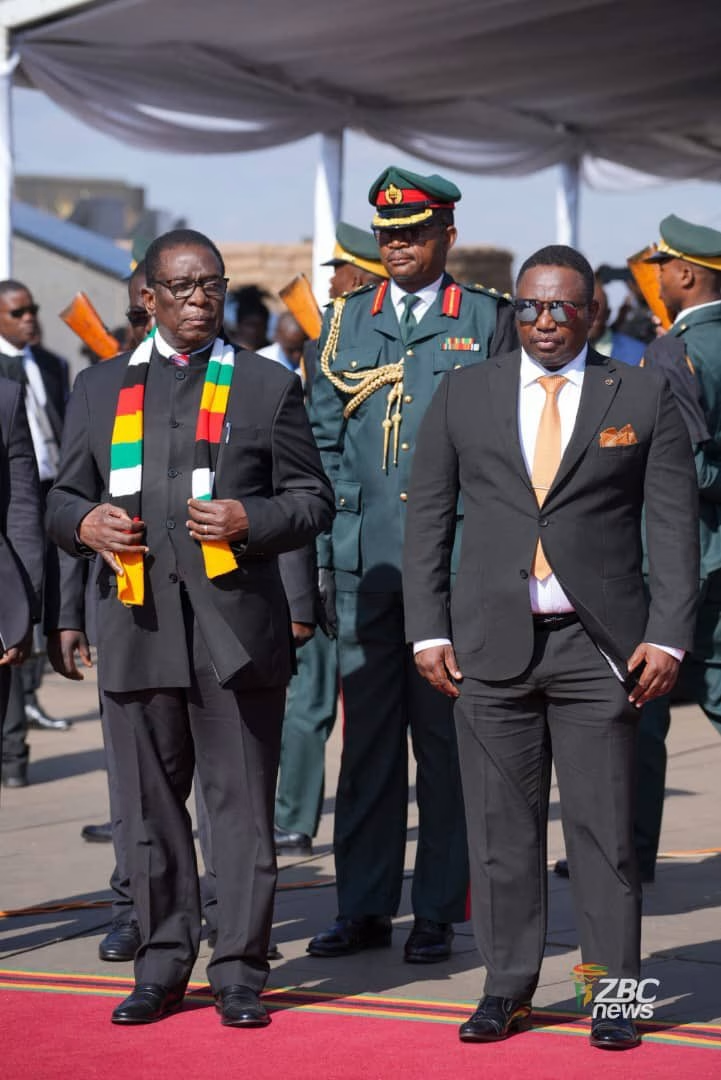
HARARE – President Emmerson Mnangagwa has called on Zimbabweans to embrace production, productivity and national unity as the foundation for accelerating the country’s industrialisation and modernisation agenda, saying every citizen has a role to play in building the Zimbabwe envisioned under Vision 2030. The President made the call yesterday while presiding over the burial of National Hero Ambassador Victor Matemadanda at the National Heroes Acre, where he said the late liberation war veteran’s life embodied patriotism, hard work and selfless national service.
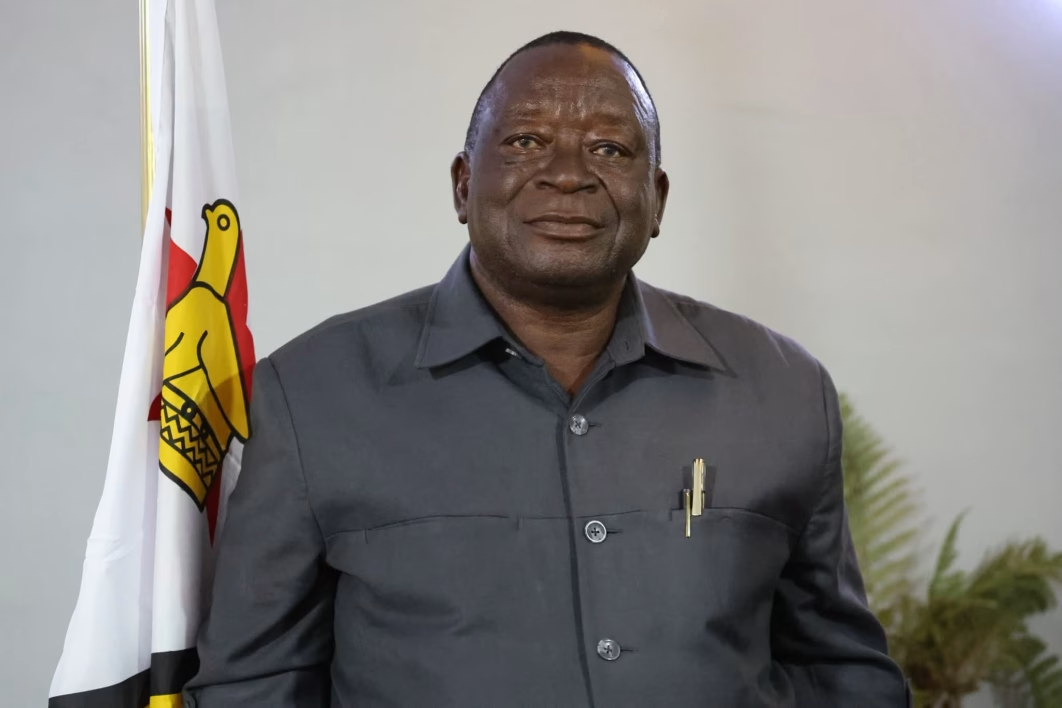
While the occasion marked the burial of one of Zimbabwe’s distinguished liberation fighters and diplomats, the President’s address extended beyond paying tribute to the late national hero. It evolved into a broader articulation of the country’s development philosophy, where the ideals of the liberation struggle are increasingly being linked to economic transformation.
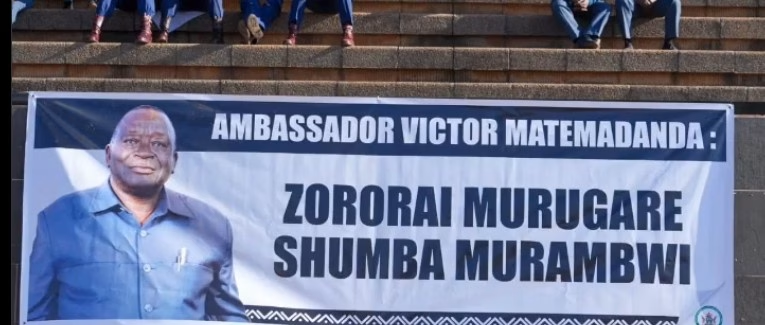
The recurring message throughout the address was that the struggle for Zimbabwe has entered a new phase. Political independence, the President suggested, must now be consolidated through industrial growth, increased productivity, infrastructure development and shared national prosperity. In this context, patriotism is measured not only by historical sacrifice but also by citizens’ contribution to national development.
This explains why the President repeatedly highlighted Ambassador Matemadanda’s advocacy for hard work, production and economic self-reliance during his tenure as Secretary-General of the War Veterans Association. Rather than promoting dependency, Matemadanda encouraged Zimbabweans to utilise land productively and create sustainable livelihoods, values that remain central to the country’s economic reform agenda.
Another significant development theme emerging from the address is the strategic recognition of Zimbabweans in the Diaspora. By acknowledging their historical contribution to the liberation struggle and appreciating their continued support for national development, Government appears to be positioning the Diaspora as an important partner in investment, innovation, skills transfer and economic growth.
The President also linked national development with heritage preservation. Ambassador Matemadanda’s diplomatic efforts to preserve liberation shrines in Mozambique demonstrate that protecting historical sites is increasingly viewed as strengthening national identity while creating opportunities for education, tourism and regional cooperation.
Importantly, the address broadened responsibility for national development beyond Government institutions. Veterans, young people, women, the private sector and communities were all challenged to become active participants in Zimbabwe’s industrialisation and modernisation journey. This reflects the Government’s whole-of-society approach towards achieving Vision 2030.
By anchoring national development on the values of discipline, unity, production and patriotism, the burial of Ambassador Matemadanda became more than a state ceremony. It reaffirmed the Government’s position that the next chapter of Zimbabwe’s liberation story will be written through economic growth, innovation, industrialisation and inclusive national development.