By Aldridge Dzvene
BEIJING, CHINA – Zimbabwe’s engagement with the Asian Infrastructure Investment Bank (AIIB) marks more than a routine diplomatic meeting. It represents a potentially significant development in the country’s search for long-term infrastructure financing, economic transformation and deeper integration into emerging global financial institutions.
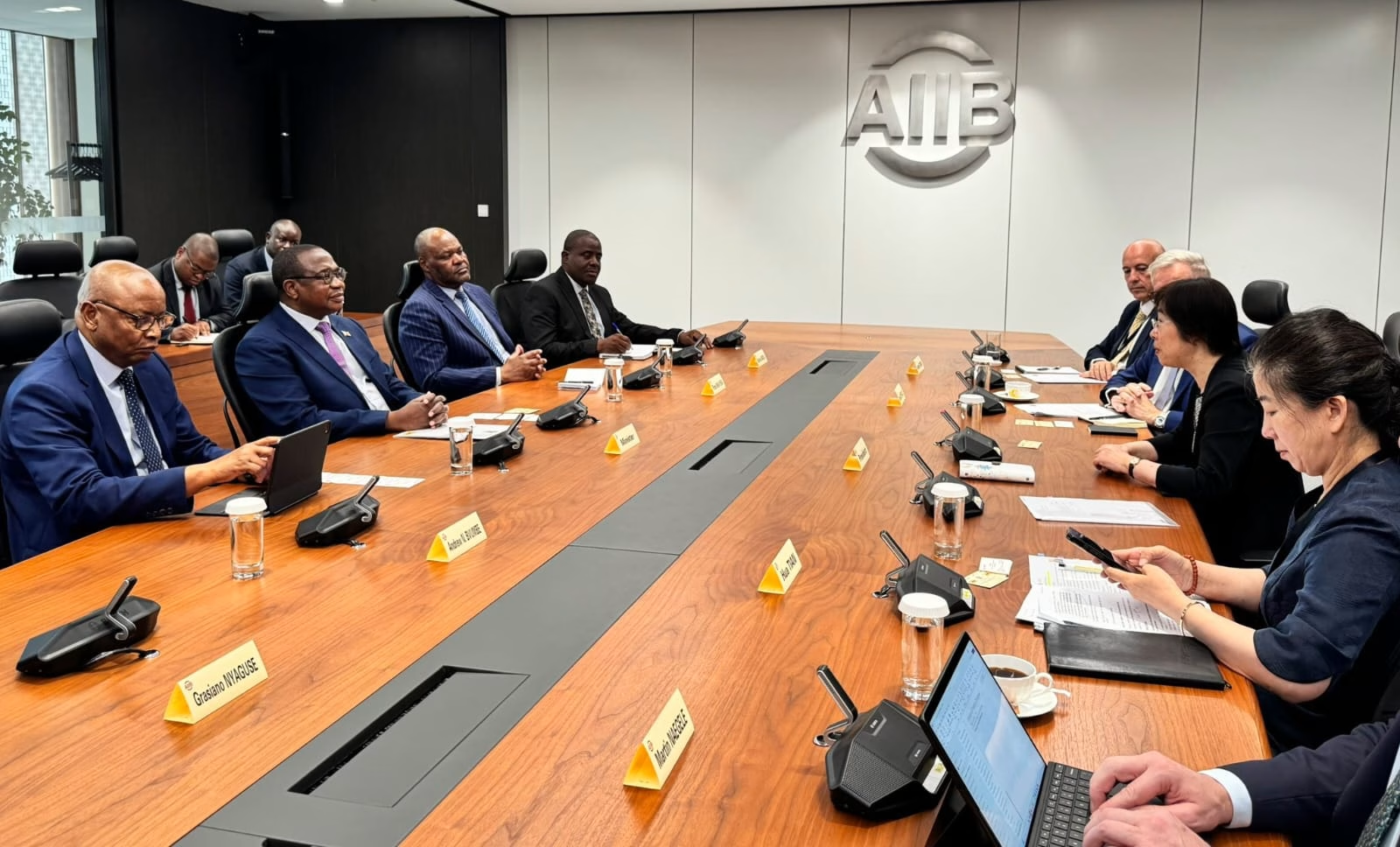
The high-level engagement between Finance, Economic Development and Investment Promotion Minister Professor Mthuli Ncube and AIIB President Jiayi Zou at the Bank’s headquarters in Beijing follows Zimbabwe’s formal application to join the institution in May 2026.
At first glance, the meeting may appear to be another diplomatic engagement. However, beneath the formalities lies a broader strategic objective: positioning Zimbabwe to access alternative sources of development finance at a time when infrastructure investment is increasingly recognised as one of the key drivers of economic growth and industrialisation.
Infrastructure remains one of the most critical requirements for achieving Zimbabwe’s Vision 2030 aspirations. Roads, energy generation, water systems, digital infrastructure, irrigation facilities and climate resilience projects all require substantial capital investment. For developing economies, securing affordable long-term financing for such projects often remains a major challenge.
The AIIB was established precisely to address infrastructure financing gaps, particularly across developing economies. Since its inception, the Bank has emerged as an important multilateral financial institution supporting sustainable infrastructure, climate resilience, regional connectivity and private sector development.
Significantly, the priority areas outlined by the AIIB during the meeting closely mirror some of Zimbabwe’s most pressing developmental needs. Sustainable infrastructure, green energy, water security and climate adaptation have become central pillars of the country’s National Development Strategy 2 (NDS2), which seeks to accelerate economic growth between 2026 and 2030.
Zimbabwe’s emphasis on hydro-infrastructure development reflects the growing importance of water management in a changing climate. Recurring droughts and weather-related shocks have increasingly highlighted the need for investments in dams, irrigation systems and water storage facilities capable of supporting agriculture, industry and household consumption.
Equally important is the country’s drive to expand sustainable energy generation. Reliable electricity remains a critical enabler of industrial productivity, mining growth and investment attraction. Access to institutions capable of supporting large-scale infrastructure financing could therefore strengthen efforts to close existing infrastructure gaps.
The meeting also carries significance from a macroeconomic perspective. The AIIB President’s acknowledgement of Zimbabwe’s progress towards macroeconomic stability, particularly the achievement of single-digit inflation, may be viewed as recognition of ongoing economic reforms aimed at creating a more predictable investment environment.
For international financial institutions, macroeconomic stability is often regarded as a prerequisite for successful long-term infrastructure investment. Stable economic conditions improve project viability, strengthen investor confidence and enhance a country’s ability to attract development financing.
Beyond financing, AIIB membership could potentially provide Zimbabwe with access to technical expertise, project preparation support and international best practices in infrastructure development. Modern infrastructure projects increasingly require sophisticated planning, environmental safeguards and climate resilience measures, making technical cooperation as important as financial resources.
The discussions also highlight Zimbabwe’s broader strategy of diversifying its international partnerships. Rather than relying on a limited pool of financiers, the country has increasingly pursued engagement with multiple bilateral and multilateral institutions to support its development agenda. Such diversification can enhance resilience and expand opportunities for financing strategic national priorities.
However, membership alone will not automatically translate into funding. Infrastructure financing institutions typically assess projects based on economic viability, sustainability, governance standards and developmental impact. The ultimate benefits will therefore depend on Zimbabwe’s ability to develop bankable projects capable of attracting support.
Nevertheless, the engagement in Beijing represents a noteworthy step in Zimbabwe’s infrastructure financing journey. As the country advances NDS2 and Vision 2030, access to institutions focused on sustainable infrastructure development may prove increasingly important in unlocking growth, strengthening climate resilience and improving the quality of life for citizens.
Should Zimbabwe’s membership bid succeed, the discussions held in Beijing may come to be viewed as the beginning of a new chapter in the country’s efforts to mobilise international capital and partnerships for long-term national development.