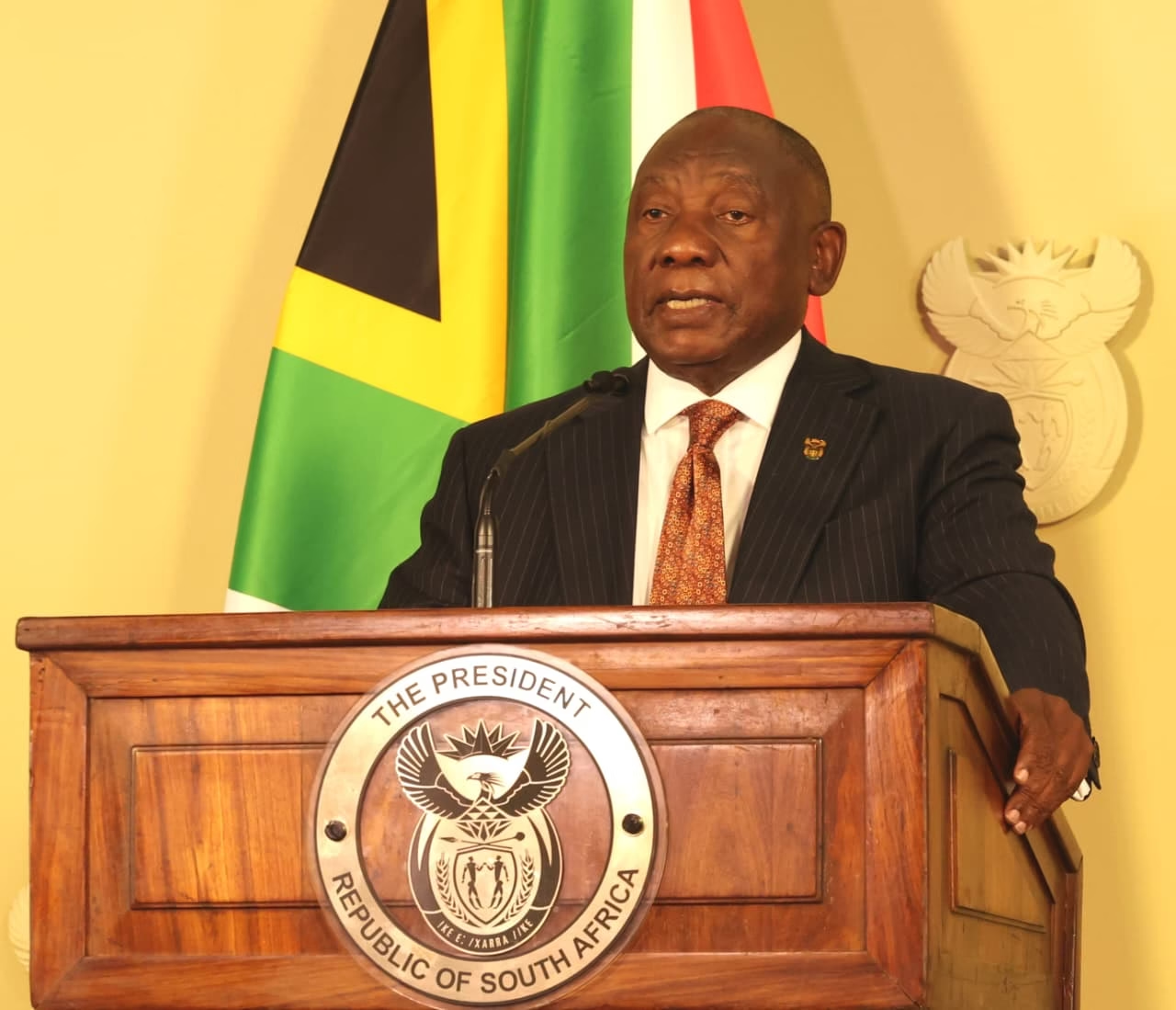
South African President Cyril Ramaphosa has unveiled a wide-ranging government plan to address illegal migration, saying public concerns about borders, jobs, and pressure on services are legitimate and will be met with stronger enforcement, legal reform, and regional cooperation. In a national address on illegal migration and anti-foreigner protests, he stressed that only state authorities may enforce immigration law and warned against vigilantism, xenophobia, and the exploitation of community frustrations for political or criminal gain.
Speaking on Tuesday evening, Ramaphosa said South Africans across all sectors have raised difficult but legitimate questions about migration and illegal immigration. He listed public concerns about border security, employment, and strain on clinics, schools, and other services. “These concerns are real. They deserve to be heard. They deserve to be addressed,” Ramaphosa said. He acknowledged weaknesses in migration management, enforcement, and systems integrity, including corruption, and said the government accepts responsibility and is taking decisive action.

Rainbow Hotels — Experience Luxury Across Zimbabwe
Rainbow Hotels continues to redefine hospitality standards in Zimbabwe, offering world-class accommodation, fine dining, and modern conference facilities in Harare, Bulawayo, and Victoria Falls.
Whether for business or leisure, Rainbow Hotels delivers unmatched comfort, exceptional service, and a truly premium guest experience tailored to modern travellers.
Book NowAt the same time, he cautioned that illegal immigration is not the root cause of all economic challenges. “The answer must be faster economic growth, greater investment, industrial expansion, infrastructure development, and the creation of millions of new jobs,” he said.
Ramaphosa reaffirmed that every person in South Africa should be here legally, and that only authorised government officials may act against violations of immigration law. “No other person is allowed, for example, to confront someone in the street to demand proof of nationality,” he said. He stated that South Africa is not xenophobic and has no space for xenophobia, racism, sexism, Afrophobia, or other forms of intolerance. He condemned groups using legitimate concerns to incite lawlessness and violence, and warned against social media campaigns spreading misinformation about foreign nationals.
The President said the Cabinet last week adopted a Comprehensive Approach for Migration Management, endorsed by the President’s Coordinating Council, which includes Premiers, MECs, local government, and the National House of Traditional and Khoi-San Leaders.
The plan rests on five pillars: 1. Intensified Crackdown on Legal Violations
The Department of Home Affairs, Border Management Authority, SAPS, and other agencies will intensify identification and deportation of undocumented foreign nationals. In the past year, the BMA intercepted over 450,000 people attempting to enter illegally. The government will set up dedicated immigration courts to speed up deportations. SAPS, Home Affairs, and the Department of Employment and Labour are increasing workplace inspections targeting companies employing undocumented foreign nationals. The Department of Employment and Labour has begun phased recruitment of 10,000 inspectors this financial year to rebuild enforcement capacity. Penalties for employers who violate the Immigration Act will be increased, including imprisonment. Employers found guilty will no longer be able to pay a fine and continue hiring undocumented workers.A specific plan for the transport, logistics, and freight sector, developed with industry and labour, is being implemented to address violations.
2. Securing Borders and Processing Asylum at Points of Entry
Ramaphosa said secure borders are a fundamental requirement of a sovereign state. Government will continue investing in technology, infrastructure, and personnel to secure borders while facilitating legitimate trade and travel.Refugee reception centres will be relocated to border posts in a phased approach, starting with the Tshwane centre this year. The move is intended to process asylum applications more efficiently and securely at the point of entry and ensure genuine protection needs are met quickly.
3. Stamping Out Corruption and Digitising Identity
The President said corruption enables illegal immigration. Officials who sell documents or facilitate unlawful entry will face dismissal, prosecution, and the full consequences of the law. The government is establishing an Intelligent Population Register containing biometric data for every person in the country, forming the basis for a Digital ID. The green ID book will be phased out, with Home Affairs to announce a cut-off date, to curb identity theft by undocumented migrants and syndicates. The Department of Transport will issue new regulations within three months to end the abuse of Traffic Registration Numbers as a form of identification by foreign nationals.
4. Closing Legislative Loopholes
Ramaphosa said immigration laws are fragmented and create loopholes. The government has finalised the National Labour Migration Policy, which proposes maximum quotas for the employment of documented foreign nationals and stronger enforcement against employers hiring undocumented workers. The Employment Services Amendment Bill, approved by Cabinet for introduction to Parliament, will empower the Minister to set sectoral and occupational quotas for foreign nationals. The Department of Small Business Development, with SALGA, will complete registration of small and informal businesses and support South African informal businesses through the Spaza Shop Fund, responding to community concerns about foreign nationals operating spaza shops and trading stores.
5. Regional and Continental Engagement
Migration is a continental and global phenomenon, Ramaphosa said. South Africa will work through SADC, the African Union, and bilaterally to address drivers of migration, including conflict, stagnation, and poverty. He announced he will send envoys to several African countries to outline the new measures.
The President said illegal migration, if unchecked, poses risks to security, stability, and economic progress, and often overlaps with organised crime, including trafficking, extortion, illegal mining, drugs, and money laundering. It also undermines efforts to create decent work, as some employers exploit undocumented workers with sub-minimum wages and poor conditions.He stressed that foreign nationals must respect South African law, and South Africans must respect foreign nationals. Anti-foreigner sentiment, accompanied by tribal or ethnic slurs against other South Africans, was also condemned.
Cabinet will regularly review progress. The Inter-Ministerial Committee on Migration will coordinate the response across departments and spheres of government. NATJOINTS and Provincial NATJOINTS have been directed to strengthen coordination among law enforcement, intelligence, and security agencies. Law enforcement and security services, Ramaphosa said, are ready to act to protect public safety, maintain law and order, and safeguard critical infrastructure. He reiterated that South Africa welcomes lawful migration, tourists, skilled talent, and investment, and noted many South Africans also study and work abroad.
Ramaphosa closed by calling for a secure, lawful, compassionate, and prosperous South Africa that upholds dignity and the values of Ubuntu. “We can protect our borders while protecting human dignity. We can enforce our laws while upholding our Constitution,” he said. “Let us do so not through fear, anger, hatred or violence, but through unity, determination and respect for the rule of law.”