Aldridge Dzvene
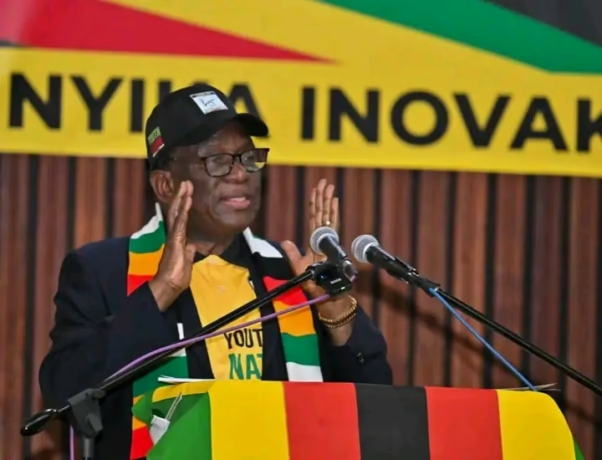
Speaker of Parliament and ZANU PF Secretary General, Hon. Advocate J.F.N. Mudenda’s engagements in Minsk, Belarus, have elevated parliamentary diplomacy to the forefront of Zimbabwe’s international relations architecture, signalling a new phase in the strategic partnership between Zimbabwe and Belarus that is increasingly anchored on state sovereignty, mutual respect, legislative cooperation and sustainable socio-economic development.
The visit, undertaken within the framework of the Belarus Political Party Second International Conference on State Sovereignty and Principles of International Relations, comes at a time when both countries are consolidating bilateral relations built on shared values of self-determination, sovereign equality among nations and commitment to a multipolar international order.
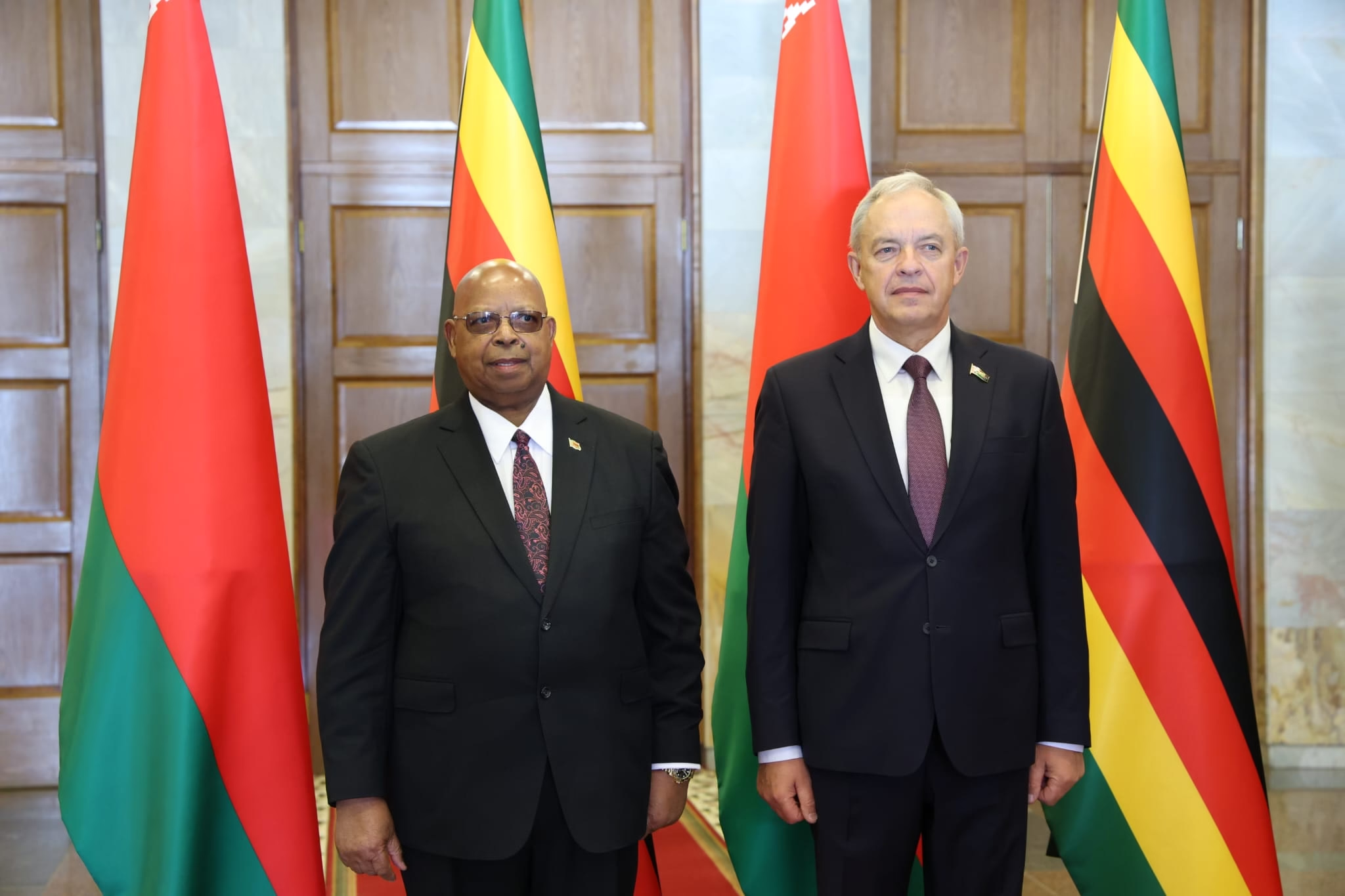
At the centre of the visit was the historic signing of a Cooperation Agreement between the Parliament of Zimbabwe and the House of Representatives of the National Assembly of the Republic of Belarus. More than a ceremonial diplomatic undertaking, the Agreement institutionalises parliamentary cooperation as a strategic pillar supporting the broader State-to-State relationship that has been strengthened through successive high-level engagements between President Emmerson Dambudzo Mnangagwa and President Alexander Lukashenko.
The Agreement reflects a growing recognition that modern diplomacy can no longer be confined to executive structures alone. Instead, legislatures are increasingly becoming critical instruments for advancing international cooperation through ratification of bilateral agreements, harmonisation of legislative frameworks, oversight of implementation processes and the exchange of parliamentary best practices.
In discussions with his counterpart, Hon. Igor Sergeyenko, Chairman of the House of Representatives of the National Assembly of the Republic of Belarus, Speaker Mudenda emphasised that the true measure of international cooperation lies not in the number of agreements signed but in their practical impact on the livelihoods of citizens. His call for signed agreements not to remain “paper tigers” underscored an implementation-driven approach to diplomacy that prioritises tangible developmental outcomes over symbolic commitments.
The significance of this position becomes even more pronounced considering that Zimbabwe and Belarus have already signed thirty-six bilateral agreements covering agriculture, education, mining, industrialisation, science, technology and infrastructure development. The challenge now shifts from negotiation to execution, from policy formulation to measurable socio-economic transformation.
Belarus continues to occupy a strategic position within Zimbabwe’s engagement and re-engagement matrix. Cooperation in agricultural mechanisation has already contributed towards enhancing production efficiency and strengthening food sovereignty, a critical component of national resilience in an increasingly uncertain global environment. The partnership has demonstrated how mutually beneficial South-South cooperation can generate practical developmental outcomes without compromising national sovereignty.
Speaker Mudenda’s advocacy for expanded cooperation in tourism, innovation, science, technology, STEM education and the positive harnessing of Artificial Intelligence reflects Zimbabwe’s broader aspiration to transition towards a knowledge-based and innovation-driven economy. These sectors are increasingly becoming strategic determinants of competitiveness within the Fourth Industrial Revolution.
Beyond bilateral matters, the discussions in Minsk reflected wider global concerns regarding the evolving international order. Both sides reaffirmed their commitment to multilateralism as enshrined in Article 2 of the United Nations Charter, particularly the principle of sovereign equality among nations. This shared outlook has strengthened solidarity between Zimbabwe and Belarus in international forums where both countries continue to advocate for dialogue, diplomacy and peaceful coexistence as the primary mechanisms for resolving disputes.
Against the backdrop of escalating geopolitical tensions across different regions of the world, Speaker Mudenda’s assertion that history has consistently demonstrated that war does not end war resonates with the conference’s overarching focus on sovereignty and principles of international relations. The emphasis on diplomacy and dialogue reflects an enduring belief that sustainable peace can only emerge through engagement rather than confrontation.
Equally significant was the commitment by both legislatures to establish institutional mechanisms that will sustain parliamentary interaction beyond individual visits. Belarus has already established a Working Group on Cooperation with the Parliament of Zimbabwe, while Speaker Mudenda pledged the establishment of a Zimbabwe-Belarus Parliamentary Friendship Association. Such structures are expected to deepen collaboration between parliamentary committees and facilitate the exchange of legislative experiences, procedural innovations and governance best practices.
The visit therefore represents more than a diplomatic engagement. It demonstrates the growing strategic relevance of parliamentary diplomacy in advancing national interests, strengthening bilateral cooperation and supporting Zimbabwe’s broader developmental aspirations.
As Zimbabwe and Belarus continue to expand cooperation across multiple sectors, the Minsk engagements have reinforced a shared vision founded on sovereignty, mutual trust, equality, implementation-focused cooperation and the pursuit of prosperity for the peoples of both sister republics. In that regard, the historic Cooperation Agreement signed by Speaker of Parliament Hon. Advocate J.F.N. Mudenda and Hon. Igor Sergeyenko may well become one of the defining instruments guiding the next chapter of Zimbabwe-Belarus relations.