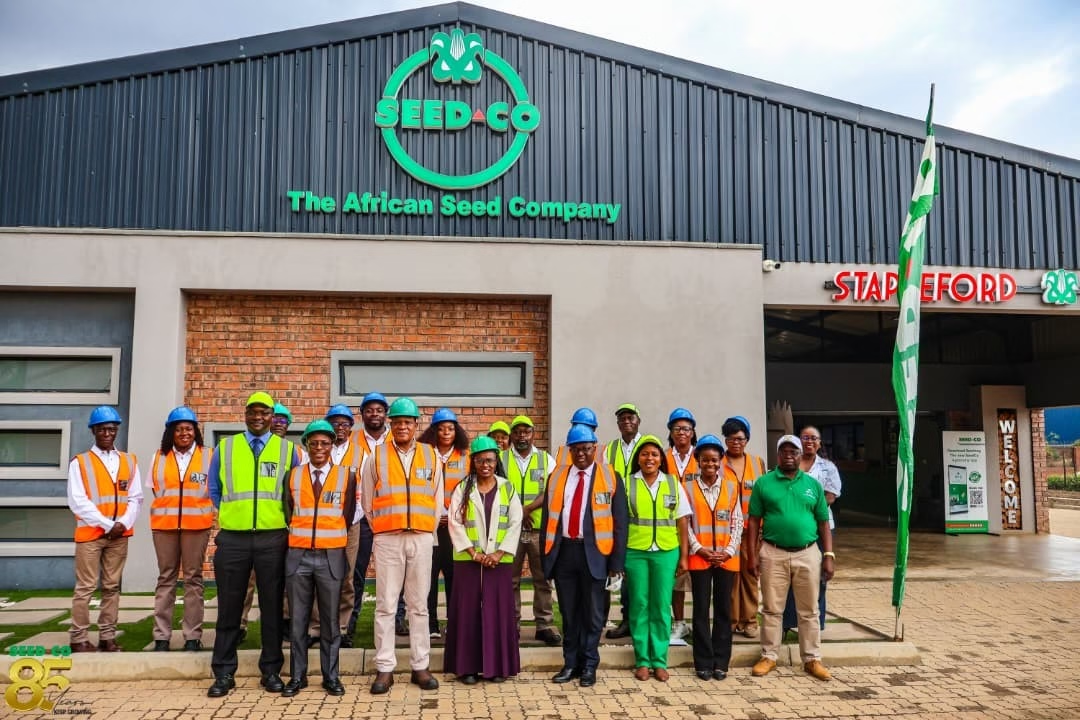
Harare, The visit by Doctor Anxious Jongwe Masuka to Seed Co’s Stapleford facility highlighted the increasingly strategic role being played by private sector agricultural institutions in driving Zimbabwe’s climate smart agriculture agenda, food security ambitions, and long term rural industrial transformation under National Development Strategy 2 and Vision 2030.
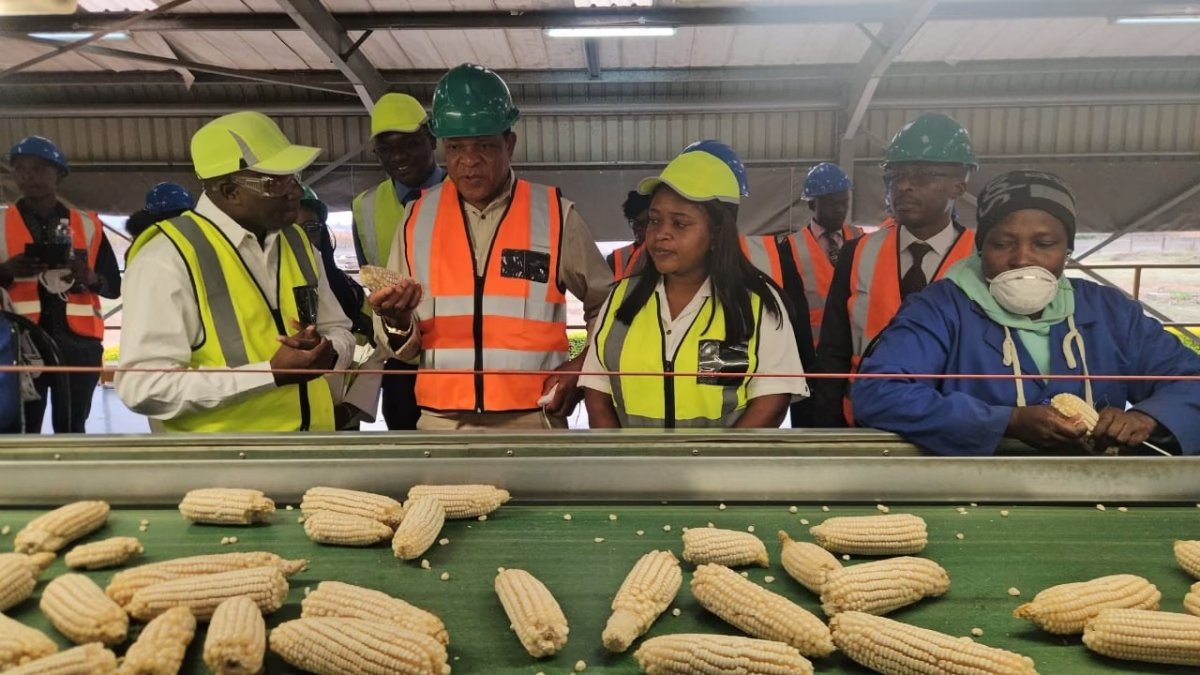
The tour provided more than a routine inspection of agricultural operations, it reflected Zimbabwe’s broader transition toward science driven agriculture where seed genetics, research and development, mechanisation, irrigation, and technology integration are becoming central pillars of national agricultural productivity.
During the engagement, Minister Masuka commended Seed Co for its leading role in developing climate smart seed technologies tailored for Zimbabwe’s diverse agro ecological regions. The recognition carries broader significance as climate variability, prolonged drought cycles, and changing rainfall patterns continue reshaping agricultural planning across Southern Africa.
Analytically, the emphasis on climate resilient seed systems represents a strategic response to the growing vulnerability of rain fed agriculture. Seed varieties capable of tolerating drought, resisting pests, and adapting to different ecological zones are increasingly viewed not only as agricultural inputs, but as instruments of economic resilience and national stability.
Zimbabwe’s crop mapping programme, which seeks to align crop production with regional climatic suitability, reflects a wider policy shift toward precision agriculture and resource optimisation. The alignment between Government planning and private sector seed innovation therefore illustrates a growing integration of policy, science, and commercial agriculture within Zimbabwe’s food systems.
Minister Masuka’s call for accelerated production of traditional grains such as sorghum, pearl millet, and sunflower also signals a strategic recalibration of Zimbabwe’s agricultural priorities. Traditional grains are increasingly being recognised as climate resilient alternatives capable of withstanding harsher environmental conditions while supporting nutritional security and rural livelihoods.
This reflects a continental trend where African governments are revisiting indigenous crop systems as part of climate adaptation and food sovereignty strategies. Dependence on water intensive crops is becoming increasingly risky in the context of recurring drought conditions and rising climate uncertainty.
The technological investments showcased at the Stapleford facility further demonstrated how agricultural competitiveness is increasingly being shaped by infrastructure modernisation, automation, and quality control systems.
The Seed Co Quality Laboratory, operating under international seed certification standards, highlighted the growing importance of scientific quality assurance in maintaining seed integrity, purity, and germination performance. In modern agriculture, quality assurance systems are critical not only for productivity, but also for protecting farmer confidence, export credibility, and national food security outcomes.
The company’s investments in colour sorting technology, seed grading systems, modern packaging infrastructure, and automated drying systems illustrate the increasing industrialisation of agriculture. These technologies reduce waste, improve processing efficiency, extend seed shelf life, and strengthen overall productivity across the agricultural value chain.
Particularly significant is the company’s continued investment in mechanisation through the Grower Transformation Initiative, which supports farmers with access to centre pivots, solar infrastructure, grain dryers, and modern farming equipment. Mechanisation remains one of the major determinants separating subsistence agriculture from commercially viable production systems capable of sustaining national food requirements and export competitiveness.
The integration of solar infrastructure within farming operations also reflects the growing intersection between agriculture and renewable energy systems. Energy stability is increasingly essential for irrigation, drying facilities, processing plants, and storage systems, particularly as agriculture becomes more technologically intensive.
Seed Co’s regional export footprint into countries such as Mozambique, Malawi, Tanzania, and Kenya further highlights Zimbabwe’s potential positioning as a regional agricultural technology and seed production hub. Agricultural exports increasingly extend beyond raw commodities into seed genetics, research capacity, and agronomic innovation.
The company’s ongoing discussions with the Stockfeed Manufacturers Association of Zimbabwe and the Livestock and Meat Advisory Council around yellow maize and sunflower production also point toward expanding integration between crop production and livestock value chains. Such integration is central to industrial agriculture, where crop systems support feed manufacturing, food processing, and broader agro industrial ecosystems.
However, the risks acknowledged during the visit underscore the continuing fragility within the agricultural sector. Climate risks, particularly droughts, remain a major threat to production sustainability despite technological progress. Equally concerning is the growing prevalence of counterfeit seed entering the market, which undermines productivity, damages farmer confidence, and threatens national food security outcomes.
Minister Masuka’s emphasis on irrigation development and collaboration with financial institutions reflects Government’s recognition that agricultural transformation requires coordinated investment frameworks involving banks, private companies, researchers, and farmers collectively working toward productivity expansion.
Beyond seed production itself, the Stapleford visit symbolised Zimbabwe’s broader agricultural transformation narrative under NDS2, where agriculture is increasingly being repositioned from subsistence activity into a science based, technology driven, industrial sector capable of supporting national economic growth, rural industrialisation, export development, and climate resilience.
As Zimbabwe advances toward its Vision 2030 targets, the strengthening of institutions such as Seed Co increasingly reflects the country’s wider strategy of building resilient agricultural systems capable of sustaining food security, economic stability, and long term national development in the face of evolving global and environmental pressures.