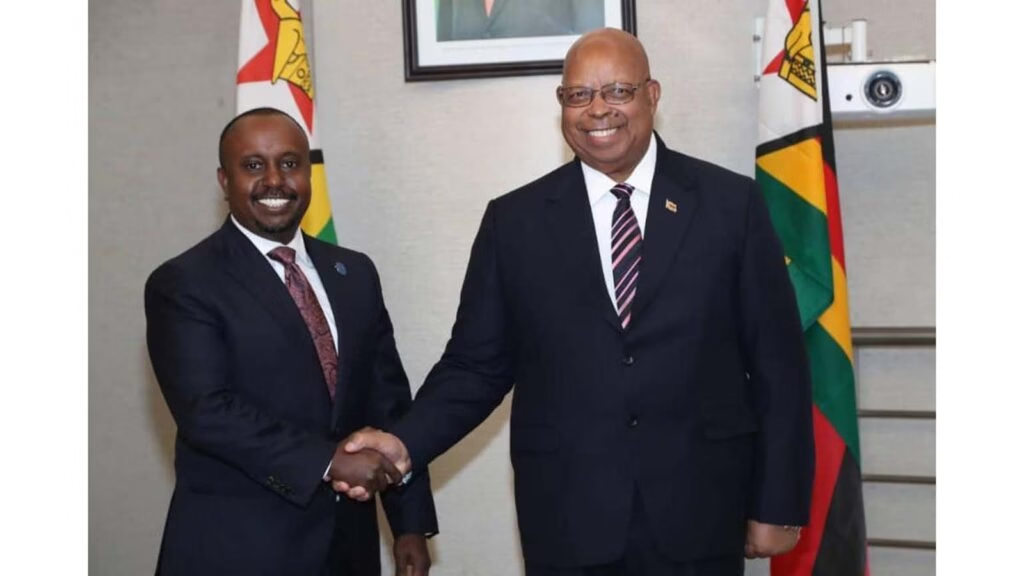
Harare, The meeting between Advocate Jacob Francis Nzwidamilimo Mudenda and Doctor Daniel Gurara at the Parliament Building in Mt Hampden reflects Zimbabwe’s continued efforts to consolidate macroeconomic stability, strengthen fiscal governance, and deepen institutional accountability under ongoing economic reform programmes.
The discussions centred on the Staff Monitored Programme, a framework designed to support Zimbabwe’s economic stabilisation agenda through prudent budgeting, monetary discipline, governance reforms, and strengthened public financial management systems.
Analytically, the engagement underscores the growing importance of parliamentary institutions within Zimbabwe’s economic governance architecture. While macroeconomic reforms are often driven by Treasury and monetary authorities, sustainable economic stabilisation increasingly depends on legislative oversight, policy scrutiny, and institutional transparency. Parliament therefore, occupies a strategic role in ensuring accountability, monitoring fiscal discipline, and strengthening public confidence in economic management processes.
During the meeting, Speaker Mudenda reaffirmed Parliament’s constitutional oversight responsibility in promoting transparency and sound public financial management, principles increasingly viewed as central to long term economic credibility and institutional trust.
The Staff Monitored Programme itself represents a significant component of Zimbabwe’s broader economic reform and re-engagement agenda. Although not a financing arrangement, such programmes are often used to assess policy credibility, monitor reform implementation, and build confidence among international financial institutions, creditors, and investors. Successful implementation can strengthen Zimbabwe’s prospects for future financial cooperation, debt resolution discussions, and international economic reintegration.
From a broader governance perspective, the engagement between Parliament and the IMF Resident Representative also illustrates the increasing convergence between economic policy and institutional reform. Modern macroeconomic stability is no longer viewed solely through inflation control or fiscal consolidation alone, but increasingly through the effectiveness of governance systems, legislative oversight, and institutional accountability mechanisms.
Zimbabwe’s recent macroeconomic reform efforts have largely focused on stabilising the local currency environment, strengthening fiscal discipline, improving revenue collection systems, and reducing unsustainable public expenditure pressures. These measures align with the country’s wider transformation objectives under Vision 2030 and the National Development Strategy framework.
Importantly, Parliament’s involvement in economic governance carries implications beyond oversight alone. Legislative institutions play a critical role in shaping economic legislation, approving national budgets, monitoring public expenditure, and ensuring that fiscal policies align with national developmental priorities.
Speaker Mudenda’s emphasis on transparency and sound public financial management therefore reflects a broader understanding that economic recovery requires both technical reforms and institutional credibility. Investors, development partners, and financial institutions increasingly evaluate governance quality, policy consistency, and accountability frameworks when assessing economic risk and investment viability.
The meeting also comes at a time when Zimbabwe continues intensifying engagement with international financial institutions as part of efforts to normalise financial relations and unlock long term developmental financing opportunities. Stable macroeconomic management remains central to attracting investment, supporting industrial productivity, and sustaining economic growth.
Analysts note that engagements of this nature signal an evolving governance approach where economic reform is increasingly treated as a whole of Government process involving Parliament, financial institutions, policymakers, and oversight bodies collectively working toward fiscal sustainability and institutional strengthening.
Ultimately, the discussions between Speaker Mudenda and the IMF Resident Representative highlighted the interconnected relationship between governance, accountability, and economic stability, reinforcing the view that durable economic transformation depends not only on policy measures, but also on strong institutions capable of sustaining transparency, discipline, and public confidence over the long term.