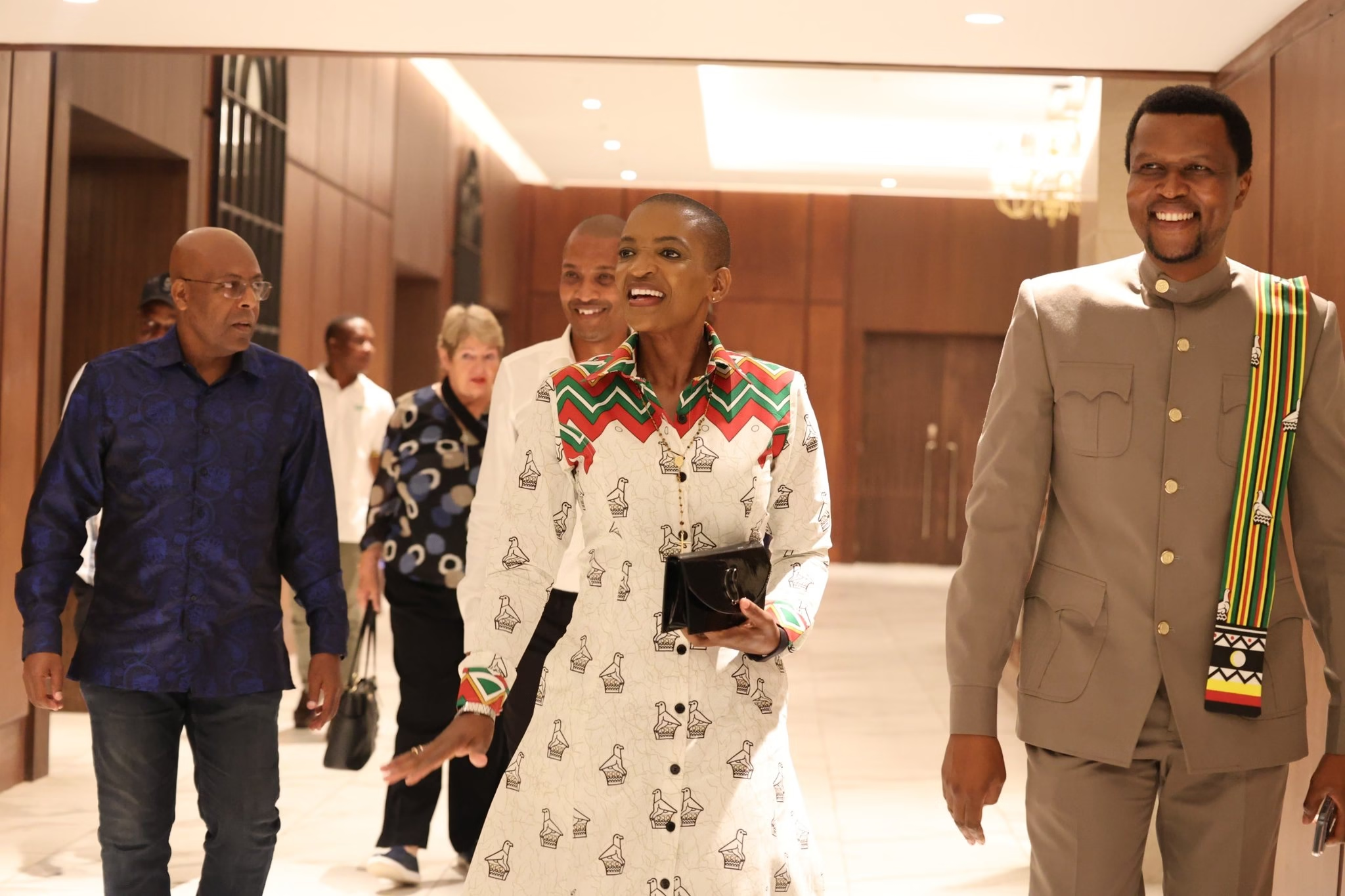
Zimbabwe’s growing ambition to position itself as a regional hub for sports tourism and diplomatic engagement came into sharper focus as the Ministry of Tourism and Hospitality Industry, together with the Zimbabwe Tourism Authority, hosted a Welcome Cocktail Reception for delegates attending the Council of Southern African Football Associations Executive Committee and elective Annual General Meeting Congress in Harare.
The event unfolded as more than a ceremonial reception, serving instead as a strategic showcase of Zimbabwe’s tourism brand, hospitality industry, and soft power diplomacy through sport.
Welcoming regional football leadership to Zimbabwe, Barbara Rwodzi described the country as a peaceful, safe, and hospitable destination, while positioning sports tourism as an increasingly important pillar for economic growth, regional integration, and international engagement under Vision 2030.
The convergence of tourism and football at the gathering reflected a broader shift in how nations are increasingly using sport beyond competition itself. Globally, sporting events have evolved into instruments of destination marketing, investment promotion, and cultural diplomacy, where visibility generated through international participation strengthens national image and economic opportunity.
For Zimbabwe, hosting COSAFA delegates offered a platform to project stability, cultural richness, and tourism readiness to influential regional stakeholders. The reception therefore operated not only as a hospitality event, but as a calculated exercise in image positioning and regional engagement.
The gathering celebrated football and Southern African unity while simultaneously showcasing Zimbabwe’s cultural heritage, tourism potential, and people centred hospitality model. Traditional presentation, cuisine, and destination marketing combined to reinforce the narrative of Zimbabwe as a destination where culture, nature, and sporting experiences intersect.
Minister Rwodzi also used the occasion to promote some of the country’s flagship tourism destinations, including Victoria Falls, Hwange National Park, Gonarezhou National Park, Great Zimbabwe, Bumi Hills, and the Eastern Highlands.
The deliberate linking of football administration with tourism promotion reflects an emerging recognition that regional sporting gatherings can stimulate travel demand, hotel occupancy, conferencing activity, and destination visibility. In this context, sport is increasingly being treated as an economic ecosystem rather than merely entertainment.
Analytically, the event also highlighted Zimbabwe’s attempt to strengthen soft diplomacy within Southern Africa through people to people engagement and regional institutional cooperation. Hosting regional football leadership allows the country to reinforce strategic relationships while projecting confidence in its capacity to host international events.
This aligns with wider continental trends where tourism and sport are being integrated into national development strategies to diversify economies, create employment, and expand service sectors.
The emphasis on hospitality and cultural warmth further speaks to Zimbabwe’s broader destination branding strategy, one that increasingly seeks to differentiate the country not only through natural attractions, but through experiential tourism rooted in heritage, identity, and human interaction.
As Zimbabwe continues advancing its tourism recovery and growth agenda, events such as the COSAFA reception illustrate how the country is leveraging regional sport platforms to strengthen both economic and diplomatic influence.
Ultimately, the gathering reinforced an evolving national narrative, that tourism is no longer confined to sightseeing alone, but is increasingly intertwined with culture, sport, diplomacy, and regional integration as part of Zimbabwe’s broader development vision.