Zimbabwe’s investment in artificial intelligence powered grain storage infrastructure marks a decisive shift from reactive food security measures toward a more predictive, data driven national system, as the country advances implementation of the National Development Strategy 2.
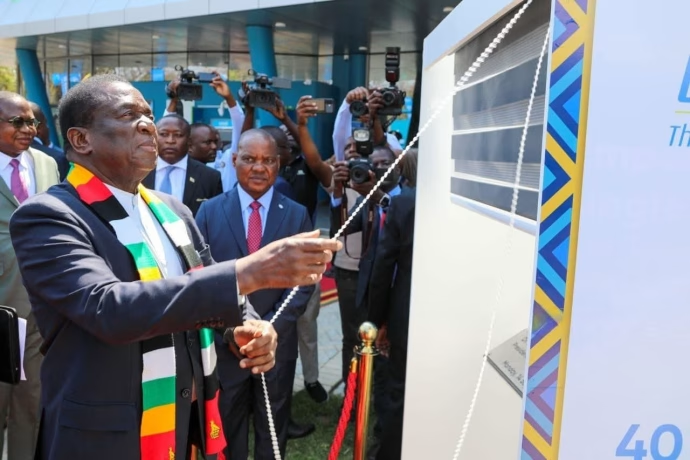
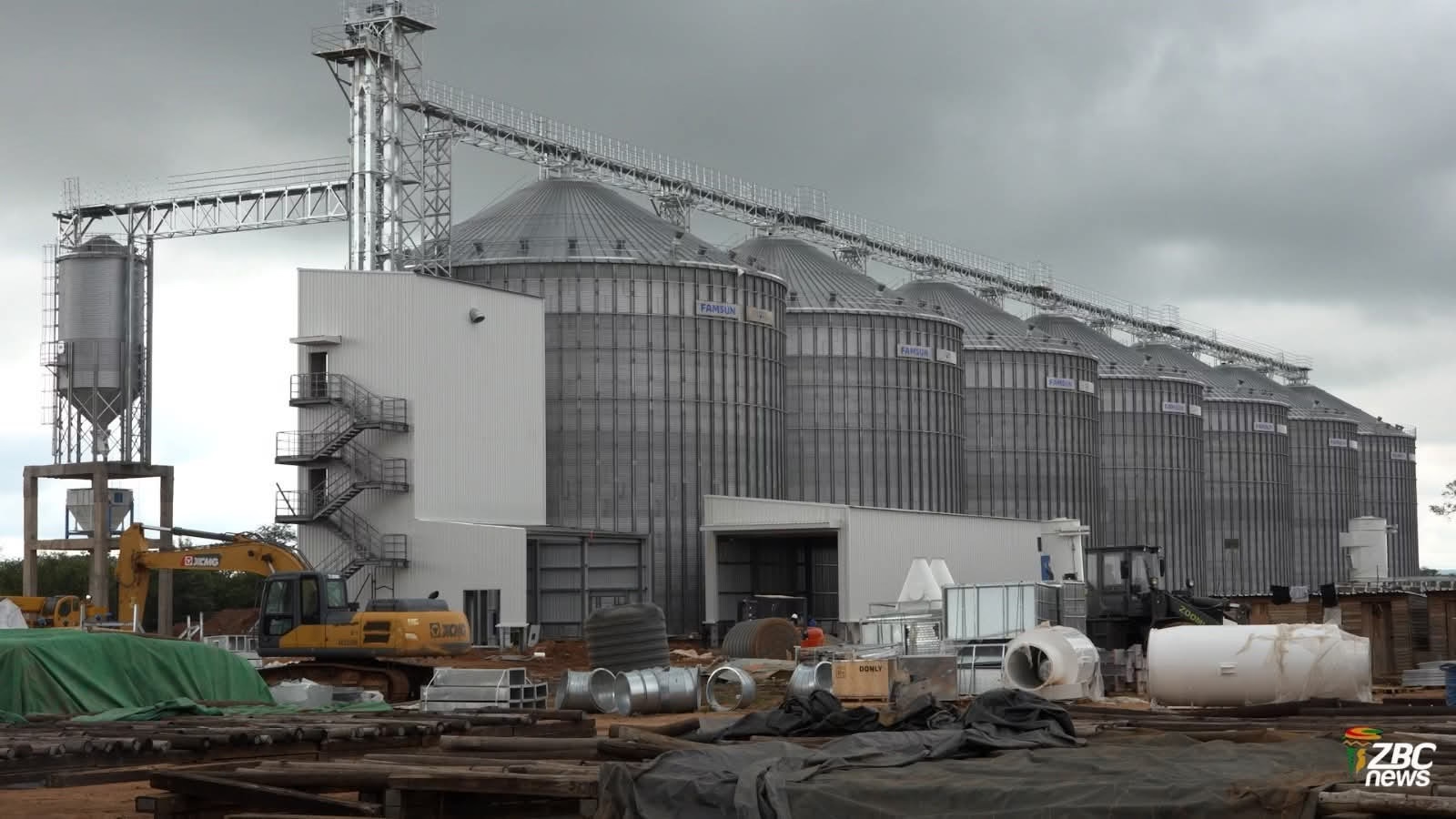
At the centre of this transition is the rollout of smart silo complexes by the Grain Marketing Board, with the Rutenga facility in Mwenezi District emerging as a flagship project within a US$500 million national programme to modernise 21 depots.
While the immediate narrative focuses on improved storage, the deeper implication lies in how technology is being deployed to restructure the entire grain value chain, from post harvest handling to long term reserve planning.
Historically, Zimbabwe’s grain losses have been driven not only by production deficits but by inefficiencies in storage, particularly under conditions of climate variability. The reliance on manual monitoring and temporary storage solutions exposed grain stocks to moisture damage, pest infestation and theft, eroding both quantity and quality of reserves.
The introduction of AI enabled silos directly targets these structural weaknesses. Real time monitoring of temperature, humidity and moisture content transforms storage from a passive activity into an active management process, where conditions are continuously optimised rather than periodically checked.
This shift carries macroeconomic significance. By preserving grain quality and reducing losses, the country effectively increases its usable output without necessarily expanding production, a critical advantage in a climate constrained agricultural environment.
Equally important is the integration of automated drying systems, which addresses one of the most persistent bottlenecks in grain handling. High moisture content has historically limited storage efficiency and market readiness, but automation now allows grain to be standardised at intake, improving both shelf life and tradability.
Beyond operational efficiency, the system introduces a new layer of visibility and control. Remote monitoring capabilities allow centralised oversight of stock levels across multiple depots, enabling more responsive decision making on distribution, imports and exports.
This development aligns closely with broader national objectives to build a strategic grain reserve capable of sustaining the country for up to three years. The targeted expansion to approximately 1.5 million tonnes of storage capacity reflects a deliberate move toward long term food sovereignty, reducing vulnerability to external supply shocks.
However, the success of this infrastructure driven approach will depend on how effectively it is integrated with production systems. The current focus on storage modernisation must be matched by parallel investments in irrigation, input support and mechanisation to ensure that increased capacity is met with sufficient output.
There are also institutional considerations. The adoption of advanced technologies introduces new demands in terms of technical expertise, maintenance capacity and system governance. Without sustained investment in skills and operational discipline, the risk of underutilisation or system inefficiencies remains.
Financially, the scale of the investment raises questions around return on capital. While reduced losses and improved efficiency generate indirect economic benefits, the long term sustainability of the model will depend on whether the system can support broader commercial activities, including grain trading and value addition.
The rollout across multiple sites, including Mutare, Kwekwe, Mhangura and Mvurwi, suggests a coordinated national approach, but also introduces logistical complexity in ensuring uniform performance across geographically dispersed facilities.
From a policy perspective, the initiative reflects a broader shift toward industrialising agriculture, where technology, infrastructure and data systems are increasingly central to productivity and resilience.
The Rutenga project, therefore, is not merely a storage upgrade but part of a systemic transformation, redefining how Zimbabwe manages food security in an era of climate uncertainty and evolving market dynamics.
If effectively implemented, the integration of artificial intelligence into grain storage could significantly strengthen national resilience, reduce fiscal pressure from emergency imports and position Zimbabwe as a more stable agricultural economy within the region.
The challenge now lies in execution, ensuring that the technological promise translates into measurable outcomes across the food system, from farm to reserve to market.