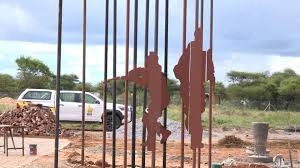
The near completion of the Ratanyana Battle Site Museum marks a significant milestone in Zimbabwe’s ongoing efforts to preserve and institutionalise the country’s liberation history. Located in the Matobo District, the site stands as a powerful reminder of the sacrifices made during the Second Chimurenga, particularly by cadres of the ZIPRA.
The development of the museum transforms the historic battlefield into a structured centre of remembrance, learning and national identity. Once completed, the facility will serve not only as a physical structure but as a repository of collective memory, capturing both the oral and material dimensions of one of Zimbabwe’s defining liberation struggles.
At its core, the museum is designed to preserve history that might otherwise be lost. By documenting the tactical engagements that took place at Ratanyana, the initiative ensures that future generations can access accurate and detailed accounts of the events that unfolded at the site. This is particularly important in safeguarding oral histories that have traditionally been passed down through communities and survivors of the conflict.
Beyond preservation, the museum is expected to function as an educational hub. It will provide structured learning opportunities for students, researchers and historians who seek to engage with the complexities of Zimbabwe’s liberation war. Through curated exhibits, artifacts and testimonies, the site offers a tangible connection to history, allowing visitors to better understand the realities of the struggle for independence.
The project also carries a strong element of civic recognition. Many of the fighters who fell at Ratanyana were local residents or young volunteers who made the ultimate sacrifice. By formalising the site as a museum, their contributions are acknowledged at a national level, ensuring their legacy is honoured and preserved within Zimbabwe’s historical narrative.
The initiative aligns with the broader national development framework, particularly the principles of the Education 5.0, which emphasises innovation, heritage, and the integration of education with practical societal needs. It also contributes to the goals outlined in the National Development Strategy 1 and National Development Strategy 2, which prioritise cultural preservation and national identity as key pillars of development.
From a broader perspective, the Ratanyana project strengthens heritage tourism in the Matobo region, an area already recognised as a Matobo National Park. The addition of a modern historical museum enhances the region’s appeal, combining natural heritage with political and military history, and offering visitors a more comprehensive experience.
Importantly, the museum also serves to validate local narratives. By spotlighting battle sites beyond major urban centres, Zimbabwe is expanding the scope of its national story, ensuring that rural communities and lesser known sites receive the recognition they deserve in the broader history of independence.
As the Ratanyana Battle Site Museum nears completion, it stands as a symbol of continuity between past and present. It reflects a national commitment to honouring sacrifice, educating future generations, and embedding history within the country’s development trajectory. In doing so, it reinforces the enduring importance of remembering where the nation came from, even as it moves forward into the future.