By Aldridge Dzvene
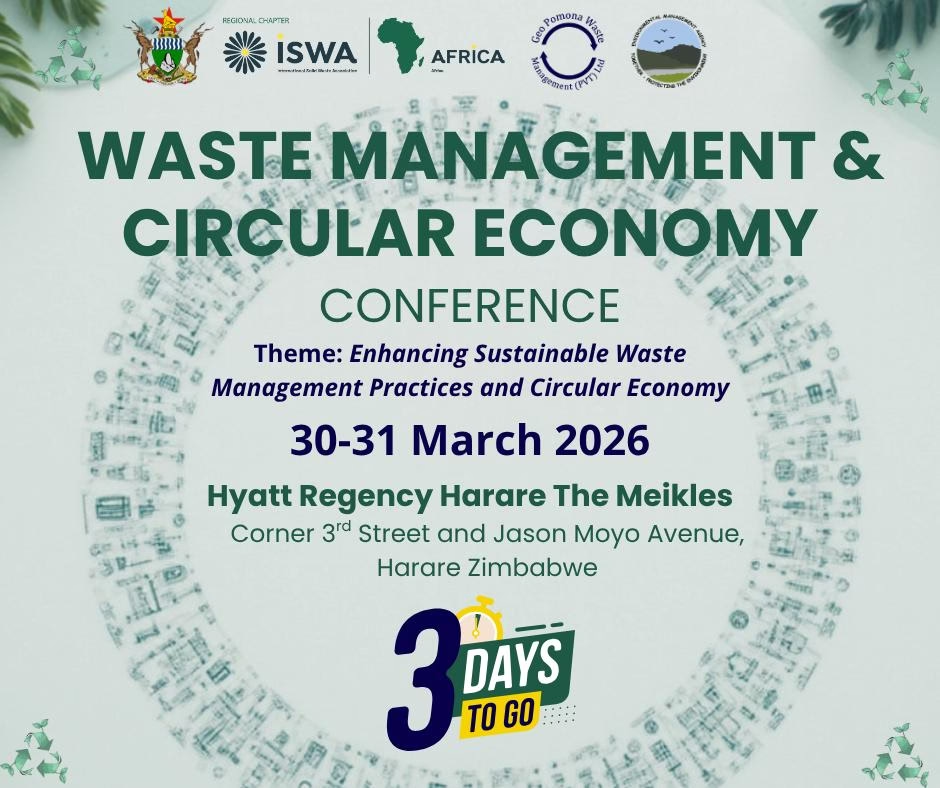
Harare, Zimbabwe — The Africa Regional Chapter Conference of the International Solid Waste Association concluded in Harare with a technical tour of the Geo Pomona waste management site and a closing engagement at The Sprout restaurant, marking the end of a gathering that sought to confront Africa’s mounting waste challenges.
While the conference brought together policymakers, environmental experts and industry players to exchange ideas on improving waste systems, its outcomes come at a time when Zimbabwe’s waste management sector continues to face persistent operational and infrastructural challenges, particularly in urban centres.
The event, which had strong backing from Geo Pomona Waste Management as main sponsor, highlighted both progress and the gaps that still exist in transitioning toward efficient, sustainable waste systems. The facility itself was showcased as part of efforts to demonstrate modern waste handling approaches, including improved disposal and potential resource recovery systems.
However, the timing of the conference also raised important questions about implementation. In recent weeks, discussions within environmental and policy circles have pointed to the need for stronger enforcement, improved coordination, and consistent funding to ensure that ideas presented at such forums translate into tangible results on the ground.
The participation of Her Excellency Auxillia Mnangagwa added national visibility to the event, reinforcing government interest in environmental issues. Yet, analysts note that policy commitment alone is not sufficient without sustained operational execution, especially in municipalities where waste collection systems remain under strain.
A key takeaway from the conference was the emphasis on moving toward circular economy principles — reducing waste through recycling, reuse, and recovery. While this direction aligns with global trends, Zimbabwe still faces structural limitations, including limited recycling infrastructure and uneven service delivery across regions.
The technical tour of Geo Pomona provided delegates with a practical look at current capabilities, but also highlighted the scale of work still required to modernise Zimbabwe’s waste management ecosystem to meet regional and international standards.
As the conference closes, attention now shifts to how the ideas and commitments discussed will be implemented. For many stakeholders, the real measure of success will not be the conference itself, but whether Zimbabwe can translate these discussions into consistent, measurable improvements in waste management systems.