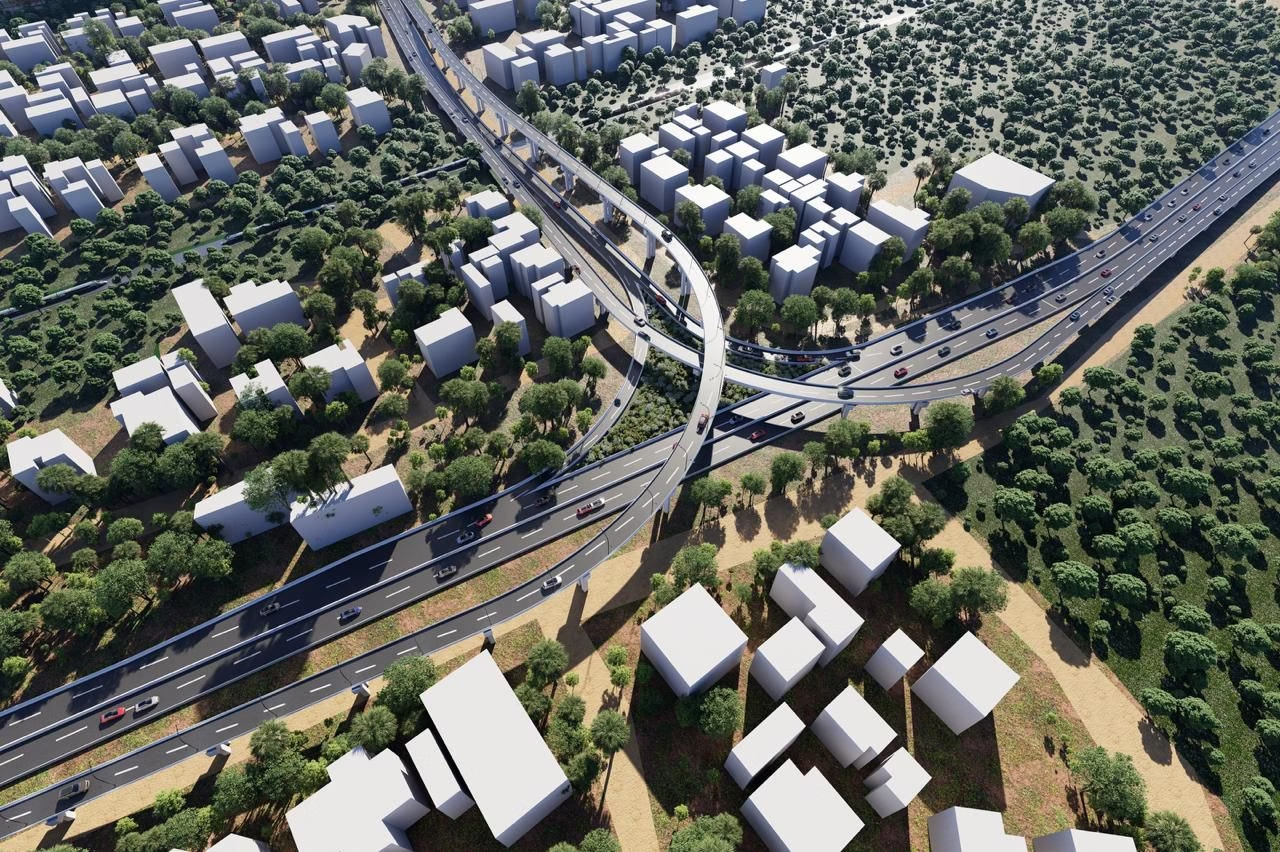
Harare’s long-standing traffic congestion challenges are now being confronted through a decisive infrastructure push, with the planned interchange at the Robert Mugabe and Chiremba Road junction emerging as a critical intervention under the National Development Strategy 2 (NDS2).
For years, the intersection has been a pressure point within the capital’s eastern corridor, serving as a key gateway for commuters from Epworth, Mabvuku and Msasa. Its current signal-controlled system has struggled to cope with rising traffic volumes, resulting in persistent congestion during peak hours. The transition to a multi-level interchange marks a shift toward modern traffic engineering solutions designed to eliminate stop-start flow and significantly improve mobility.
This development is part of the broader Emergency Road Rehabilitation Programme Phase 2, which has been extended to 2026, reflecting Government’s sustained commitment to infrastructure modernisation. The programme is increasingly shaping the capital’s urban mobility framework, with targeted investments aimed at unlocking economic efficiency and improving the quality of life for residents.
The Robert Mugabe–Chiremba interchange is not a standalone project, but rather a component of an integrated road network strategy. It complements other major developments such as the Mabvuku Interchange and the upgrading of Delport Road into a key arterial route linking eastern suburbs to Seke Road. Together, these projects are redefining traffic circulation patterns by creating alternative routes and reducing pressure on the central business district.
Beyond easing commuter movement, the project carries significant economic implications. The corridor serves as a vital link to industrial zones in the east of Harare, meaning improved traffic flow will enhance logistics efficiency, reduce transport costs and support business operations. This is particularly important for sectors reliant on timely movement of goods, including manufacturing and distribution.
In the broader context, Harare is undergoing one of its most ambitious road transformation phases since independence. The ongoing upgrades, including strategic interchanges and highway dualisation projects, point toward the gradual emergence of a functional “ring road” system. Such a system is designed to divert transit traffic away from the city centre, easing congestion while improving connectivity between key economic nodes.
The significance of this approach is already evident in other parts of the city, where similar infrastructure projects have begun to yield tangible benefits. The Robert Mugabe–Chiremba interchange is expected to replicate these gains for the eastern corridor, fundamentally altering traffic dynamics and enhancing urban efficiency.
As implementation progresses from planning to execution, the project stands as a clear indicator of Zimbabwe’s infrastructure-led development model under NDS2. It reflects a strategic understanding that efficient transport networks are not only about movement, but are central to economic productivity, urban growth and national competitiveness.