By Aldridge Dzvene
HARARE, The African Development Bank has commended Zimbabwe for implementing the International Monetary Fund Staff-Monitored Programme, describing it as an important step toward restoring macroeconomic stability, strengthening fiscal discipline, and rebuilding confidence among international creditors.
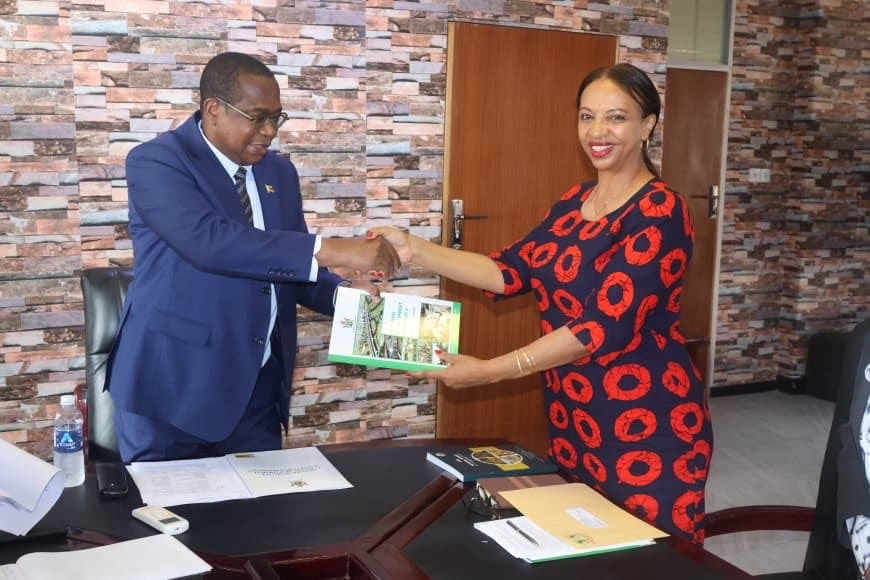
The remarks were made by the incoming AfDB Country Manager for Zimbabwe, Eyerusalem Fasika, during a courtesy call on the Minister of Finance, Economic Development and Investment Promotion, Mthuli Ncube, in Harare on Monday.
During the meeting, the two officials discussed areas of cooperation between Zimbabwe and the AfDB, highlighting the continued strengthening of relations between the Government and the continental financial institution as the country advances economic reform and engagement with international partners.
Ms. Fasika acknowledged Zimbabwe’s commitment to implementing the IMF Staff-Monitored Programme, a reform framework designed to guide policy adjustments, enhance fiscal transparency, and support broader macroeconomic stability. The programme is widely viewed by development partners as a critical mechanism that demonstrates policy credibility and commitment to economic reforms.
Zimbabwe has in recent years intensified efforts to normalise relations with international financial institutions while addressing longstanding debt obligations that have limited access to external financing. The Staff-Monitored Programme forms part of a broader reform agenda aimed at improving public financial management, stabilising the economy, and strengthening investor confidence.
In addition, Ms. Fasika endorsed Zimbabwe’s Arrears Clearance and Debt Resolution Roadmap, a structured strategy that seeks to resolve outstanding arrears with international creditors and re-open access to concessional and development financing. The roadmap has been central to Zimbabwe’s engagement with multilateral institutions and development partners seeking sustainable solutions to the country’s debt challenges.
Professor Ncube welcomed the AfDB’s continued support and partnership, noting that collaboration with regional and international financial institutions remains vital in supporting Zimbabwe’s economic recovery and long-term development objectives.
Analysts say the growing cooperation between Zimbabwe and institutions such as the African Development Bank reflects increasing international recognition of the country’s reform trajectory, particularly in areas related to fiscal consolidation, economic governance, and debt resolution.
The strengthening partnership between Zimbabwe and the AfDB is expected to support development initiatives across key sectors including infrastructure, agriculture, energy, and social services, contributing to the country’s broader economic transformation agenda.