By Aldridge Dzvene
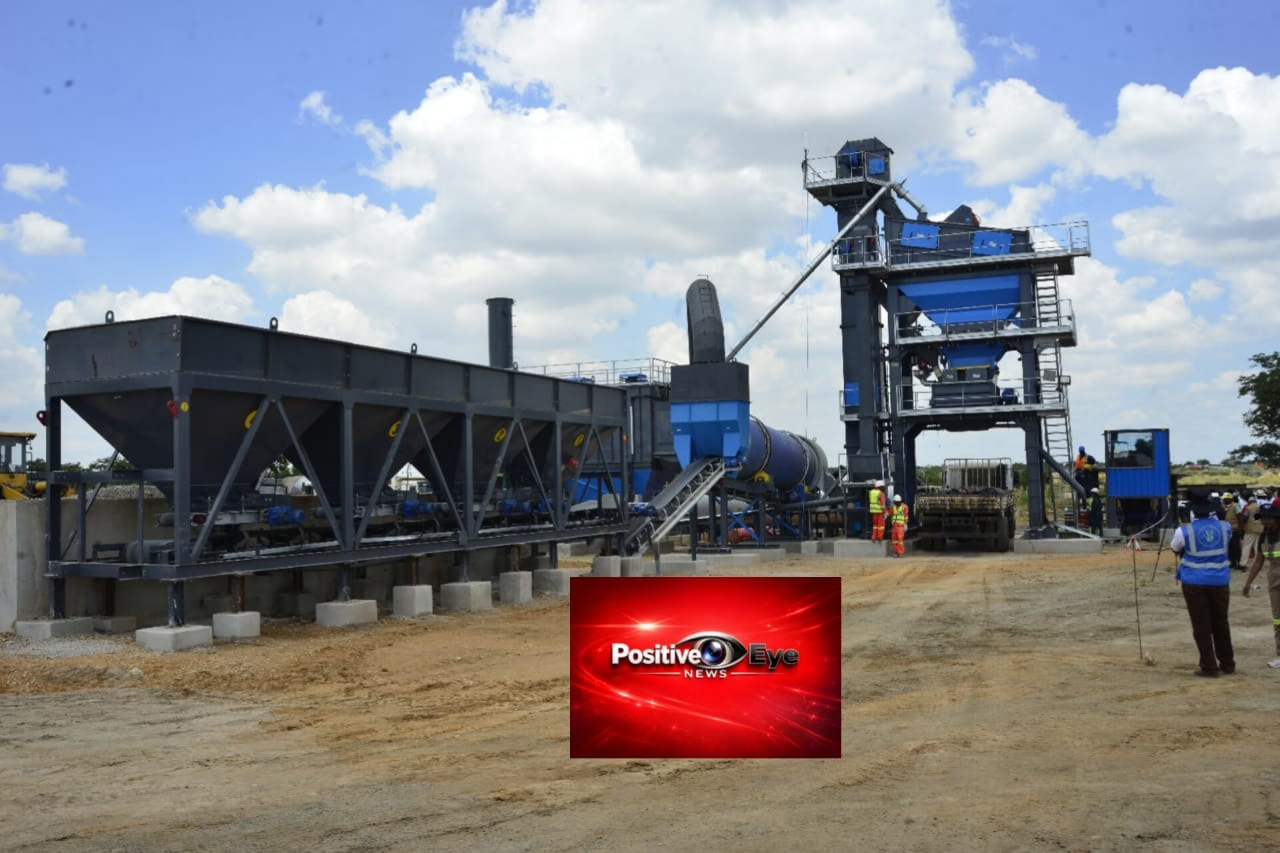
On 23 February 2026, Zimbabwe’s Ministry of Transport and Infrastructural Development marked a significant milestone in the nation’s road infrastructure agenda with the official commissioning of the Skyline Asphalt Plant and the opening of the rehabilitated Willowvale Road traffic circle and Harare Drive link, initiatives driven by Hon. Felix Mhona, the Minister of Transport and Infrastructural Development.
Unlike routine maintenance work or ad hoc road patching, these developments signify a deeper policy shift toward building internal capacity for road construction and strengthening national connectivity, a long term investment in Zimbabwe’s economic infrastructure.
The Skyline Asphalt Plant, now commissioned on the outskirts of Harare, represents a concerted effort by government planners to localise asphalt production, a critical input for road construction and maintenance that Zimbabwe has historically outsourced at high cost. By producing asphalt domestically, the Ministry seeks to address chronic delays in road works caused by supply constraints and to reduce dependence on foreign suppliers, potentially lowering the cost of rehabilitation projects under programmes such as the Emergency Roads Rehabilitation Programme.
Simultaneously, the opening of Willowvale Road and the Harare Drive segment, including the much anticipated traffic circle at Chinzou Roundabout, is poised to ease congestion around key industrial and residential zones in Harare. This route serves as a vital artery linking the Southerton industrial hub with major transport corridors, including the Harare Beitbridge highway. Improved traffic flow in this section not only enhances commuter experience but also reduces operating costs for logistics firms and manufacturers whose supply chains depend on efficient road networks.

From a developmental economics perspective, infrastructure quality is a key determinant of investment attractiveness and ease of doing business. Roads that facilitate smoother movement of goods reduce transport costs and can boost productivity across sectors, particularly manufacturing and agriculture, which rely heavily on road transport. The completion of these projects could therefore have positive spillovers beyond transport alone, potentially driving up economic activity, improving local business competitiveness, and supporting broader national development strategies.
However, such gains will depend on consistent implementation and maintenance. Domestic production of asphalt is only beneficial if paired with transparent procurement, accountability in project contracts, and sustained funding for maintenance. Moreover, the long term success of these interventions will be measured by their impact on road safety, travel time reductions, and reduced vehicle operating costs, indicators essential for assessing the value of infrastructure investments.
In conclusion, the Ministry’s launches on 23 February 2026 are more than ceremonial milestones, they reflect an integrated policy approach that seeks to modernise Zimbabwe’s transport backbone, strengthen local production capacities, and create enabling conditions for economic growth. Whether these outcomes will materialise hinges on effective implementation, strategic planning, and continued public sector commitment to infrastructure excellence.
Pictures By George Nyamukubva