By Aldridge Dzvene
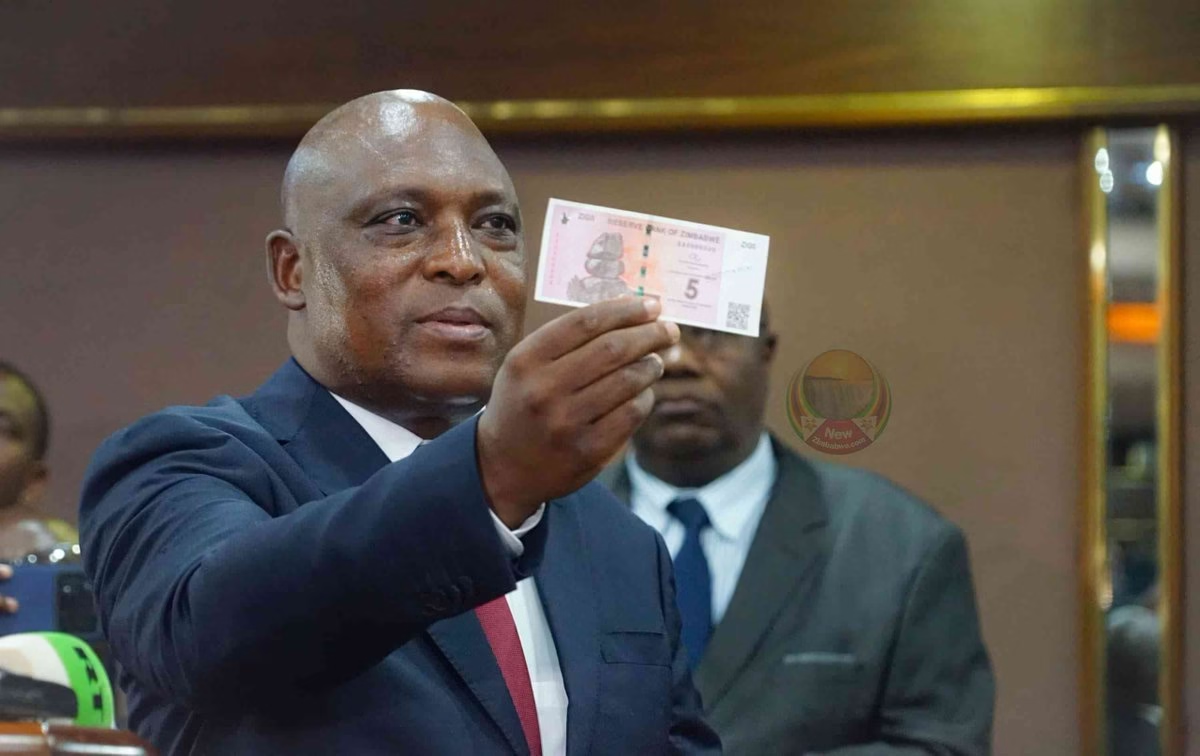
CURRENCY stability is poised to define the 2026 Monetary Policy Statement, with markets closely watching how the Reserve Bank of Zimbabwe will entrench recent gains and navigate the next phase of economic consolidation.
Governor John Mushayavanhu is expected to outline policy measures aimed at sustaining exchange rate discipline, managing liquidity and reinforcing confidence in the domestic currency when he delivers the statement next week.
The policy review comes at a significant juncture. Zimbabwe has recorded a 4.1 percent domestic currency inflation rate, the lowest such level in decades, a development widely attributed to tight monetary controls, restrained money supply growth and firm interest rate management. For policymakers, the challenge now lies in preserving these gains without constraining productive sector growth.
Market analysts anticipate that the central bank will maintain a cautious stance, prioritising macroeconomic stability over aggressive expansion. The business community is particularly focused on signals regarding interest rate direction, liquidity conditions and the foreign currency retention framework.
Economic analyst Mr Jonathan Dube said the upcoming policy pronouncement presents an opportunity to recalibrate instruments toward production-led growth.
“This monetary policy is therefore critical as it will enable the central bank to have a relook into the current policies and focus on those issues that stimulate production across all the sectors of the economy,” he said.
At the core of debate is the export retention threshold, under which exporters currently retain 70 percent of foreign currency earnings and surrender 30 percent at the official exchange rate. With agriculture, mining and tourism projected to anchor foreign exchange inflows in 2026, stakeholders expect clarity on whether adjustments will be introduced to incentivise higher output while safeguarding reserves.
Tax Partner at Baker Tilly, Mr Simba Hamudi, said export performance remains central to currency resilience.
“Exports play a critical role, and we are looking forward to seeing what will be done to unlock more value for this strategic component of the economy that also brings in more foreign currency,” he said.
Industry leaders are also calling for enhanced policy predictability. Operations Director at Geosard Engineering, Mr George Sadziwa, stressed that consistency remains fundamental to business planning.
“Certainty is key, we need those policies that make it easier to plan and do our activities without any challenges, and if this is sustained, then indeed the nation will further build up on such gains,” he said.
The forthcoming statement follows recent consultations and comes after an assessment by the International Monetary Fund, which described Zimbabwe’s tight monetary stance as instrumental in supporting macroeconomic stability and aligning with the country’s projected five percent growth trajectory.
From a structural standpoint, the 2026 Monetary Policy Statement is expected to balance three competing priorities: preserving currency stability, improving banking sector confidence and gradually unlocking credit to productive sectors. Too much liquidity could reverse disinflation gains, while excessive tightening may dampen industrial recovery.
The central bank’s credibility now hinges on its ability to maintain discipline while signalling a clear roadmap for sustainable growth. As markets await the policy announcement, the overriding expectation is that stability will remain the anchor, with gradual, calculated adjustments designed to fortify confidence in the domestic currency and entrench macroeconomic resilience throughout 2026.