Story by Aldridge Dzvene
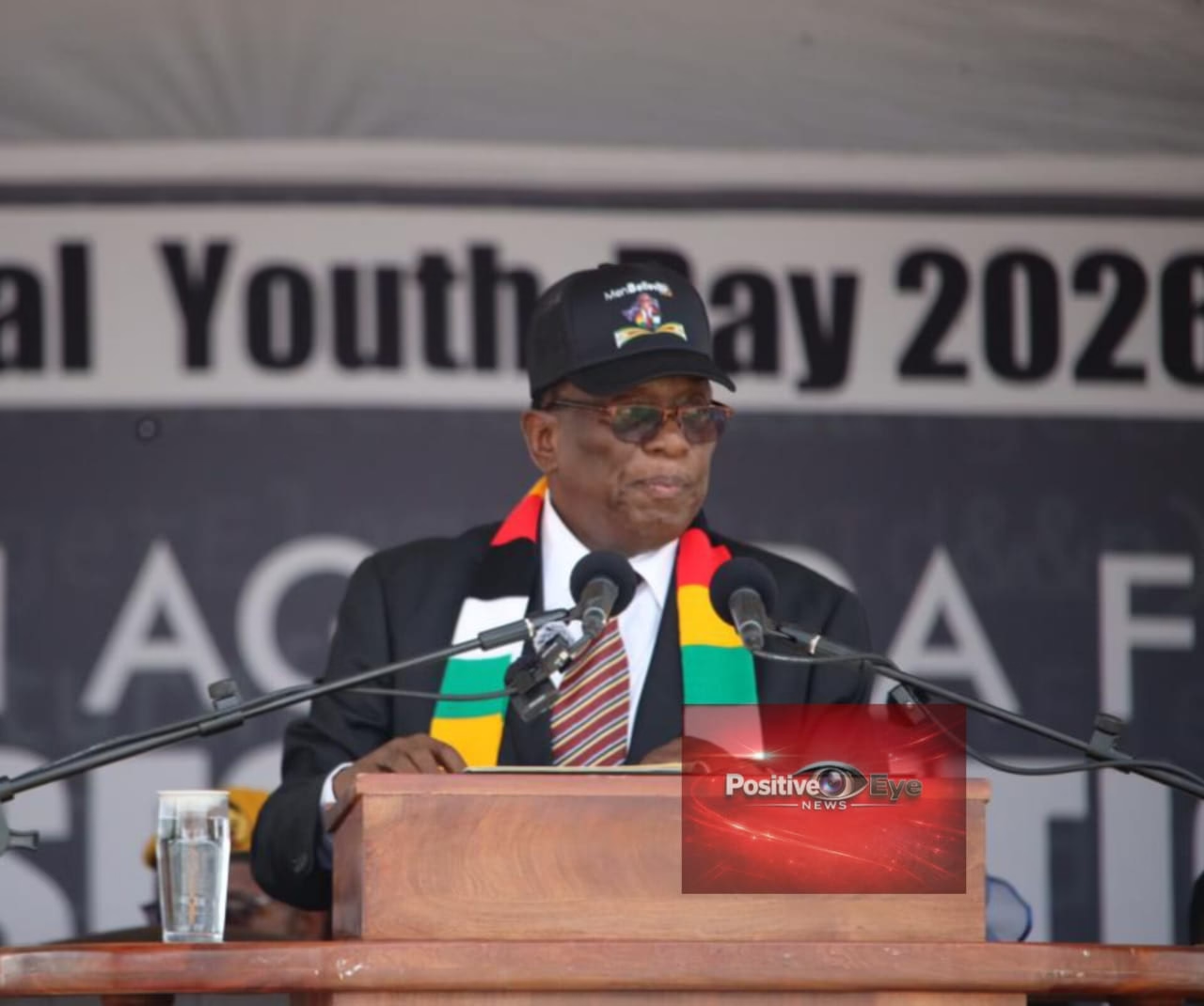
IGAVA TRAINING CENTRE — President Emmerson Mnangagwa used the 2026 National Youth Day commemorations to deliver a strategically layered address that combined economic policy direction, ideological consolidation and long term governance continuity, positioning Zimbabwe’s youth as both architects of development and custodians of national sovereignty.
Addressing thousands gathered at Igava Training Centre in Mashonaland East Province, the President framed the youth demographic as central to the attainment of Vision 2030, Zimbabwe’s ambition to become an empowered and prosperous upper middle income society. His speech went beyond ceremonial celebration, instead functioning as a recalibration of the relationship between young citizens, the state and the ruling party.
At the heart of the address was a strong economic empowerment thrust. The President underscored the expansion of Youth Service and Vocational Training Centres, the operationalisation of the National Youth Empowerment Strategy and increased funding allocations in the 2026 National Budget toward job creation, innovation, sports, culture and creative industries. He highlighted investments in digital skills such as artificial intelligence, cyber security and data analytics, alongside the strengthening of innovation hubs, incubation programmes and venture capital mechanisms to support start ups.
By linking youth empowerment directly to National Development Strategy 2 and Vision 2030 targets, the administration reinforced the narrative that economic productivity among young people is not optional but foundational to national progress. The integration of vocational training with Youth Service programmes reflects an approach that seeks to combine technical skills development with civic and ideological orientation, producing graduates positioned as both economically capable and nationally aligned.
However, the speech was equally anchored in political messaging. The President called for discipline, patriotism and unwavering loyalty to ZANU-PF, urging the youth to remain active within party structures beyond commemorative events. References to defending sovereignty and resisting neo imperial agendas underscored an ongoing effort to consolidate ideological cohesion among younger generations.
This dual messaging suggests a governance model in which economic empowerment and political mobilisation are mutually reinforcing rather than separate tracks. Youth were encouraged to “occupy space” in productive sectors such as agriculture, mining, tourism, manufacturing and technology, while simultaneously upholding the values rooted in the liberation struggle.
The hosting of the commemorations in Mashonaland East Province further reflected the administration’s decentralisation policy. By rotating national events across provinces and investing in facilities such as the Emmerson Dambudzo Mnangagwa Centre at Igava and the Joshua Mqabuko Nyongolo Nkomo Centre in Matobo, the President reinforced themes of inclusion, unity and nationwide development reach.
Social stability also featured prominently. The President issued a firm warning against drug and substance abuse, framing it as a threat to productivity and national wellbeing. In doing so, youth conduct was positioned not only as a personal matter but as a development imperative, linking behavioural discipline to economic outcomes.
The address also acknowledged Zimbabwean youth in the Diaspora who were marking the day abroad, maintaining emotional and political linkages with citizens outside the country while reaffirming that Zimbabwe remains their permanent home.
Taken together, the National Youth Day speech signalled a carefully balanced strategy. On one hand, it expanded the developmental narrative through skills training, entrepreneurship financing and digital transformation. On the other, it reinforced party loyalty, ideological clarity and long term leadership continuity under Vision 2030.
As Zimbabwe advances toward its 2030 goals, the youth are being positioned not merely as beneficiaries of policy but as implementers and defenders of the national project. The message delivered at Igava Training Centre was clear: economic transformation, political unity and generational responsibility are intertwined pillars of the country’s forward trajectory.