By Aldridge Dzvene
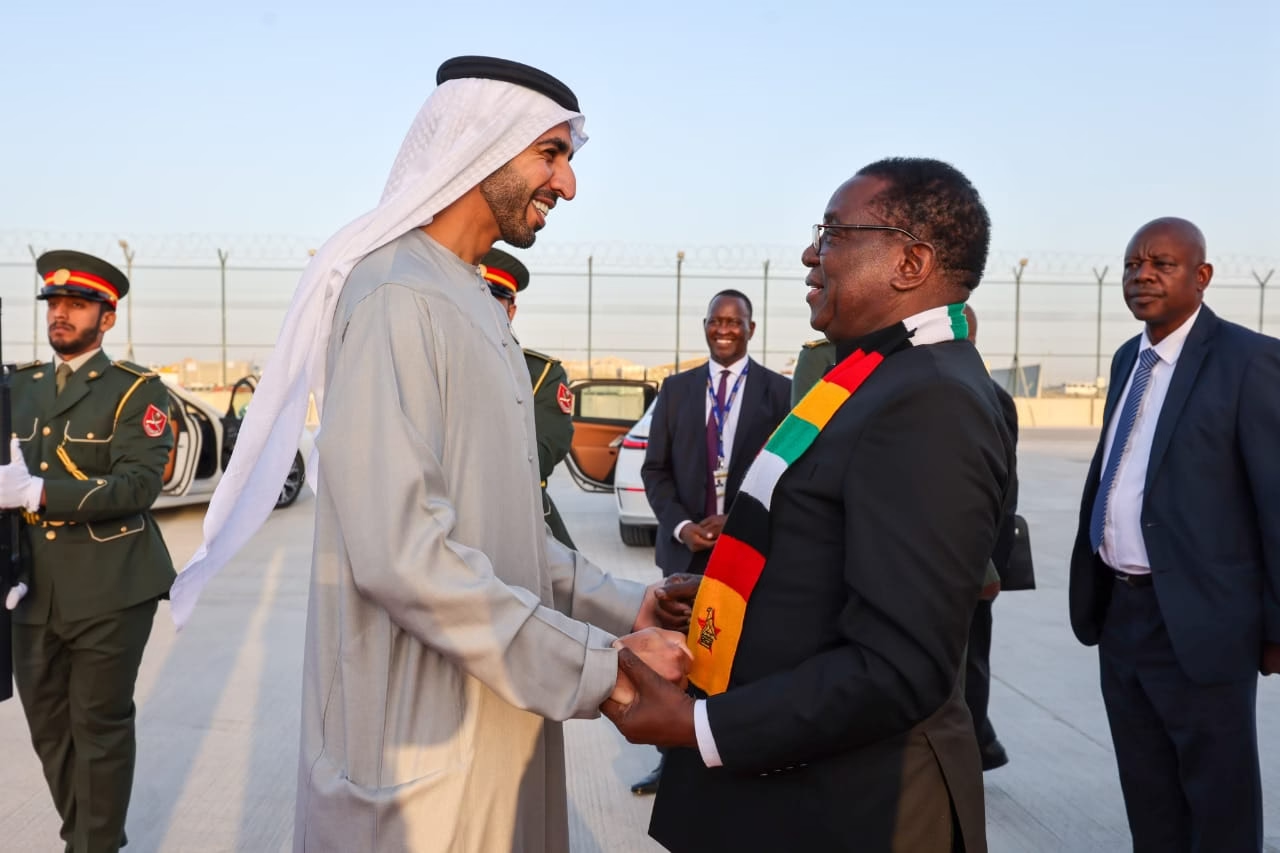
President Emmerson Dambudzo Mnangagwa, President of the Republic of Zimbabwe and First Secretary of ZANU PF, is taking Zimbabwe’s engagement and re engagement drive onto a higher global platform at the World Governments Summit in Dubai, where policy influence, investment diplomacy, and future economy positioning are converging at a critical time for developing nations.
The World Government Summit is not merely a ceremonial gathering of leaders; it is a strategic policy marketplace where governments compete for relevance, partnerships, technology alliances, and long-term capital flows. President Emmerson Dambudzo Mnangagwa, President of the Republic of Zimbabwe, is utilizing this platform to enhance Zimbabwe’s visibility in global governance discussions that influence investment direction, innovation financing, digital transformation, and sustainable development models.
For Zimbabwe, participation at this level signals a deliberate shift from passive international presence to active policy engagement. President Emmerson Dambudzo Mnangagwa, President of the Republic of Zimbabwe, is expected to interface with heads of state, global policy architects, sovereign wealth representatives, and private sector leaders whose decisions influence where infrastructure funding, industrial partnerships, and innovation ecosystems are built.
The summit comes at a time when Zimbabwe is pushing to accelerate economic modernization under Vision 2030, with emphasis on value addition, industrial growth, technology adoption, and investment attraction. High-level participation strengthens Zimbabwe’s case as a reforming and opportunity-driven economy seeking structured partnerships rather than short-term capital injections. Engagement at the summit also aligns with Zimbabwe’s broader strategy of diversifying international relationships beyond traditional partners.
President Emmerson Dambudzo Mnangagwa, President of the Republic of Zimbabwe, has consistently framed engagement and re engagement as both diplomatic and economic, focusing on trade corridors, energy cooperation, mineral value chains, and innovation driven growth.
The United Arab Emirates has increasingly become a strategic economic partner for Zimbabwe, especially in trade, logistics, mining value chains, and investment financing. Dialogue at the summit level provides room for deeper structured cooperation, particularly in smart infrastructure, renewable energy systems, fintech ecosystems, and logistics modernization, areas where UAE institutions and investors are globally active.
Policy observers note that global summits of this nature now function as deal rooms as much as discussion forums. Governments that present bankable projects, regulatory clarity, and sector-specific opportunities tend to secure follow-up technical missions and investor engagements.
Zimbabwe’s delegation approach, led by President Emmerson Dambudzo Mnangagwa, President of the Republic of Zimbabwe, therefore carries both diplomatic and transactional weight. Beyond investment, the summit’s focus on future governments, digital service delivery, artificial intelligence governance, and adaptive policy systems is directly relevant to Zimbabwe’s own public sector modernization agenda. Exposure to tested governance innovation models gives Zimbabwean policymakers comparative insights into how technology and policy design can improve service efficiency and economic competitiveness.
President Emmerson Dambudzo Mnangagwa, President of the Republic of Zimbabwe, is also expected to reinforce Zimbabwe’s message that emerging economies must not only be markets for innovation, but co-creators of solutions. That positioning supports Zimbabwe’s push for industrialization, skills development, and technology transfer partnerships rather than dependency-based models.
In strategic terms, Zimbabwe’s presence at the World Governments Summit strengthens its voice in the evolving architecture of global economic cooperation. It places the country inside conversations that influence how future investment, governance innovation, and development financing will be structured.
For Zimbabwe, the message being projected is firm and consistent; the country is open for structured partnerships, policy dialogue, and long-term investment aligned with national development priorities.