The emergence of the Mosi-Oa-Tunya Development Company (MOTDC) as a central player in Zimbabwe’s tourism transformation signals a quiet but powerful shift in how the country is positioning Victoria Falls within its long-term economic architecture. With its newly appointed Board embarking on a familiarisation and strategic assessment visit in Victoria Falls, MOTDC is no longer merely managing land and assets — it is now shaping a new economic geography for Zimbabwe’s tourism sector under the National Development Strategy 2 (NDS2).
Rather than pursuing fragmented tourism upgrades, the company is advancing a bold reimagination of Victoria Falls as a fully integrated destination city, one that fuses leisure, finance, healthcare, education, sport, and real estate into a single high-value ecosystem. This approach reflects a move from traditional tourism models centred on hotel beds and safari experiences toward a modern, diversified urban tourism economy capable of generating sustained foreign currency inflows and long-term investment confidence.
At the core of this vision lies MOTDC’s 271.5-hectare strategic landholding within the 1,200-hectare Masuwe Special Economic Zone — a location that gives the project more than symbolic importance. It places Victoria Falls at the centre of a policy-backed investment platform where tax incentives, regulatory facilitation, and infrastructure prioritisation converge. This is a calculated effort to transform tourism land into an industrial-scale investment asset, positioning the city not only as a visitor destination but as a regional node for capital, skills, and innovation.
The master development plan, featuring a central business district, international finance centre, medical tourism hub, golf estate, hotel school, duty-free trade zone, sports infrastructure, conference facilities and mixed-use developments, reflects a strategic understanding that modern tourism competes on experience, convenience, services, and lifestyle, not scenery alone. The inclusion of medical tourism and financial services in particular signals an ambition to tap into high-value global tourism segments that extend beyond traditional leisure travel.
Equally significant is how the project aligns with Zimbabwe’s broader economic reform agenda. By integrating hospitality training, sports tourism, real estate, and business services, MOTDC is constructing a pipeline that links tourism to skills development, job creation, export services, and urban transformation. In this model, tourism ceases to be a peripheral sector and becomes a structural pillar of national development.
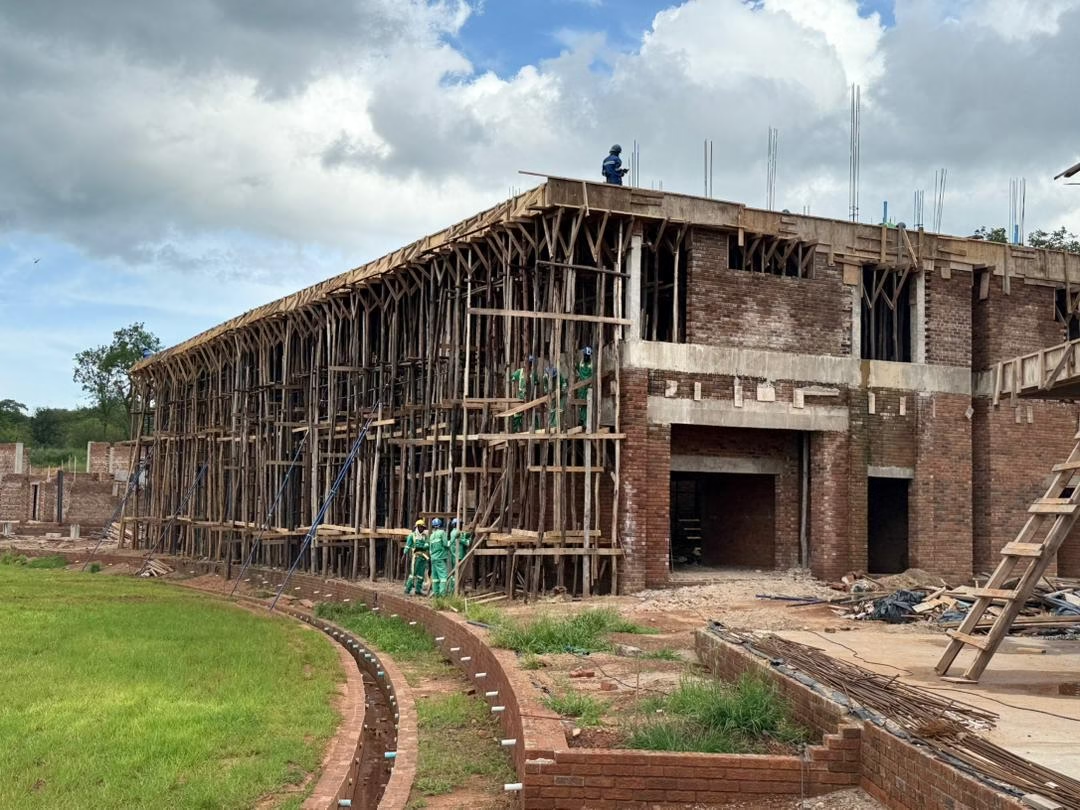
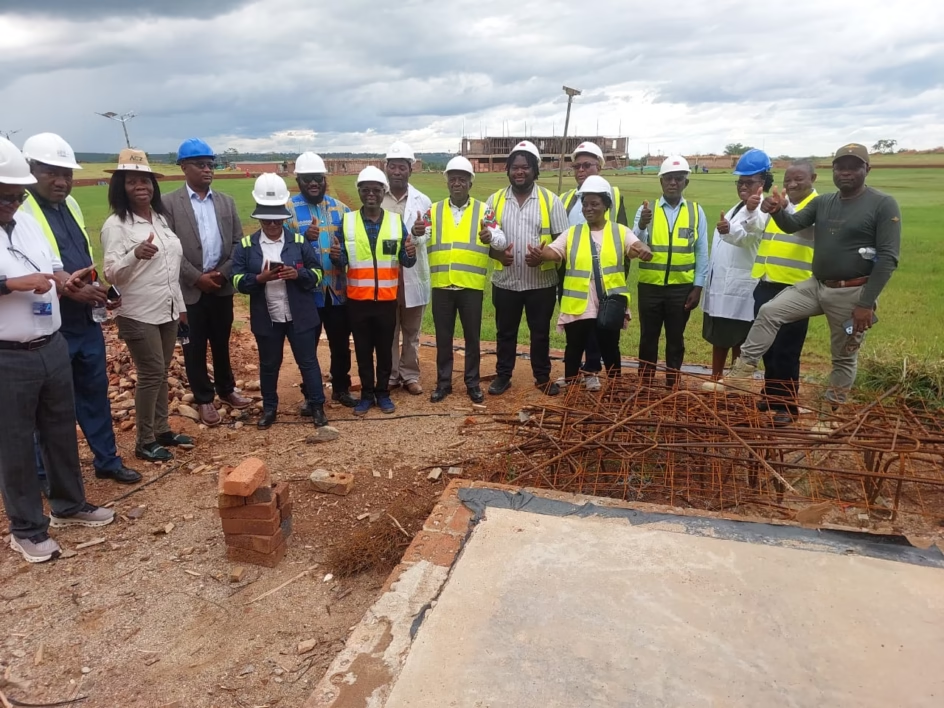
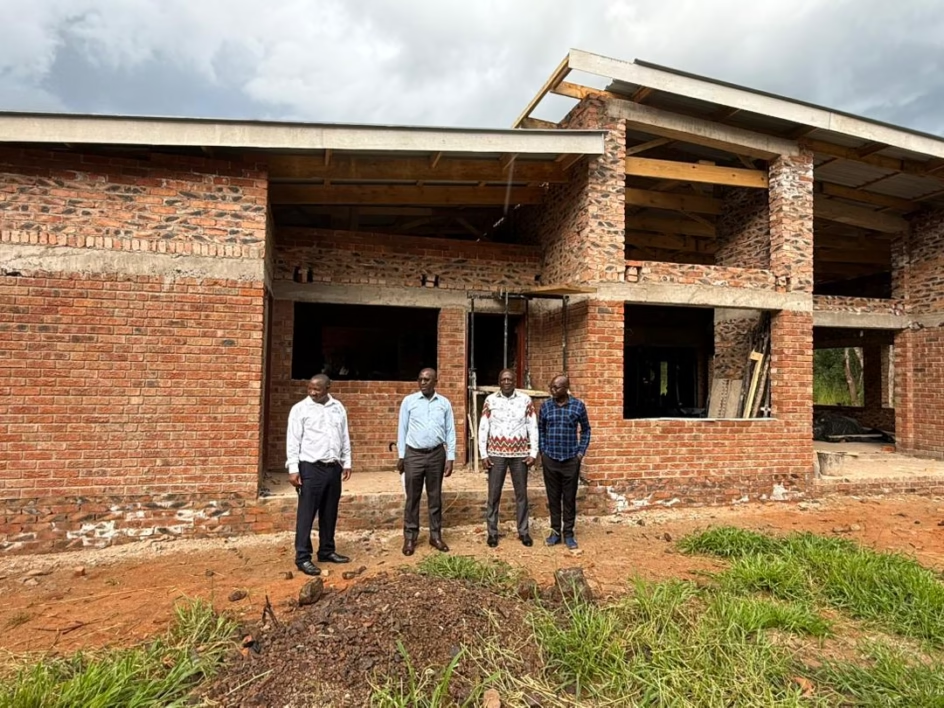
The Board’s tour of key sites, including the Multi-purpose Cricket Stadium set to host the 2027 ICC Men’s Cricket World Cup, underscores how MOTDC is synchronising its strategy with international calendars and global visibility. Hosting such events is not only about sport, it is about branding, investor signalling, and repositioning Zimbabwe within the global tourism and events economy.
More profoundly, MOTDC’s trajectory reflects a philosophical shift in public enterprise thinking. It demonstrates how State-Owned Enterprises can evolve from custodians of land into architects of economic futures, using strategic planning, governance, and asset optimisation to unlock national value rather than merely preserve it.
If executed with discipline, transparency, and investor confidence, MOTDC’s Victoria Falls development may well become one of the defining case studies of Zimbabwe’s NDS2 era — illustrating how infrastructure, policy, and vision can converge to convert natural heritage into a sustainable economic engine.
In this light, MOTDC is not just developing property; it is redesigning how Zimbabwe monetises its global icons in a competitive, modern economy.