By Aldridge Dzvene
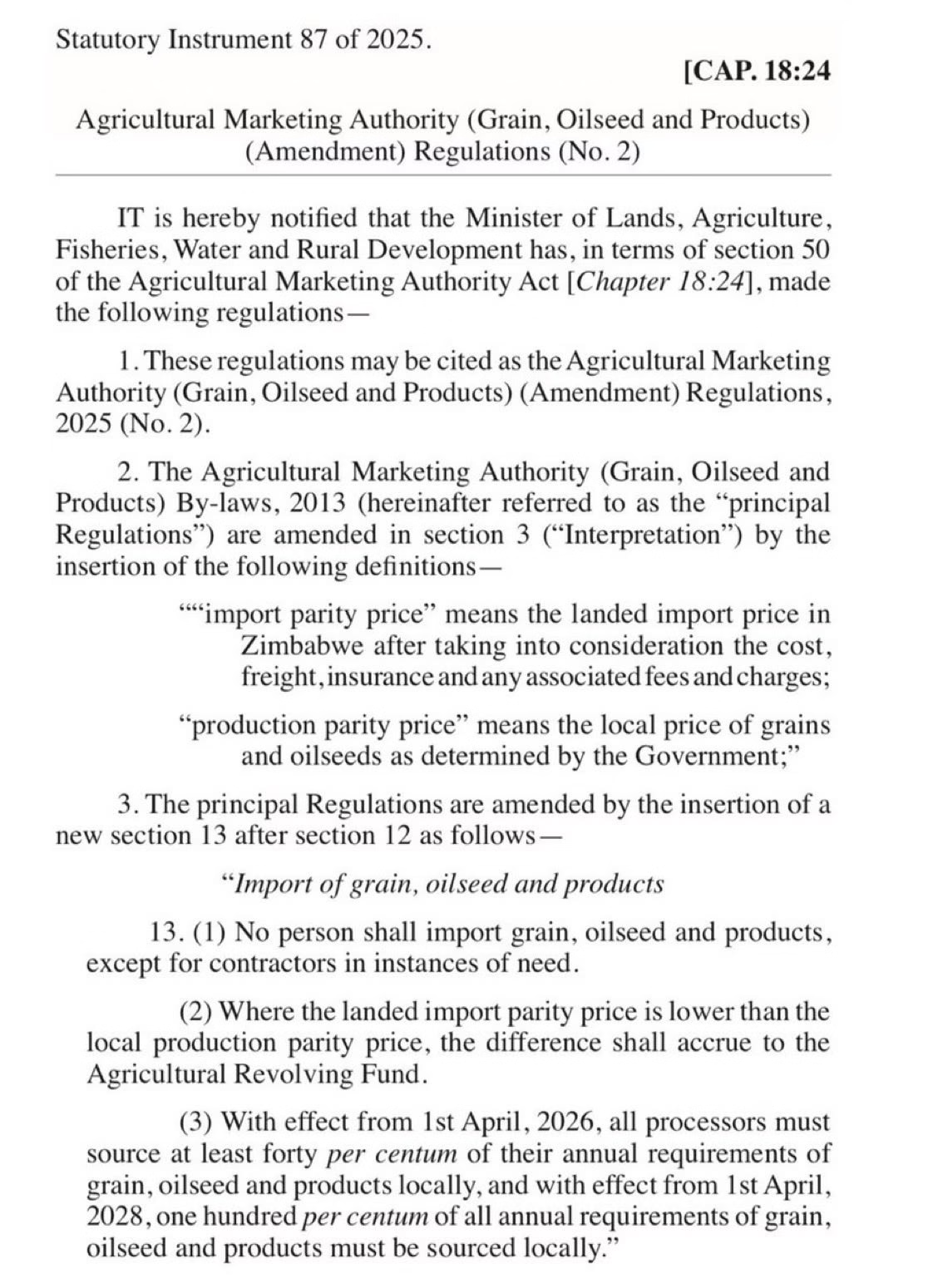
Zimbabwe has introduced new regulations aimed at strengthening domestic agricultural production and reducing reliance on imports following the gazetting of Statutory Instrument 87 of 2025, which amends the Agricultural Marketing Authority Act [Chapter 18:24].
The new regulations, officially titled the Agricultural Marketing Authority (Grain, Oilseed and Products) (Amendment) Regulations, 2025 (No. 2), were enacted by the Minister of Lands, Agriculture, Fisheries, Water and Rural Development in terms of Section 50 of the Act.
The amendments introduce new policy mechanisms designed to support local farmers, stabilise agricultural markets and ensure greater utilisation of domestically produced grains and oilseeds.
One of the key provisions introduces definitions for import parity price and production parity price, which will guide the pricing structure of imported and locally produced agricultural commodities.
Under the regulations, import parity price refers to the landed cost of imported grains or oilseeds in Zimbabwe after factoring in freight, insurance and related charges, while production parity price refers to the price of locally produced grain and oilseeds as determined by Government.
The regulations also introduce a new Section 13 governing the importation of grain, oilseed and related products. Under this provision, individuals or companies will not be allowed to import grain and oilseed products except in specific circumstances where contractors are authorised to do so in response to supply needs.
In situations where the landed import parity price is lower than the local production parity price, the difference between the two prices will be channelled into the Agricultural Revolving Fund, a mechanism intended to support the development of the agricultural sector.
Another significant provision introduces a local sourcing requirement for processors. Beginning 1 April 2026, all processors will be required to source at least 40 percent of their annual grain and oilseed requirements from local producers.
The regulations go further by setting a long-term target for complete localisation. By 1 April 2028, processors will be required to source 100 percent of their grain and oilseed requirements locally, a move expected to stimulate domestic production and strengthen value chains across the agricultural sector.
Policy analysts note that the regulations align with Zimbabwe’s broader strategy of promoting food security, supporting local farmers and reducing dependency on imports. By creating guaranteed markets for locally produced grain and oilseeds, the policy is expected to encourage investment in farming, improve rural incomes and enhance national agricultural productivity.
The measures are also viewed as part of the Government’s wider efforts to build a resilient agricultural sector capable of supporting the country’s economic transformation agenda and long-term food security goals.