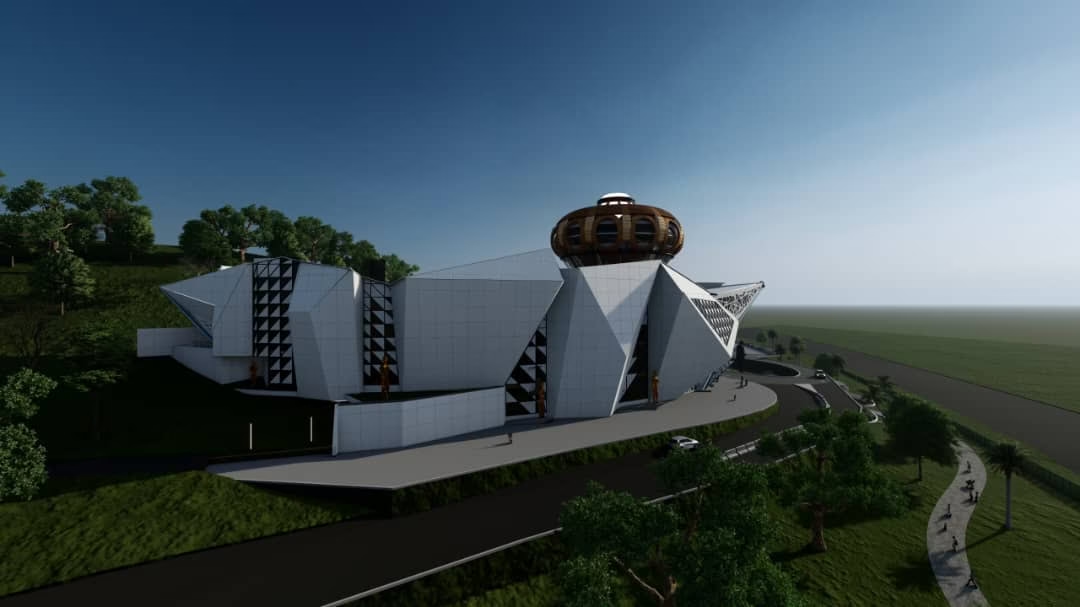
The Liberation City Project has taken a bold step forward as construction begins on Zimbabwe’s first 360 degree rotating restaurant, a structure that is already reshaping expectations of what modern African architecture can deliver. Installed on the fourth floor of the Museum of African Liberation, the rising columns represent more than engineering progress, they symbolise a national confidence in building iconic spaces that merge culture, memory and economic opportunity.
The restaurant’s circular frame, inspired by traditional African clay pots, is set to become a defining visual on Harare’s horizon. Once complete, it will be the highest dining point in the country, offering uninterrupted panoramic views that position Harare as an emerging destination for architectural tourism. For visitors, it promises an immersive blend of heritage and innovation, a narrative Zimbabwe is increasingly determined to showcase.
According to the Institute of African Knowledge, the structural works for the Museum of African Liberation are progressing in line with the April 2026 completion target. This pace places Zimbabwe in a strong position to host the African Union Mid Year Summit in July 2027 with a fully functional cultural precinct. The Museum stands as a continental memorial space honouring liberation icons and preserving historical materials for future generations.
The Project continues to enjoy the support of President Emmerson D Mnangagwa and the Government of Zimbabwe, a backing that has encouraged the participation of more than twenty African states. Their contribution reflects the Museum’s continental stature and its central role in celebrating Africa’s collective struggle for freedom.
Liberation City is more than an architectural project. It is a layered vision that includes Heritage Village, Liberation Mall, an African themed amusement park, an animal park, a luxury hotel and presidential villas. Taken together, the precinct is designed to stimulate tourism, drive job creation and expand Zimbabwe’s cultural economy.
The installation of the rotating restaurant’s foundation columns stands as an early but powerful signal of a new era of urban transformation. It marks a moment where Zimbabwe pairs the depth of its liberation story with the ambition of a modern African future, creating a landmark that will define Harare for decades.