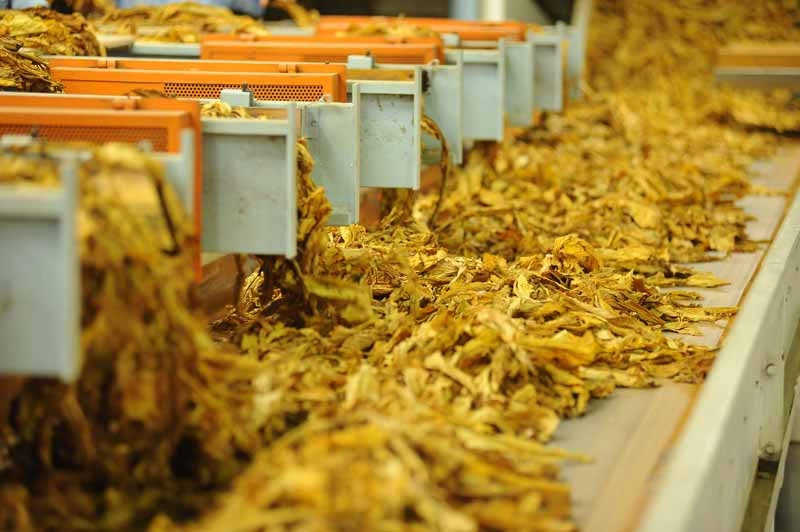
A multimillion dollar tobacco waste processing plant in Harare has shifted Zimbabwe’s tobacco story from one of raw leaf exports to high tech value addition and green industrialisation, with authorities hailing it as a game changer for farmers, exporters and the wider economy.
Backed by Indian investor African Extracts Private Limited, the plant is the first of its kind in Africa and only the third in the world, specialising in extracting nicotine from tobacco waste that previously held little or no commercial value.
Tobacco Industry and Marketing Board acting chief executive Emmanuel Matsvaire says the facility plugs directly into Government’s drive to increase tobacco value addition from about 10 percent of output to 30 percent, transforming the sector from a primary commodity producer into a value adding hub.
Instead of being burnt or dumped, tobacco scrap and stems will now feed into the plant where crude nicotine is extracted for export mainly to Europe, feeding industries such as pharmaceuticals, agro chemicals and specialised pest control. The waste stream that remains after extraction will be converted into organic fertiliser and soil conditioners, offering farmers a cheaper, environmentally friendly alternative to imported fertilisers.
African Extracts is currently processing about 20 tonnes of tobacco waste per day, with a target of 1 200 tonnes per month as supply chains stabilise. At full throttle, the plant is expected to create hundreds of direct and indirect jobs in collection, logistics, processing and support services, while also putting money back into the pockets of growers who will now earn from parts of the crop that used to be thrown away.
Company executives say the investment comes with a strong technology transfer and training component, with local technicians and young professionals being capacitated to operate and maintain sophisticated extraction equipment. For policy makers, that combination of jobs, exports and skills firmly aligns the project with Vision 2030 targets on industrialisation, value chain development and climate smart production.
Beyond tobacco, the model positions Zimbabwe as a regional hub for processing agricultural waste into high value industrial inputs, signalling a quiet but significant shift in how the country leverages its agro based economy in an era where sustainability and circular value chains increasingly determine competitiveness.