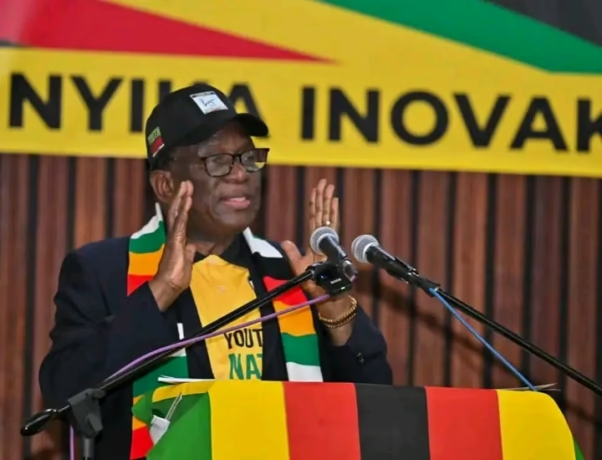
Vice President Dr Constantino Chiwenga has strongly condemned the post-election violence that erupted in Tanzania, describing it as archaic and wholly unacceptable in the context of twenty-first century political contestation. Speaking during an official visit in Dodoma, he expressed Zimbabwe’s deep concern over the unrest in what he described as a sisterly republic, recalling Tanzania’s historic and enduring role in supporting Zimbabwe’s struggle for independence. Chiwenga’s remarks were delivered at a time when the East African nation was navigating the aftermath of contentious elections, highlighting the fragile nature of democratic transitions in the region and the imperative for leaders to uphold peace and stability above partisan interests.
The Vice President’s condemnation carries significant diplomatic weight, reflecting Zimbabwe’s commitment to promoting peaceful political processes both at home and across the Southern African region. By framing the unrest as a challenge to the values of modern democracy, Chiwenga positioned Zimbabwe as an advocate for governance grounded in dialogue, tolerance, and respect for institutional norms. His words also signal the importance Zimbabwe places on maintaining regional stability, recognising that turmoil in neighbouring countries can have profound cross-border implications for trade, migration, and collective security.
In highlighting the violence in Tanzania, Chiwenga drew attention to the broader obligations of African leaders to ensure that political competition does not degenerate into chaos. His emphasis on the unacceptable nature of such unrest reflects a conscious effort to set a standard for peaceful contestation, encouraging leaders and citizens alike to prioritise unity and development. By invoking the historical bonds between Zimbabwe and Tanzania, the Vice President reinforced a narrative of solidarity that transcends political divisions, reminding regional stakeholders of the shared responsibility to uphold democracy and protect the gains of past liberation struggles.
The comments also offer an opportunity for Zimbabwe to project its diplomatic posture within Southern Africa and the wider African Union framework. As countries grapple with the challenges of democratic consolidation, statements like Chiwenga’s underline the expectations that member states will safeguard political stability, respect electoral outcomes, and resolve disputes through lawful and nonviolent means. For Zimbabwe, there is an implicit message that promoting peace abroad aligns with national interests, reinforcing the country’s image as a responsible regional actor committed to development and good governance.
Furthermore, Chiwenga’s intervention encourages reflection on the role of leadership in preventing violence and promoting social cohesion. In a region where political competition has at times been marred by unrest, such declarations are more than ceremonial; they are calls to action for governments to strengthen institutional frameworks, engage in constructive dialogue, and cultivate inclusive political cultures. By publicly condemning the Tanzanian post-election violence, Zimbabwe is reaffirming its commitment to regional norms, while implicitly holding itself and its neighbours to the same standards of accountability and peaceful political conduct.
Overall, Vice President Chiwenga’s remarks resonate beyond Tanzania, serving as both a warning and a guidepost for the Southern African region. They underscore the imperative of rejecting violence as a tool of political expression and highlight the enduring need for states to pursue democratic ideals through consensus, respect, and mutual understanding. In doing so, Zimbabwe positions itself as a nation that values historical solidarity, regional cooperation, and the advancement of democratic principles as essential pillars for sustainable development and collective prosperity.