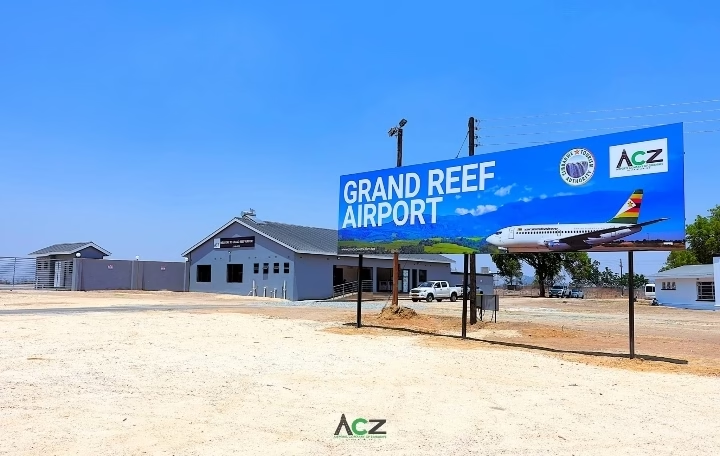
The unveiling of the new Grand Reef Airport in Mutare has ushered in a defining moment for the Eastern Highlands and Zimbabwe’s aviation sector. The development reflects a major milestone in the Airports Company of Zimbabwe’s (ACZ) ongoing transformation under the National Development Strategy 1 (NDS1), as it positions itself for an even more ambitious phase under NDS2.
Strategically located to connect the Eastern Highlands with both domestic and international destinations, the Grand Reef Airport is set to revolutionize air connectivity and regional trade. The project embodies the government’s vision of balanced provincial development, where air transport becomes a driver of tourism, investment, and economic growth.
The airport’s opening comes as the ACZ continues to record a 9.73 percent increase in total annual passenger movement across the country’s airports, reflecting growing demand for air travel and confidence in the sector. With its modern facilities and improved accessibility, Grand Reef is expected to contribute significantly to these figures by serving as a gateway to the Eastern Highlands’ prime tourist attractions such as Nyanga, Vumba, and Chimanimani.
Beyond tourism, the airport presents new prospects for agribusiness exports, conferencing, and trade linkages. Its establishment will facilitate faster movement of goods, enhance regional integration, and attract investment in hospitality and logistics, key pillars for the province’s industrialization agenda.
The expansion aligns with ACZ’s Master Plan to exponentially grow airport capacity nationwide, following the successful upgrade of the Robert Gabriel Mugabe International Airport from a handling capacity of 2.5 million to 6 million passengers annually. Grand Reef stands as the next chapter in that national modernization journey, reflecting Zimbabwe’s commitment to creating a high-capacity, technology-driven aviation network.
Ultimately, the Grand Reef Airport is more than just an infrastructure project, it is a symbol of renewed optimism and forward momentum in Zimbabwe’s economic transformation. It speaks to a broader national vision where connectivity becomes the bridge to opportunity, positioning the Eastern Highlands as a key player in the country’s growth story.