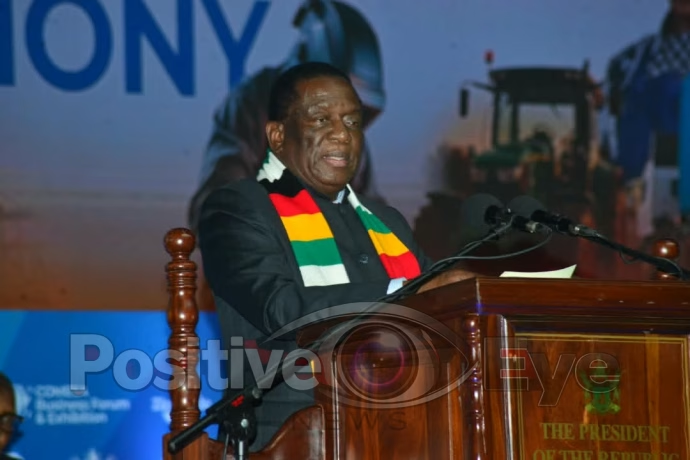
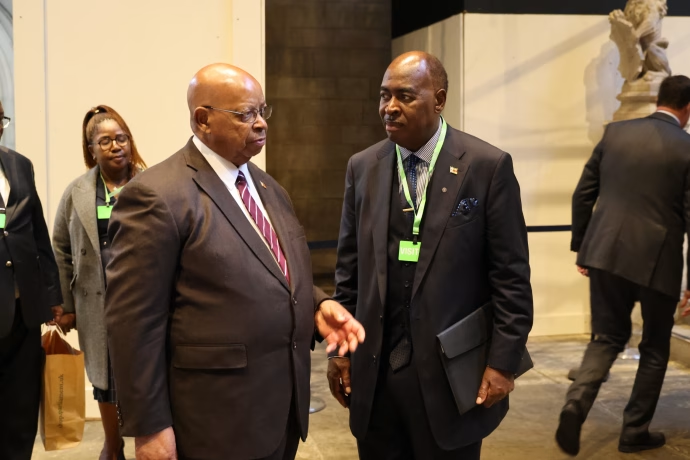
Victoria Falls, already famed as a natural wonder, took on an added significance this past week as it played host to the 57th Plenary Assembly of the SADC Parliamentary Forum (SADC PF). Beneath the spray of the Zambezi and the rhythmic hum of Parliamentarians exchanging ideas, the event marked not just a gathering of leaders but a dynamic laboratory for the future of governance in Southern Africa.
This wasn’t just another conference with neat speeches and polite applause. It was a collision of ambitions, aspirations, and sometimes hard truths, about technology, gender, governance, and the role of parliaments in a rapidly changing world. The Assembly’s theme, “Harnessing Artificial Intelligence (AI) For Effective and Efficient Parliamentary Processes,” encapsulated the urgency: How can the region’s legislatures avoid being left behind by the Fourth Industrial Revolution, while also safeguarding rights and democratic values?
AI’s promise was the golden thread weaving through the week’s sessions. Parliamentarians and experts dissected the potential of AI to transform slow, paper-heavy parliamentary processes into agile, transparent systems that better serve citizens. Yet, beneath the enthusiasm lay a cautionary tale: AI’s power comes with responsibilities. Concerns about ethics, data privacy, cybersecurity, and the preservation of democratic principles loomed large. It was a delicate dance between embracing progress and avoiding the pitfalls of unchecked technological adoption.
Victoria Falls offered more than just talk. The Plenary Assembly’s agenda was rich and broad, reflecting a region grappling with real-world challenges as it seeks to modernise. Beyond AI, delegates engaged deeply with issues of gender, youth, health, human rights, and regional integration. The presence of 13 member parliaments, alongside observers from the Pan-African Parliament, the Commonwealth Parliamentary Association, and other partners, underscored the shared commitment to collective progress, even as Mauritius and Tanzania’s absences hinted at the complexities of regional unity.
The week’s discussions revealed a region at a crossroads: on one hand, remarkable steps toward parliamentary transformation, on the other, persistent gaps that risk undermining that progress. For example, the signing of the Agreement Amending the SADC Treaty by 13 countries signals a bold leap towards establishing a fully-fledged SADC Parliament. Yet, the awaited signatures from Madagascar and Mauritius serve as a reminder that integration is a journey, not a destination.
Zimbabwe’s own story was front and center, with its Speaker, Advocate Jacob Mudenda, celebrated for his decade-long leadership of the SADC PF Transformation Lobby Group. His efforts to guide the Forum towards regional parliamentary status are both symbolically and practically significant. Zimbabwe’s pioneering AIDS Levy and ISO 9001:2015 certified Parliament set examples that resonated with delegates seeking best practices that marry innovation and governance.
The Plenary’s pivot towards gender equality was equally striking. The Regional Women Parliamentary Caucus, led by Hon. Helen Pushie Manyeneng, challenged the region to embrace gender-responsive budgeting, strengthen data systems, and foster male allyship. These are not abstract commitments; they reflect a growing realisation that gender equality is fundamental to sustainable development. Meanwhile, the Southern Africa Youth Parliament’s representative, Hon. Angela Nokubatha Dube, spoke with refreshing candor about the need to adopt a SADC Youth Protocol and invest in the region’s most valuable asset, its young people.
The Assembly’s resolutions reflected the seriousness of these conversations. Motions on cybersecurity, child marriage, food security, and the link between sexual and reproductive health and climate change showed a holistic approach to governance that recognises interconnected challenges. These aren’t isolated issues, they’re threads in a complex tapestry that requires bold, coordinated action.
One particularly transformative resolution was the call to develop a SADC Model Law on AI, a forward-thinking step that aims to provide regional guidance on harnessing technology responsibly. The urgency was palpable; the proliferation of foreign AI tools across member states risks deepening digital dependency and undermining local agency. Hence, the Assembly’s call to collaborate with regional universities signaled a commitment to homegrown solutions that reflect SADC’s unique needs.
Equally thought-provoking was the embrace of the Whole-of-SADC Enterprise Architecture (WoSEA), a strategic vision for a digitally integrated region. The idea is ambitious but essential: harmonise digital services, share infrastructure, and align policy frameworks to create a seamless governance ecosystem. It’s a roadmap that, if realised, could transform SADC from a patchwork of national systems into a digitally empowered region that leverages AI and emerging technologies to drive inclusive growth.
The Assembly didn’t shy away from the hard topics either. The stark reports on prison conditions revealed a sobering reality: vulnerable groups, including women, juveniles, and children of incarcerated mothers, remain at risk in correctional facilities that often fail to meet even basic human rights standards. The Assembly’s insistence on gender-sensitive, trauma-informed healthcare and robust parliamentary oversight underscored a region determined to bring dignity and accountability to every corner of its justice systems.
Importantly, the Plenary’s reflections on regional peace and diplomacy, particularly in the Democratic Republic of Congo, showed that even in an era of digital disruption, the timeless challenges of conflict resolution remain central to SADC’s identity. The Assembly’s reaffirmation of support for the DRC peace process highlighted the region’s commitment to solidarity and dialogue.
In the end, what made the 57th Plenary Assembly memorable was its willingness to tackle complexity head-on. It wasn’t a talk shop. It was a testament to a region wrestling with how to integrate technology, democracy, and human rights into a cohesive, inclusive vision for the future. The resolutions passed were not just administrative tasks but potential milestones on the journey towards a SADC that is technologically savvy, gender-responsive, and committed to leaving no one behind.
As the delegates packed their bags and Victoria Falls resumed its quiet rhythm, one thing was clear: the conversations that happened here would echo far beyond the conference halls. The 57th Plenary Assembly was a reminder that Southern Africa’s parliaments are not just observers of change, they are its architects. And in that realisation lies the promise of a region that dares to imagine, and build, a brighter, more inclusive future.