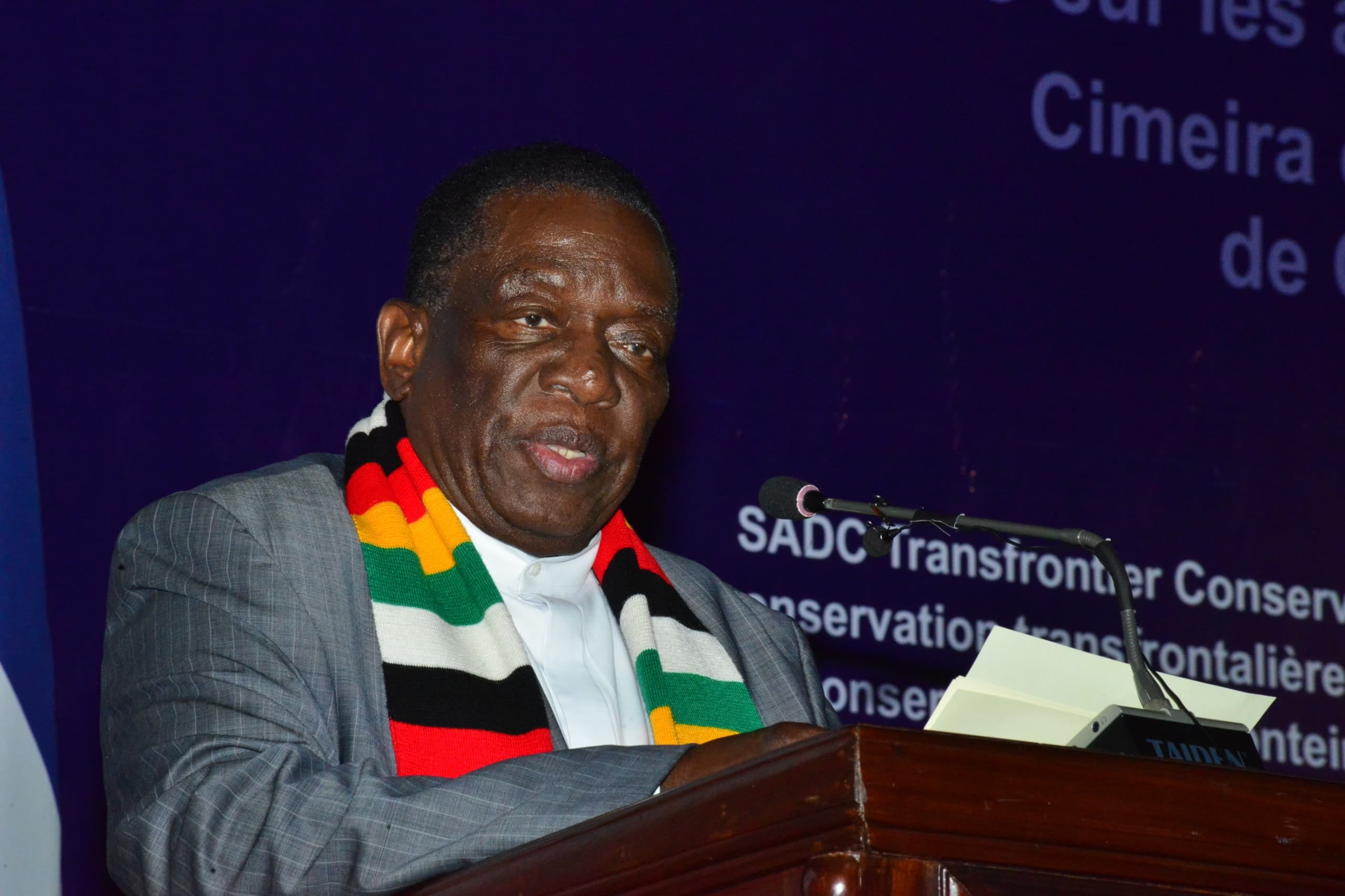
In a defining moment for Southern Africa’s environmental and developmental agenda, the President of the Republic of Zimbabwe and Chairperson of SADC, His Excellency Dr. Emmerson Dambudzo Mnangagwa, officially opened the inaugural SADC Transfrontier Conservation Areas (TFCAs) Summit in Harare on 23 May 2025. The summit marked 25 years of the SADC TFCA Programme and drew Heads of State, Ministers, former leaders, diplomats, conservation experts, community leaders, international partners, and over 500 delegates from across the region and beyond. In his opening address, President Mnangagwa set the tone for the summit by commending the region’s collective progress in advancing sustainable conservation and transboundary cooperation. He noted the establishment of 13 functional TFCAs and five more at conceptual stage, covering seven percent of the SADC region’s surface area and serving as safe havens for biodiversity, wildlife corridors, and zones of regional integration and economic opportunity.
President Mnangagwa underscored that conservation must be people-centred, inclusive, and anchored in socio-ecological harmony, with communities, youth, women, and the private sector playing central roles. He urged member states to strike a balance between development and ecological protection through innovation, science-based solutions, and resilient financing models. The President highlighted Zimbabwe’s groundbreaking achievement in launching the world’s first blockchain-based National Carbon Registry and establishing new carbon market regulations, which he described as a bold move towards climate-smart development and global leadership in sustainability and transparency.
The Summit served as both a commemoration and a call to action. It celebrated the visionary leadership that birthed the TFCA Programme, paying tribute to pioneers such as former Presidents Dr. Festus Mogae of Botswana and Dr. Thabo Mbeki of South Africa, while reaffirming the region’s commitment to the conservation agenda. The Chairperson of SADC, President Mnangagwa, was applauded for galvanising renewed momentum around TFCAs, positioning them as critical instruments of peace, biodiversity preservation, regional unity, and socio-economic development. In a show of solidarity, the Summit congratulated Zimbabwe for successfully hosting both the TFCA International Conference and the Heads of State Summit, noting the impressive participation of more than 30 exhibitors and diverse stakeholders.
A series of key resolutions emerged from the Summit. These included the urgent need to enhance cross-border conservation financing through carbon markets, biodiversity offsets, eco-tourism models, green bonds, and Public-Private Partnerships. Member states were urged to support communities through benefit-sharing mechanisms and to adopt legislation addressing human-wildlife conflict. The Summit also called for full implementation of the SADC Law Enforcement Anti-Poaching Strategy (LEAP) to curb wildlife crime and promote multi-level cooperation in safeguarding natural heritage. Recognising the strategic importance of marine and coastal ecosystems, the Summit encouraged the development of marine TFCAs and the operationalisation of the SADC Blue Economy Strategy to sustainably harness oceanic resources in sectors such as tourism, fisheries, and maritime transport.
In a further push to promote regional integration and intra-African travel, the Summit commended five member states—Angola, Mozambique, Namibia, South Africa, and Zimbabwe—for agreeing to pilot the SADC Tourism UNIVISA, a regional travel document expected to boost tourism, trade, and movement within the bloc. The Summit acknowledged that tourism, conservation, and climate finance can collectively drive employment, grassroots development, and climate resilience if aligned with inclusive governance and transparency.
President Mnangagwa’s leadership throughout the summit was widely recognised as he reaffirmed that conservation transcends borders, politics, and economies. He called on the international community to take note of the progress made by the SADC region and support its efforts through cooperation, investment, and fair trade frameworks that respect Africa’s natural and human capital. “Let this summit reaffirm our commitment to leaving no one and no place behind,” said the President, as he officially declared the SADC TFCA Summit open.
As Southern Africa faces growing climate challenges, the 2025 TFCA Summit stands as a beacon of unified purpose, with leaders embracing a future of shared responsibility, sustainable development, and ecological pride. The message from Harare is clear: conservation is not just about protecting nature—it is a strategy for peace, prosperity, and a resilient African future.