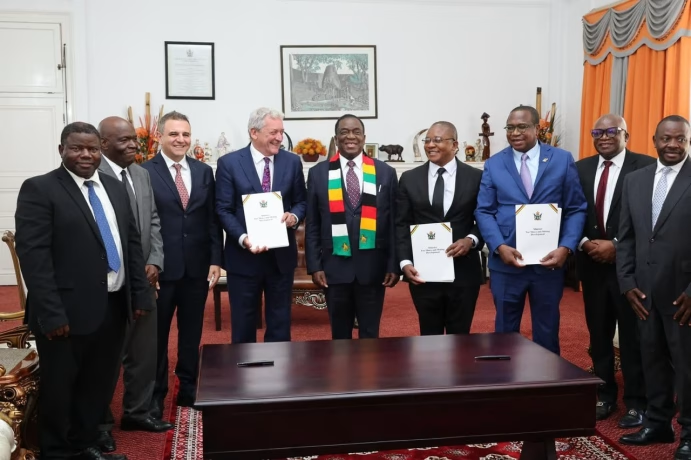
The election of the Republic of Zimbabwe as the incoming Vice Chair of the Common Market for Eastern and Southern Africa (COMESA) marks a major diplomatic breakthrough for the nation. This milestone affirms Zimbabwe’s rising influence in regional economic affairs and its growing leadership role in shaping Africa’s collective development agenda. The announcement was made during the COMESA Heads of State and Government Summit held in Nairobi, Kenya, a gathering that brought together regional leaders to deliberate on the future of integration, trade, and industrial cooperation.
Recently Zimbabwe through His Excellency President Dr ED Mnangagwa was the Chair of the Southern Africa Development Community (SADC). The country’s election comes at a pivotal time when Africa is intensifying efforts to strengthen regional trade frameworks and overcome barriers to economic growth. The Summit’s central theme focused on unlocking COMESA’s full potential by addressing non-tariff barriers, infrastructure gaps, and policy inconsistencies that continue to limit intra-regional commerce. Member states reaffirmed their commitment to deepening the implementation of the COMESA-EAC-SADC Tripartite Free Trade Area and advancing the African Continental Free Trade Area (AfCFTA), both of which seek to create a seamless and competitive African market.
During deliberations, the President underscored the importance of translating political will into practical action, urging member states to enhance connectivity through modern infrastructure, promote value addition, and strengthen trade facilitation mechanisms. His call resonated with the collective aspirations of the region to transform COMESA from a policy-driven body into a results-oriented platform that delivers tangible benefits for its people.
Analysts note that the President’s assumption of COMESA leadership is a reflection of confidence in Zimbabwe’s transformative vision under the Second Republic. Through the country’s focus on re-engagement, industrialisation, and economic reform, Zimbabwe has demonstrated that national renewal and regional solidarity can coexist as complementary goals. The President’s leadership is expected to inspire a new era of cooperation that prioritises inclusive growth, digital transformation, and sustainable industrial development.
The decision to have Zimbabwe host the next COMESA Summit presents a significant opportunity for the country to showcase its economic resilience and diplomatic progress. It is also expected to strengthen investment relations, open new trade avenues, and reinforce Zimbabwe’s position as a regional hub for dialogue, policy innovation, and business collaboration. Hosting the summit will allow the nation to further highlight its infrastructure advancements, agricultural modernisation efforts, and commitment to regional value chain integration.
Stakeholders across the region have commended the President’s balanced approach to leadership, noting that his emphasis on collective progress aligns with COMESA’s founding vision of shared prosperity. They have also underscored that resolving trade bottlenecks and strengthening policy harmonisation will be key priorities under his tenure. For Zimbabwe, this role offers a platform to amplify its achievements under Vision 2030, particularly in promoting industrial growth, innovation, and inclusive participation in continental trade.
Meanwhile, the President has since returned home, where he was welcomed at the Robert Gabriel Mugabe International Airport by Vice Presidents General (Rtd) Dr Constantino Chiwenga and Colonel (Rtd) Kembo Mohadi, Cabinet Ministers, Service Chiefs, and senior government officials. His return marks the beginning of preparations for hosting the forthcoming COMESA Summit, a task that will demand both strategic coordination and diplomatic engagement.
In the wider continental context, the President’s leadership of COMESA represents both recognition and responsibility. It is recognition of Zimbabwe’s renewed standing in international affairs and responsibility to drive regional integration that is inclusive, innovative, and resilient. As Africa advances toward economic unification through AfCFTA, Zimbabwe’s stewardship of COMESA will help shape the regional foundations necessary for a prosperous, self-reliant continent.
Ultimately, this development symbolizes the success of Zimbabwe’s diplomatic re-engagement policy and its restored voice in continental leadership. Under the stewardship of the President of the Republic of Zimbabwe, COMESA enters a new chapter of cooperation and transformation, one anchored in unity, innovation, and shared progress for all member states.