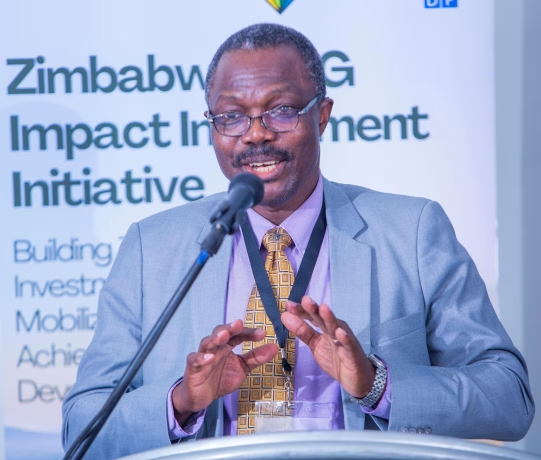
This development follows a high-level multi-stakeholder dialogue hosted during the Zimbabwe International Trade Fair (ZITF) in Bulawayo, focusing on unlocking the economic potential of a sector that already contributes approximately 60% to the national Gross Domestic Product (GDP).
The discussions, led by the Ministry of Women Affairs, Small to Medium Enterprises Development, and supported by key economic ministries and private sector actors, mark a crucial policy turning point. For years, SMEs—especially those owned and operated by women—have operated under heavy compliance burdens, limited financial access, and inflexible tax regimes. The dialogue demonstrated broad consensus that Zimbabwe’s tax policy needs to move from being extractive to developmental.
Minister Monica Mutsvangwa underscored the urgency of dismantling rigid bureaucratic compartments that hinder entrepreneurial growth. “We brought in ministries to look at the fiscal barriers we have. We are identifying and reviewing policies to open space for growth,” she said. Her remarks suggest an impending shift toward cross-ministerial coordination to align fiscal, trade, and enterprise development policies.
The Confederation of Zimbabwe Industries (CZI), represented by CEO Ms Sekai Kuvarika, highlighted that policy segmentation and tax relief tailored to enterprise size and growth trajectory are critical. “We need to align to the fact that women-led businesses must be allowed some leeway on taxes as they grow,” she noted. This recommendation reflects an acknowledgment that uniform tax application across enterprises fails to reflect the diverse operating realities of SMEs.
From a developmental standpoint, the UNDP’s Tax for SDGs National Coordinator, Mr Melusi Tshuma, affirmed the role of tax systems in not only revenue collection but also in facilitating inclusion. “SMEs are a key pillar, and they operate with limited funds. We are working with the Ministry of Finance to explore mechanisms that reduce tax pressure while bringing more into the formal economy,” Tshuma said.
What emerges from the dialogue is a policy consensus: Zimbabwe’s current tax environment needs to be adaptive, inclusive, and catalytic. A restructured framework—potentially including tax thresholds, grace periods, and incentives for formalisation—could significantly improve the survival and scaling rates of women-led businesses.
The wider implication of this initiative is that unlocking the growth of women-led SMEs is not only a gender equity imperative but also a macroeconomic strategy. As Zimbabwe pursues its Vision 2030 goals, empowering women entrepreneurs will be key to broadening the tax base, increasing employment, and achieving more inclusive economic resilience. The real test will lie in translating this policy momentum into legislative reform, simplified procedures, and transparent implementation across ministries.