As the Grain Marketing Board (GMB) nears completion of its silo expansion project in Kwekwe, a critical question arises: is this the long-term answer to Zimbabwe’s recurring grain storage and food security challenges? The ambitious project—part of a nationwide plan to erect 14 new silo sites—signals a serious shift by the Second Republic toward securing the country’s agricultural future. But beyond the impressive infrastructure lies a deeper conversation about sustainability, efficiency, and long-term impact.
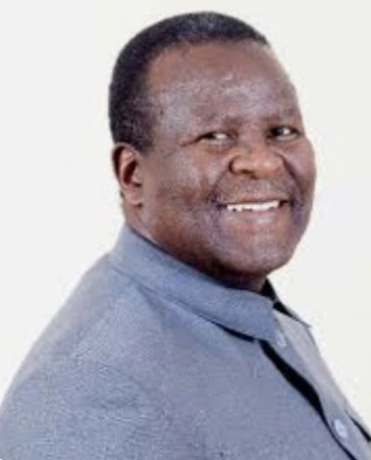
The Kwekwe depot is now in its final phase, with seven new silos featuring cutting-edge continuous grain drying mechanisms. These advanced driers—capable of handling up to 200 tonnes of grain per hour—represent a significant technological leap from older models that process 28 tonnes in five hours. According to the Minister of Lands, Agriculture, Fisheries, Water and Rural Development, Dr Anxious Masuka, this will allow farmers to harvest grain with up to 24% moisture and have it dried efficiently on-site, bridging the gap between winter and summer cropping seasons.
This enhancement alone could improve post-harvest handling across the Midlands and surrounding provinces, reducing losses caused by delayed drying and poor storage. Additionally, the integration of environmentally friendly dust removal systems and automated ventilation to prevent stack burn suggests that the government is not only prioritising capacity but also grain quality and safety.
However, the strategic scope of the silo programme goes far beyond Kwekwe. With additional construction sites in Beitbridge, Gwanda, Lupane, Gokwe, Masvingo and Timber Mills Mutare, the initiative is deliberately decentralising grain storage. Each of the 14 sites will add 56,000 metric tonnes to the country’s silo system—raising the national strategic reserve capacity to an anticipated 1.5 million metric tonnes. In good rainfall seasons, grain can be moved from surplus-producing areas to silos in different regions, effectively redistributing food security and reducing regional pressure.
But while the numbers are promising, the success of this expansion hinges on more than steel and cement. Questions around operational capacity, maintenance, logistical coordination, and long-term financing remain. Silo systems have historically suffered from underutilisation, corruption, and mechanical failure due to poor upkeep and management. Will the new silos be adequately staffed and serviced? Can GMB and local authorities ensure fair and efficient access for farmers, especially smallholders?
Moreover, while this infrastructure boosts physical capacity, it must be supported by consistent policy incentives for production. Strategic reserves only matter if there is enough surplus to fill them. That requires timely inputs, extension services, access to markets, and price guarantees that motivate farmers to grow and sell.
The GMB Kwekwe project is undoubtedly a major milestone in Zimbabwe’s agricultural development. But its full value will only be realised if it is embedded in a broader ecosystem that supports productivity, transparency, and farmer confidence. As the country moves toward its Vision 2030 targets, the silo expansion is a bold and necessary investment—but it will take more than construction to ensure that Zimbabwe’s grain is not only grown and harvested but protected, preserved, and distributed wisely.