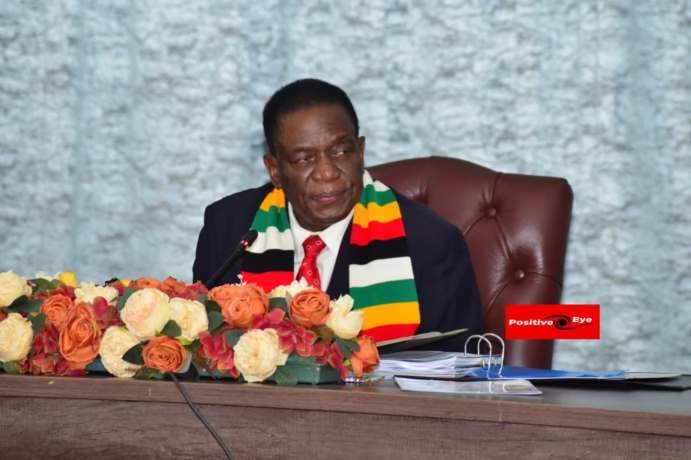
Today, the Southern African Development Community (SADC), led by its Chairperson President Emmerson Mnangagwa, has united in calling for the removal of US-imposed sanctions on Zimbabwe.
This appeal comes as SADC and Zimbabwe’s ruling party, ZANU PF, gather at Bulawayo Large City Hall for the ZANU PF People’s Annual Conference. A petition condemning the sanctions was also signed by ZANU PF’s Politburo members, reinforcing the message that these restrictions are harmful to Zimbabwe’s economy and people.
Despite Zimbabwe’s resilience over the years, these sanctions have severely impacted the nation’s economic growth, restricting its ability to access international credit lines and hindering development financing under the Zimbabwe Democracy and Economic Recovery Act (ZDERA). While the US claims that the sanctions are targeted, Zimbabweans continue to feel the brunt. Recently, fire tenders procured in Belarus for Zimbabwe were impounded en route, challenging the US’s narrative that the sanctions impact only specific individuals.
In response to these challenges, the Second Republic has shown impressive resolve, driven by the same spirit of resilience that powered Zimbabwe’s independence in the 1980s. Guided by the philosophy “Nyika Inovakwa Nevene Vayo/Ilizwe Lakhiwa Ngabinikazi Labo” (The country is built by its own people), the government has prioritized critical infrastructure projects over the past six years. Notable projects like the Mbudzi Interchange, a vital transportation hub, and the Lake Gwayi-Shangani water resource in Matabeleland North, are nearing completion. These initiatives underscore Zimbabwe’s commitment to building an economically secure and self-sufficient future, despite the limitations imposed by sanctions. Public-private partnerships are also being pursued to address infrastructure gaps and secure sustainable financing.
Under its “friend to all, enemy to none” philosophy, Zimbabwe has gained new allies and strengthened bonds with longstanding partners. SADC’s establishment of Anti-Sanctions Day not only highlights Zimbabwe’s struggle but also demonstrates the region’s unity and collective determination to stand firm against external economic pressures. The removal of these sanctions is crucial for Zimbabwe to unlock its full economic potential and achieve its Vision 2030 goals.