By Aldridge Dzvene
A decade after adopting its landmark Model Law on Eradicating Child Marriage, the Southern African Development Community faces a critical implementation challenge: translating regional legislative commitments into effective national protection, adequately funded interventions and measurable improvements in the lives of vulnerable children.
This question took centre stage as the 59th Plenary Assembly of the SADC Parliamentary Forum officially opened at the Ezulwini Palazzo in the Kingdom of Eswatini on 21 November 2026, bringing together parliamentary delegations from 14 Member Parliaments under the theme, “Harnessing Political Leadership, Progressive Culture and Data to Accelerate the Eradication of Child Marriage in the SADC Region.”
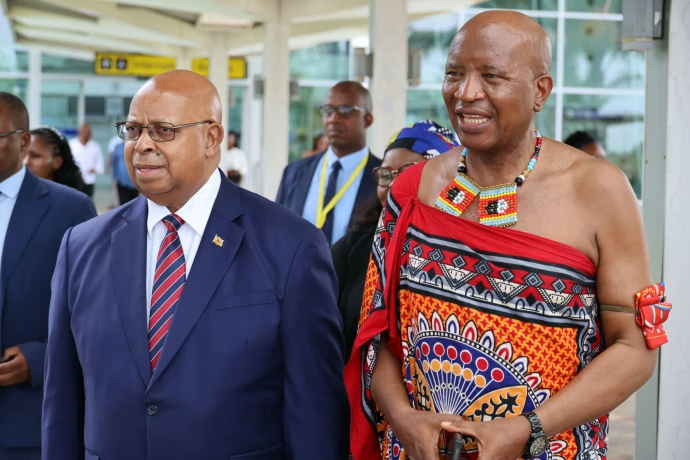
The Prime Minister of Eswatini, His Excellency the Right Honourable Russell Mmiso Dlamini, officially opened the Assembly on behalf of His Majesty King Mswati III, using his keynote address to challenge regional legislators to examine the distance between the commitments made in 2016 and the protection children are experiencing today.
The choice of Ezulwini carries particular significance. It was here in June 2016 that the Forum adopted the SADC Model Law on Eradicating Child Marriage and Protecting Children Already in Marriage. Returning to the same venue ten years later presents an opportunity to assess whether the regional legislative benchmark has translated into meaningful changes in national laws, public policy and community experiences.
Prime Minister Dlamini framed the anniversary around three fundamental questions: what protection has reached the child, what barriers remain and what must now be done with greater urgency. His address placed poverty, educational access and household vulnerability within the broader child protection agenda, arguing that legal prohibitions must be supported by social protection, quality education, livelihood opportunities, healthcare and legal assistance.
His assertion that “Physical development does not confer adulthood” reinforced the principle that the protection of children must remain grounded in their rights rather than assumptions about physical maturity or social expectations.
The economic dimension of his address is particularly important. Child marriage is not sustained by legal gaps alone. Poverty, interrupted schooling, limited livelihood opportunities and inadequate social support can create circumstances in which children become vulnerable to early marriage. Addressing these conditions requires a coordinated response that connects legislation with education, social services and economic empowerment.
The Assembly’s planned launch of the SADC Dashboard for Monitoring the Model Law on Ending Child Marriage and Protecting Girls Already in Marriage on 22 November is therefore a significant step towards strengthening regional accountability. The platform is intended to help track national implementation, identify gaps and provide legislators with evidence for assessing progress.
Its effectiveness will depend on the availability of credible, comparable and appropriately disaggregated data, as well as the willingness of national parliaments to use that information in scrutinising public programmes and budget allocations. Without this connection between monitoring and corrective action, regional commitments risk remaining declarations of intent.
Beyond child protection, the Ezulwini deliberations have also brought renewed attention to the institutional future of regional parliamentary cooperation. Prime Minister Dlamini reaffirmed Eswatini’s support for transforming the SADC Parliamentary Forum into a fully-fledged SADC Parliament, noting that the Agreement amending the SADC Treaty, which entered into force in July 2024, provided the legal foundation for advancing the process.
The transformation agenda has implications for how regional legislatures coordinate their work, deliberate on shared challenges and strengthen parliamentary cooperation. Zimbabwe is contributing to this process through the Speaker of Parliament, Hon. Advocate Jacob Francis Nzwidamilimo Mudenda, who chairs the six-Speaker Strategic Lobby Team tasked with advancing the transformation of the Forum into a fully-fledged regional Parliament. His participation in the Ezulwini Assembly places Zimbabwe within the continuing parliamentary diplomacy surrounding this institutional ambition.
Prime Minister Dlamini also outlined Eswatini’s aspiration to host a SADC University of Transformation, envisaged as an institution that would harness regional intellectual resources to address shared development challenges.
SADC Parliamentary Forum President Hon. Siteny Randrianasoloniaiko Thierry reinforced the responsibility of national parliaments to use their legislative, budgetary and oversight powers in advancing the protection of children. His emphasis on accurate data highlighted the importance of evidence in determining priorities and ensuring that public resources are directed towards interventions that produce results.
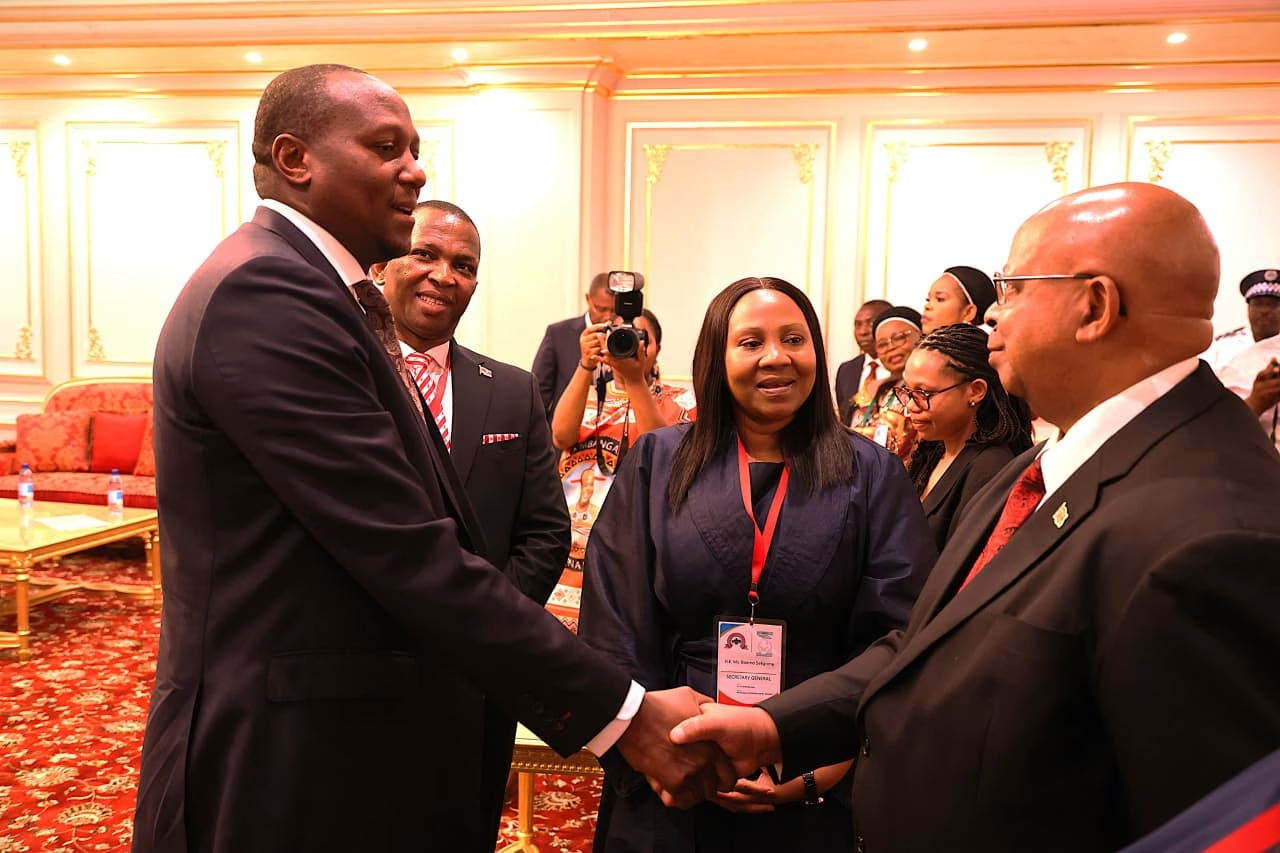
The question of representation also featured prominently. SADC Parliamentary Forum Secretary-General Ms. Boemo Sekgoma disclosed that women account for 34.7 percent of the 75 Members accredited to the Assembly, highlighting the continuing need to strengthen women’s participation in regional parliamentary institutions.
Representing the Southern Africa Youth Parliament, Hon. Thembela Msibi raised concern over youth unemployment, which she said had reached 62.5 percent in some Member States. She called for National Parliamentary Youth Caucuses to participate in policy formulation and decision-making, insisting that young people must have a meaningful voice in shaping the institutions that will determine their future.
The Assembly also heard from Speaker of the Parliament of Eswatini, Hon. Jabulani C. Mabuza, who urged delegates to exchange parliamentary best practices and strengthen institutional capacity through the implementation of resolutions. The vote of thanks was delivered by Speaker of the National Assembly of Lesotho, Rt. Hon. Tlohang Sekhamane, who commended Eswatini for its commitment to parliamentary diplomacy and regional cooperation.
The broader significance of the gathering lies in the convergence of two regional priorities: improving the delivery of existing commitments and strengthening the institutions responsible for regional cooperation. The proposed SADC Parliament represents an institutional ambition, while the monitoring dashboard offers a practical mechanism for assessing progress on a specific regional challenge.
The Assembly’s programme also includes country presentations on selected SADC Protocols, consideration of institutional and financial reports, and the election of the Forum’s President and Vice-President for the 2026–2028 term.
Ten years after the adoption of the Model Law, the region is being challenged to demonstrate that legislative cooperation can produce measurable social outcomes. The real test will be whether national institutions can close implementation gaps, commit adequate resources and ensure that children at risk receive protection before their circumstances become irreversible.
For the SADC region, the next decade must be defined not simply by the strength of its legislative commitments, but by the extent to which those commitments improve the lives and future opportunities of its children.