GOVERNMENT has approved a new package to bring informal vending in Harare’s Central Business District into a formal trading system while protecting livelihoods and expanding access to affordable, lawful trading spaces.
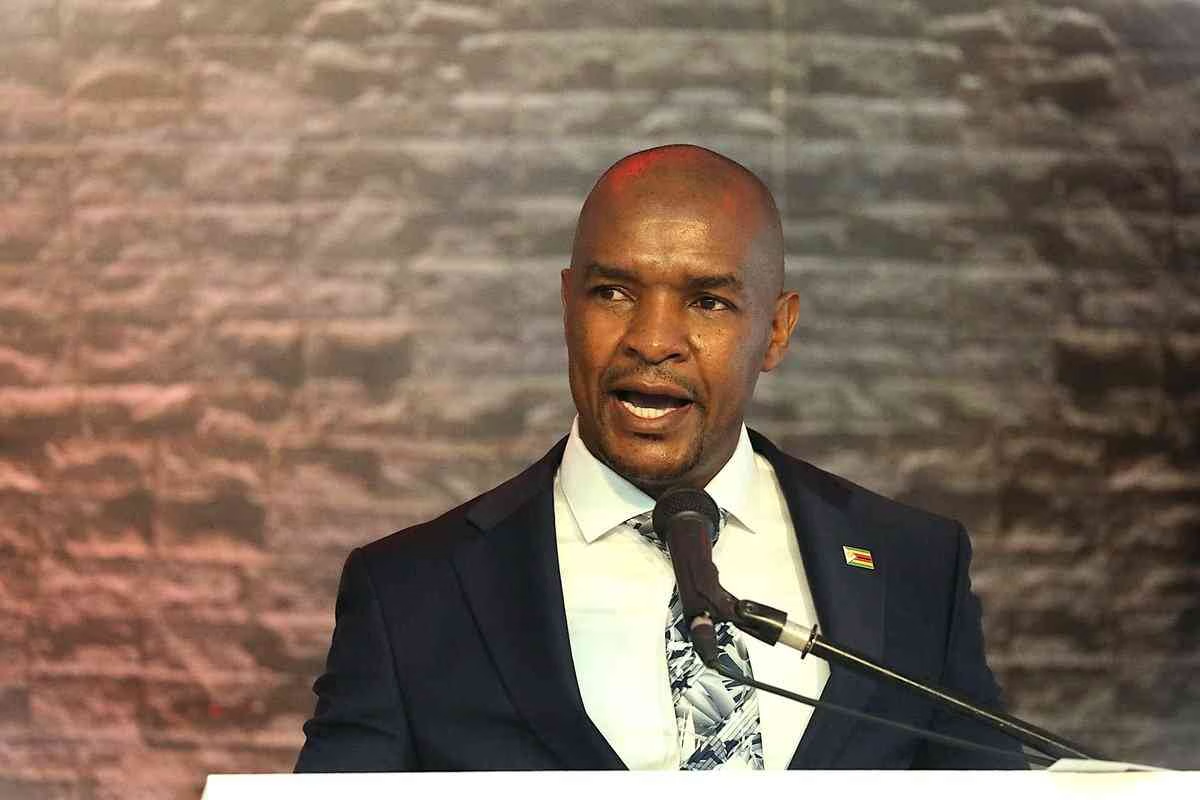
The measures, approved by Cabinet and presented by Minister of Transport and Infrastructural Development Honourable Felix Tapiwa Mhona, seek to balance enforcement with practical alternatives for thousands of people whose livelihoods depend on informal trading.
At the centre of the programme is a four-pillar framework of Legislate, Provide, Formalise and Enforce, signalling a shift towards addressing vending through infrastructure and economic inclusion alongside enforcement.
Government will accelerate the servicing of 100 identified vending sites across Harare’s suburbs, providing potable water, ablution facilities, lighting, shelter, waste management and storage.
The investment in these facilities is expected to give traders access to more decent and functional places to conduct business while helping maintain affordable points of access to everyday goods and services for residents.
A new modern satellite market will also be developed on the periphery of the CBD, creating additional formal trading capacity and reducing pressure on the city centre.
The programme will further introduce a 60-Day One-Stop Formalisation Drive, bringing Government, the City of Harare and other stakeholders together to assist traders in transitioning into the formal economy.
Formalised vendors will also be linked to financial institutions for access to working capital, potentially allowing small traders to move beyond daily survival trading and build more sustainable enterprises.
A Harare Vendors Council will be established to support co-management of trading sites and provide a structured mechanism for resolving disputes between traders and authorities.
The affordability and livelihoods dimension comes as Government seeks to manage the tension between the economic importance of informal trade and the need for a clean, safe and functional capital city.
Rather than relying solely on removal, the approved framework provides for the development of alternative trading infrastructure before and alongside enforcement, with illegal vendors to be relocated to designated sites.
A CBD Urban Management Command, chaired by the City of Harare, will oversee the “Clear, Clean, Keep” approach aimed at restoring and maintaining order in the CBD.
Meanwhile, Government is expediting the Municipal Police and Courts Bill, which is expected to strengthen municipal enforcement of by-laws and facilitate faster prosecution of municipal offences through Municipal Courts.
The Ministry of Local Government and Public Works has already commenced a 60-day clean-up and relocation exercise in Harare.
Government said measures addressing other urban challenges, including illegal transport operations, deteriorating roads and organised crime, will follow as the broader urban management programme progresses.
The policy therefore places Harare’s vending challenge within a wider economic question, how to create an orderly capital city while ensuring that people who depend on small-scale trading can continue earning, formalise their businesses and gain access to infrastructure and finance.
Further details on the immediate, medium and long-term measures will be announced and implemented by the responsible Ministry and the City of Harare.