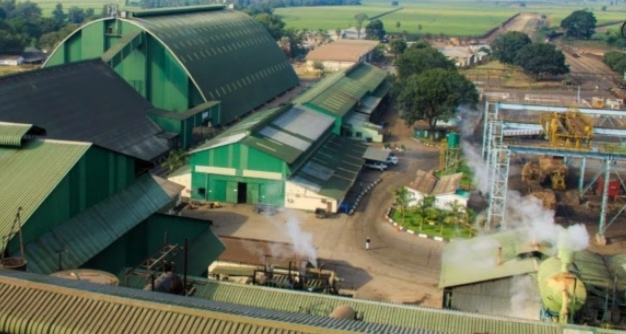
HARARE — Hippo Valley Estates Limited delivered a resilient first quarter ended 30 June 2026, underpinned by improved macroeconomic stability, robust water reserves and strong demand in the local market, even as global cost pressures and a late start to crushing weighed on first-quarter production.
The quarter was characterised by improved macroeconomic stability. Inflation remained in the single-digit range, providing a more predictable pricing environment that supported business planning, budgeting and consumer confidence. Stable exchange rates also reduced foreign currency risk, enabling businesses reliant on imported goods and raw materials to plan procurement with greater certainty.
Despite these positives, Hippo Valley continued to face increasing costs for key production inputs, particularly fuel and fertiliser. The increases were largely driven by global geopolitical tensions and supply chain disruptions that have elevated international energy prices. Higher fuel costs continue to have a cascading effect across the economy, raising transportation, logistics, manufacturing and distribution costs.
To mitigate these pressures while maintaining competitiveness, the Company remained focused on operational efficiency improvements and disciplined cost management, an approach that contributed positively to performance in the prior year.
Above-average rainfall during the 2025/2026 season enhanced resilience against future dry spells by improving river flows and replenishing dam levels. Water storage levels currently range between 95% and 100%, providing sufficient irrigation water for at least two seasons. This is particularly important given forecasts that El Niño conditions will negatively influence the 2026/2027 rainfall season with below-average rainfall and higher temperatures.
Hippo Valley said it continues to monitor weather patterns closely and has embedded climate risk planning into its agronomic calendar.
First quarter performance trailed prior year levels. Cane deliveries from own plantations and private farmers both declined by 25%, primarily due to disruptions caused by rains at the start of the crushing season. The wet conditions reduced field accessibility and affected the planned harvesting programme.
Consistent with cane supply, sugar production fell by 21% from prior year, reflecting the late start, periods of plant downtime, and reduced throughput. Despite the slow start, the company remains confident that cane deliveries will recover without further disruptions, supported by a robust cane supply system capable of meeting peak harvesting demands and improved factory reliability.
The off-crop annual maintenance programme was completed before the start of the season, providing confidence in plant reliability. Critical spares and essential components remain available to support sustained production and minimise the risk of extended equipment outages.
The company’s focus remains on reducing the risk of harvesting interruptions and minimising mill stoppages arising from cane shortages. Although the crushing season commenced later than planned, the Hippo Valley expects to reach optimal capacity with all available cane converted into sugar, supported by reliable plant operations, a consistent cane haulage system, improved operational efficiencies, and ongoing cost management initiatives.
Targeted commercial initiatives strengthened the Company’s leadership in the domestic market, with the Huletts SunSweet brand continuing to gain momentum through strong customer engagement and trade promotions.
The local market remained the cornerstone of the business, contributing 93% of total sales volumes and recording an 8% increase compared to the prior year. Total industry sugar sales for the quarter to June 2026 were 100,628 tonnes, up 3% from 97,914 tonnes in June 2025. Local sales rose 8% to 91,395 tonnes, while export sales declined 59% to 6,519 tonnes due to a slower than planned commencement of export shipments.
The domestic market continues to generate superior margins relative to export markets. While export markets remain strategically important for inventory management and foreign currency generation, the company continues to prioritise the domestic market, particularly in light of declining global sugar prices. It remains focused on expanding opportunities within regional export markets while closely monitoring global sugar markets and logistics to improve future performance.
Ongoing collaboration with regulatory authorities to combat counterfeit and non-compliant sugar products remained a strategic priority in protecting domestic market share. However, imported, down-packed, and counterfeit sugar products, together with reduced consumer spending in certain retail segments, continued to present challenges.
Revenue for the quarter remained consistent with the prior year at US$51.8 million. Although sales volumes declined during the period, this was largely offset by a more favourable product mix. Despite challenging trading conditions, the Company sustained revenue through continued production focus, ensuring adequate sugar availability to meet demand in both domestic and export markets.
The operating environment continues to be characterised by rising input costs, particularly fuel and fertiliser, which remain significant components of the production cost base. These inflationary pressures, driven by global economic disruptions, continue to place pressure on operating margins. Management remains committed to protecting profitability through a comprehensive cost management programme focused on mitigating input cost increases while maintaining operational efficiency and product quality.
Safety, Health, Environment and Governance
The Company recorded no fatalities, Lost Time Injuries, or major environmental incidents during the quarter, unchanged from the prior year, reflecting an ongoing commitment to high safety and environmental standards.
The Board continues to monitor several key risks, including rising cane procurement costs, supply chain constraints, labour cost inflation, illegal water abstractions, and ongoing Division of Proceeds litigation. Management is actively addressing these risks through cost-efficiency initiatives, operational optimisation, and ongoing stakeholder engagement. The legal challenge relating to the increase in the Division of Proceeds allocation remains before the courts.
Exchange rate stability is expected to continue, providing greater predictability for import costs and financial planning. However, the company remains exposed to the risk of input cost inflation arising from global supply chain disruptions and geopolitical uncertainty. These pressures may lead to further increases in the cost of raw materials and key inputs, potentially affecting margins if not mitigated through pricing actions, procurement efficiencies, and disciplined cost management.
Global sugar prices have weakened amid expectations of a supply surplus. Lower prices could compress margins, particularly for higher-cost producers, thereby affecting earnings and cash flows. The company undertook to continue monitoring market developments closely and implementing appropriate sourcing and cost-control measures, including initiatives under Project Zambuko, to help mitigate these risks and maintaining operational resilience.
Looking ahead, the Hippo Valley is committed to embedding sustainability into its long-term strategy. Continued investment will focus on strengthening operational and commercial resilience, improving environmental performance, supporting employees and communities, and enhancing governance practices in order to realise sustainable economic returns for stakeholders.