By Aldridge Dzvene and Godfrey Bonda
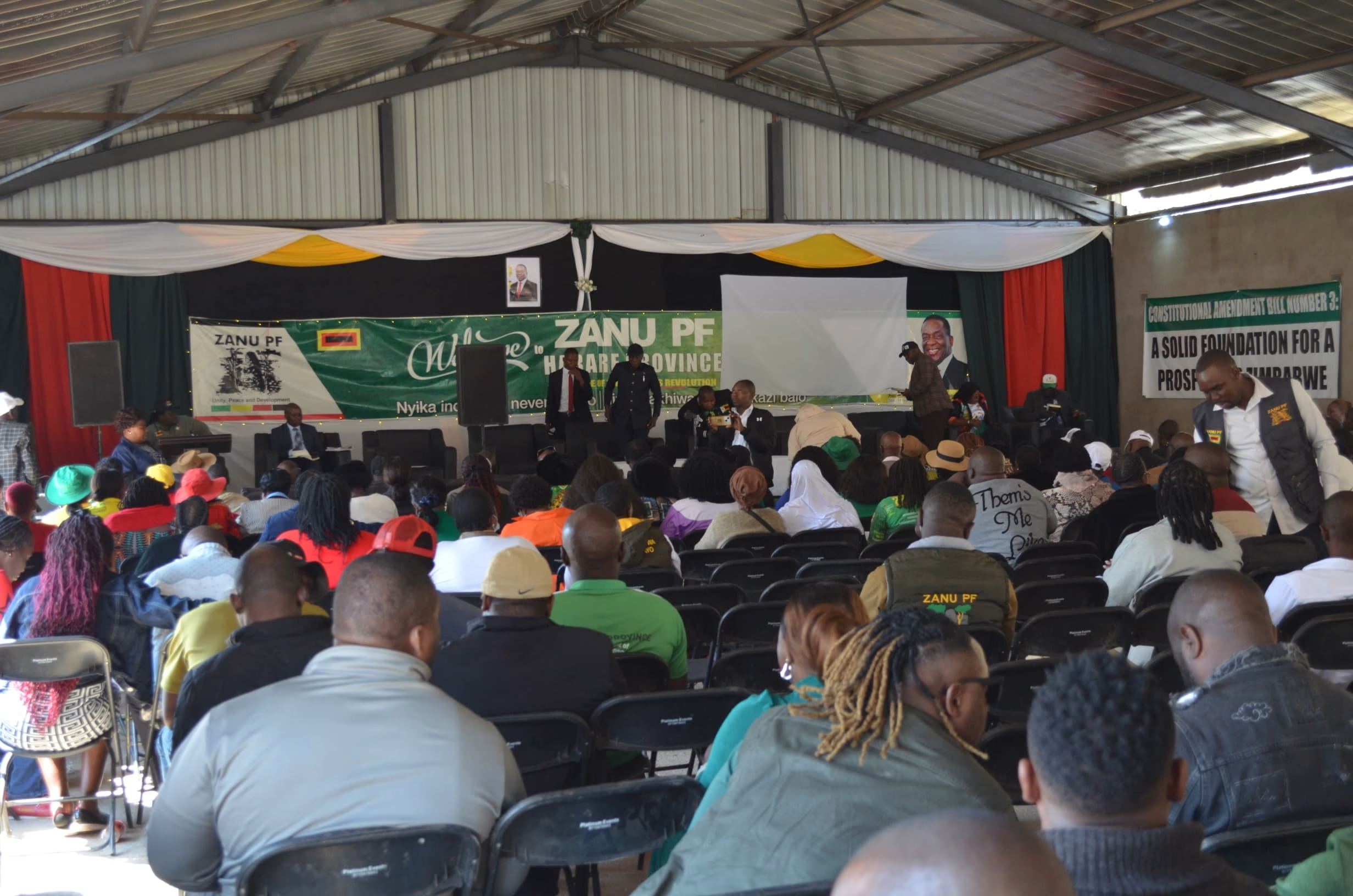
HARARE – The Harare Metropolitan Province leadership, led by Minister of State for Provincial Affairs and Devolution Senator Charles Tavengwa, has met with the ZANU PF Harare Provincial Coordinating Committee (PCC) to strengthen policy alignment between the ruling party and Government, with a focus on accelerating the implementation of national development programmes towards Vision 2030.
The engagement, held at the party’s provincial headquarters, centred on reviewing progress achieved under the National Development Strategy 1 (NDS1), outlining priorities under the National Development Strategy 2 (NDS2) and ensuring that Party policies are effectively translated into Government programmes that respond to citizens’ needs.
The meeting reflects the growing emphasis on institutional synergy between political leadership and Government structures as Zimbabwe moves from policy formulation towards accelerated implementation. The alignment seeks to ensure that national development objectives are understood, coordinated and implemented from provincial level to grassroots communities.
Representing the Harare Provincial leadership, Senator Tavengwa said Government and ZANU PF must maintain a close working relationship because development policies are derived from the Party’s vision and implemented through State institutions.
The PCC meeting highlighted that Government exists to implement policies and programmes that are aligned with the aspirations of the ruling party, particularly the attainment of Vision 2030, which seeks to transform Zimbabwe into an upper-middle-income economy.
The provincial leadership presented progress recorded under NDS1, which served as the country’s economic blueprint between 2021 and 2025, while outlining strategic areas requiring further attention under NDS2.
Among the key development areas reviewed were infrastructure development, food and nutrition security, human capital development, housing delivery, digital transformation and economic reforms.
The meeting noted that projects such as the Trabablas Interchange, Geo Pomona Waste Management Project, the upgrading of Mbare Musika and developments in Glen View demonstrate Government’s focus on modernising urban infrastructure and improving service delivery in Harare.
The Ministry of Finance and Economic Development also highlighted economic interventions undertaken during NDS1, including measures aimed at restoring macroeconomic stability through reforms such as the introduction of the Zimbabwe Gold (ZiG) currency.
From a political development perspective, the PCC engagement represents an effort to strengthen the link between policy direction and implementation. By ensuring that Party structures are informed about Government programmes, leadership seeks to improve communication, accountability and public understanding of national development initiatives.
The meeting also emphasised the need for stronger institutional coordination between Party structures and Government departments through regular reporting mechanisms and continuous engagement.
The provincial leadership agreed that translating ZANU PF resolutions into tangible development projects remains central to ensuring that communities benefit from national programmes.
As Zimbabwe transitions into NDS2, the Harare PCC meeting demonstrates the role of provincial coordination platforms in monitoring development progress, identifying implementation challenges and ensuring that Government interventions remain aligned with the broader objective of achieving Vision 2030.
The engagement further reinforces the Second Republic’s development approach, which places policy consistency, institutional coordination and grassroots participation at the centre of national transformation.