By Aldridge Dzvene
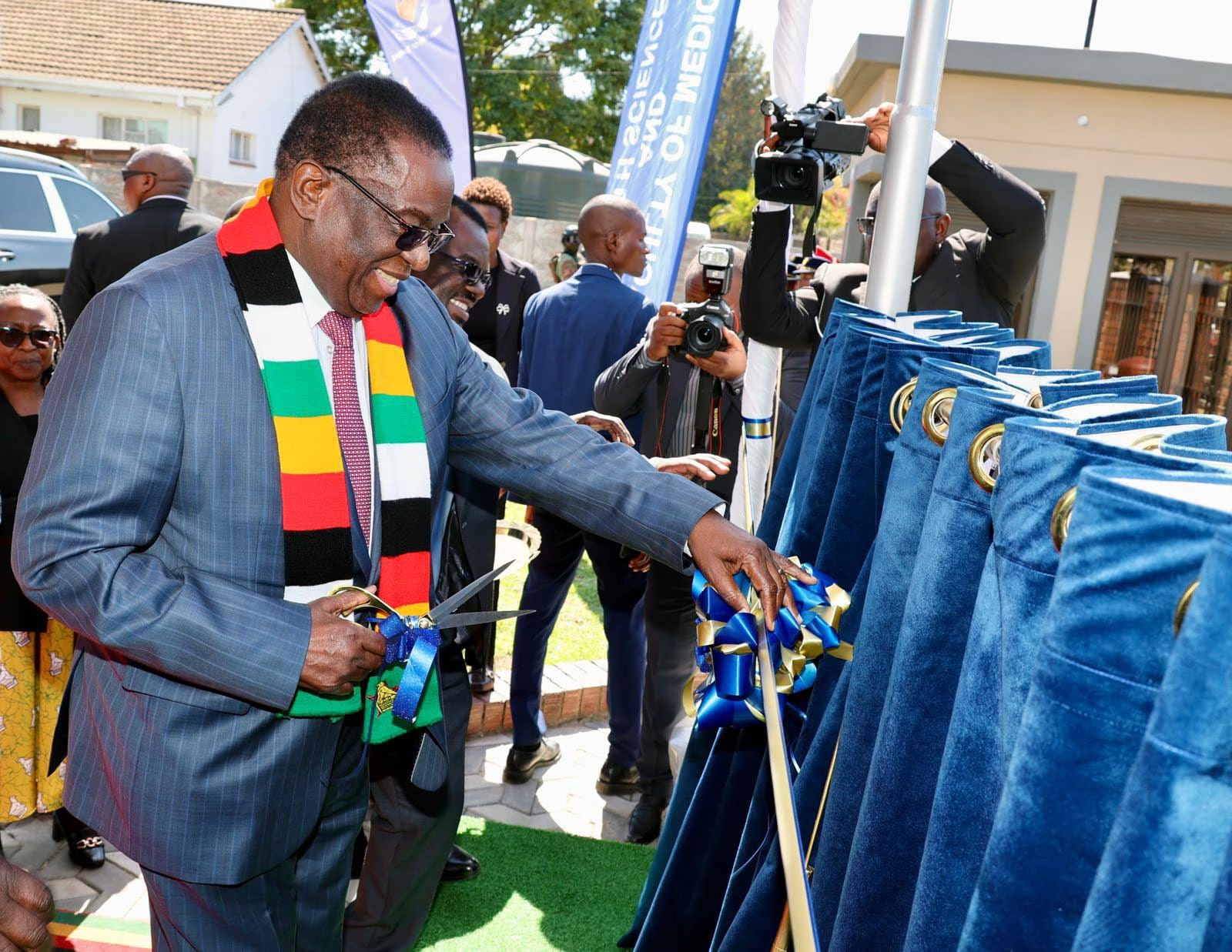
HARARE – President Emmerson Dambudzo Mnangagwa’s commissioning of the University of Zimbabwe Industrial Incubation Hub and the UZ Specialist Medical Centre marks more than the opening of two new facilities. It signals the next phase of Zimbabwe’s higher education transformation, where universities are increasingly expected to produce businesses, technologies and specialised services alongside graduates.
The two projects represent the practical evolution of the country’s Heritage-Based Education 5.0 model, which shifted universities beyond their traditional mandates of teaching, research and community service to include innovation and industrialisation. The latest commissioning demonstrates a deliberate move from research and prototype development into commercial production and service delivery.
For several years, Zimbabwe has invested in innovation hubs across state universities. Those facilities largely focused on generating ideas, supporting research and developing prototypes. The Industrial Incubation Hub in Msasa now takes that process a step further by providing a platform where university innovations can mature into commercially viable enterprises through partnerships with industry and investors. It is designed to nurture start-up companies and transform academic research into products and services capable of competing in the marketplace.
Addressing the university community, President Mnangagwa said universities must no longer remain confined to lecture rooms and laboratories but should become active participants in national transformation.
“Knowledge must now be turned into production, into goods and services, and into value for our economy,” the President said.
That philosophy reflects Government’s broader industrialisation agenda, which seeks to position institutions of higher learning as engines of economic growth capable of creating employment, fostering entrepreneurship and reducing dependence on imported technologies.
The President also highlighted opportunities for student-led start-up companies, saying universities should provide young innovators with an environment where ideas can be converted into businesses capable of contributing to national development.
Equally significant is the commissioning of the University of Zimbabwe Specialist Medical Centre, which broadens the institution’s contribution beyond education into specialised healthcare delivery.
The facility will provide oral health services, ophthalmology, trauma care and assisted reproductive services, including in-vitro fertilisation (IVF), areas that have traditionally been concentrated in the private healthcare sector and often remained beyond the financial reach of many Zimbabweans.
From a policy perspective, the medical centre addresses two strategic objectives simultaneously. It strengthens specialist training for future healthcare professionals while expanding access to advanced medical services within the public health system.
President Mnangagwa said investments in healthcare must translate into improved service delivery while reducing the need for Zimbabweans to seek specialised treatment outside the country. He also warned against practices that undermine affordable healthcare.
“Government will not tolerate the prevalence of opportunists and so-called health cartels that seek to undermine access to quality and affordable healthcare for our people,” he said.
The commissioning also reflects continuity in Government’s long-term higher education reforms. Since the introduction of Education 5.0, innovation hubs have been established across several universities to bridge the gap between academic research and industry. The latest incubation facility represents the commercial stage of that strategy, where innovation is expected to generate investment, industrial production and employment rather than remain confined to academic publications.
Taken together, the two facilities illustrate an increasingly integrated development model in which universities are expected to contribute directly to Zimbabwe’s industrialisation, healthcare modernisation and economic transformation. Rather than serving solely as centres of learning, they are being positioned as institutions capable of producing technologies, businesses, specialised services and skilled professionals that support national development objectives.
In that context, Monday’s commissioning was not simply about opening new infrastructure. It reflected Government’s effort to deepen the commercialisation of knowledge, strengthen innovation ecosystems and position higher education as a strategic pillar in Zimbabwe’s journey toward an industrialised and knowledge-driven economy.