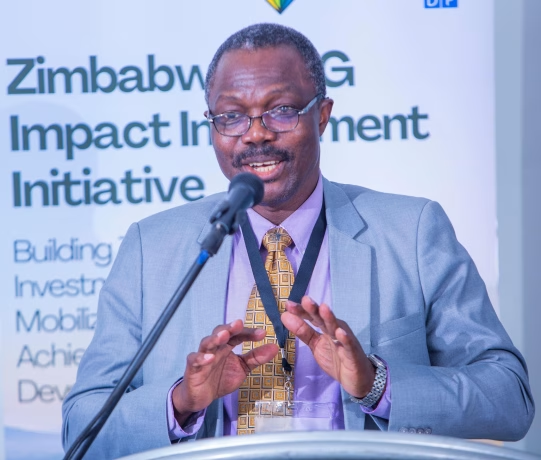
Zimbabwe Prisons and Correctional Service (ZPCS) has reaffirmed its commitment to strengthening integrated healthcare, research and regional collaboration following the successful conclusion of the 13th Zimbabwe Uniformed Forces Health Services Annual Scientific Conference, held at the Rainbow Hotel in Bulawayo.
The three-day conference was held under the theme, “Integrated Health Futures: Addressing HIV, Non-Communicable Diseases and Comorbidities in a Changing World.”
Deputy Commissioner-General Support Services, Mrs Manetswa C. Manhivi, delivered the closing remarks on behalf of the Commissioner-General of the Zimbabwe Prisons and Correctional Service, Dr Moses Cyril Ngawaite Chihobvu, who was the Guest of Honour.
In the Commissioner-General’s closing remarks, DCG Manhivi said the conference had provided an invaluable platform for scientific exchange, knowledge sharing and strengthened collaboration among the Uniformed Services in addressing emerging public health challenges.
“The health and well-being of our personnel directly influence our operational readiness, institutional resilience and our ability to effectively discharge our constitutional mandates. Investing in preventive healthcare, early diagnosis, quality treatment, health promotion and resilient health systems is therefore not merely a health imperative, but a strategic investment in national security and national development,” she said.
Reflecting on the conference theme, she noted that while Zimbabwe has made commendable progress in combating HIV, the growing burden of non-communicable diseases, mental health conditions, antimicrobial resistance, emerging infections and other comorbidities demands integrated, responsive and sustainable healthcare systems.
She urged delegates to ensure that the knowledge, innovations and best practices shared during the conference translate into practical interventions capable of improving service delivery, strengthening disease prevention and building resilient health systems within their respective institutions.
“The true success of this conference will not be measured by the quality of the presentations we have heard, but by the tangible improvements we implement within our respective institutions,” she said.
Among the key issues highlighted during the closing ceremony was the growing challenge of drug and substance abuse within society and the Uniformed Services.
She called for stronger prevention programmes, sustained awareness campaigns, early intervention and improved rehabilitation services, proposing that the Uniformed Services consider establishing a Zimbabwe Uniformed Forces Drug Rehabilitation Centre to provide treatment, rehabilitation and psychosocial support through a shared and collaborative approach.
She also commended an innovative proposal advocating for the establishment of an entomology laboratory to strengthen vector surveillance and public health preparedness, describing research and innovation as critical pillars in building resilient health systems capable of responding to future health threats.
The closing remarks further advocated for the inclusion of all Uniformed Forces from across the SADC region in future editions of the conference to broaden knowledge exchange, strengthen regional cooperation and enhance the sharing of best practices in addressing common health challenges.
Throughout the conference, the Zimbabwe Prisons and Correctional Service made significant academic contributions through the presentation of four research papers addressing key public health issues affecting correctional settings and the wider community.
The studies examined healthcare providers’ perspectives on integrating HIV and non-communicable disease services for older adults living with HIV, the relationship between criminal recidivism, substance use and mental illness, the prevalence of hypertension and blood pressure screening among people living with HIV, and disability arising from mental health conditions.
These presentations complemented discussions under key thematic areas, including mental health, substance use and behavioural health, equity and innovative healthcare delivery models, diabetes and other non-communicable diseases, health systems strengthening, tuberculosis, maternal and child health, policy development, research governance and innovation.
The active participation of ZPCS reflected the organisation’s growing investment in evidence-based practice, operational research and innovation as critical tools for improving healthcare outcomes for both correctional officers and inmates.
The conference also reinforced the Service’s broader transformation agenda, in which quality healthcare remains central to the delivery of safe, secure, humane and professional correctional services. Through preventive healthcare, disease surveillance, health promotion and strengthened medical services, ZPCS continues to support offender rehabilitation while safeguarding the health and well-being of staff and inmates.
As the conference concluded, delegates departed with a renewed commitment to translating research into action, strengthening partnerships and building resilient, inclusive and innovative health systems capable of responding to both present and future public health challenges across Zimbabwe and the SADC region.