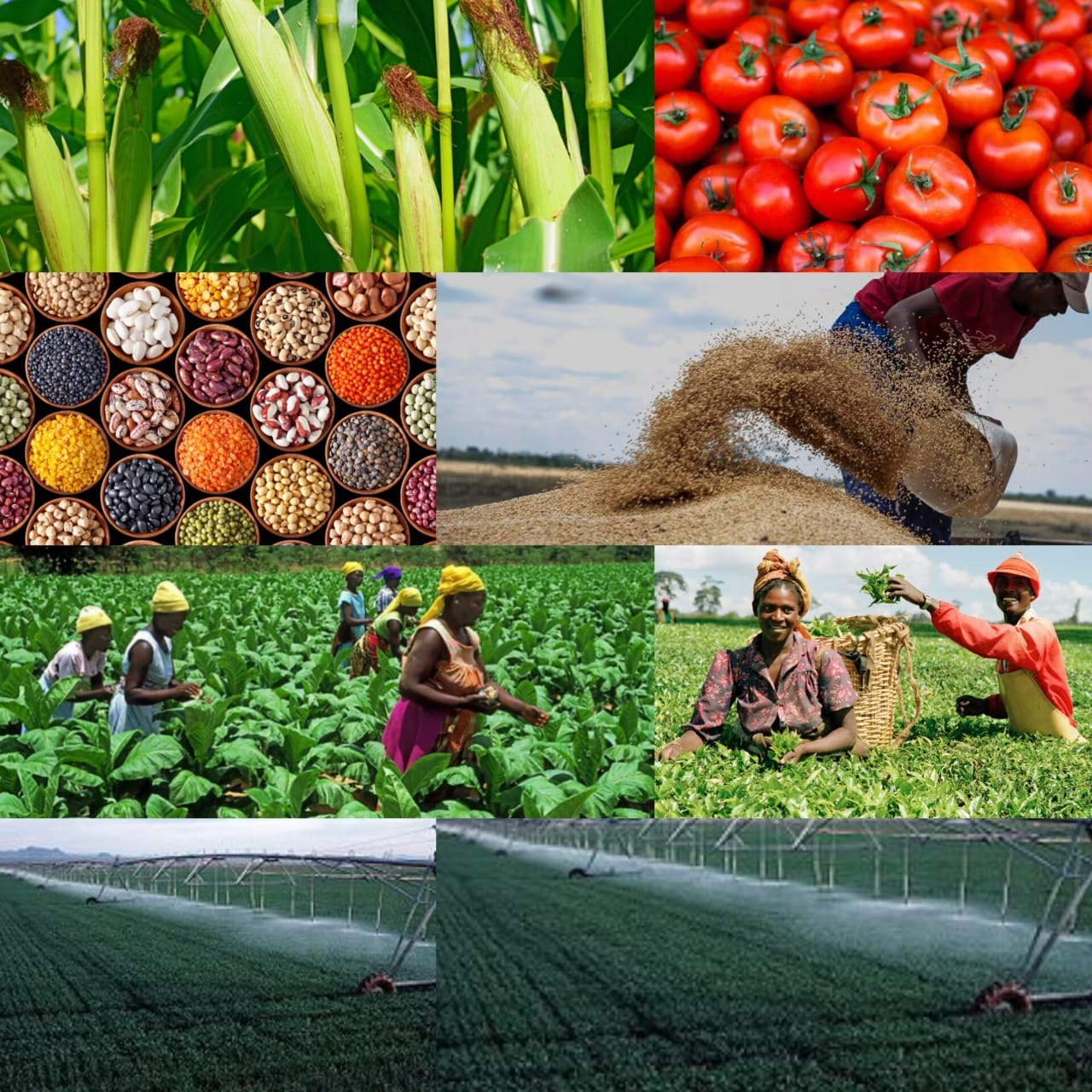
HARARE, Cabinet has outlined Zimbabwe’s agricultural transformation over the past 45 years, presenting the sector’s evolution from a highly productive commercial farming system at Independence, through years of structural disruption and recovery, to renewed growth under the Second Republic.
The report, presented to Cabinet by the Minister of Agriculture, Mechanisation and Water Resources Development, Dr. Anxious Jongwe Masuka, describes agriculture as the backbone of Zimbabwe’s economy, employing about 70 percent of the population and remaining central to national food security, industrial development and export earnings.
According to the report, Zimbabwe’s agricultural sector has passed through four distinct phases. The first, between 1980 and 1995, was characterised by strong commercial production. This was followed by a period of volatility and structural disruption between 1995 and 2013. The third phase, from 2013 to 2016, focused on rebuilding resilience, while the current phase, beginning in 2017, has centred on accelerating production and modernising the sector.
Cabinet attributes much of the recent growth to deliberate policy interventions introduced by the Second Republic. These include the Pfumvudza/Intwasa conservation agriculture programme, the Accelerated Irrigation Rehabilitation and Development Plan, the National Enhanced Agriculture Productivity Scheme, the Refined Presidential Inputs Programme, the Farm Title Deeds Programme and continued mechanisation of farming operations.
The report also highlights significant investment in agricultural infrastructure. The operational tractor fleet has expanded from 4 466 in 2015 to more than 16 000 in 2025, while irrigated land has increased from 171 000 hectares in 2020 to approximately 258 773 hectares in 2026. Government has also invested in Artificial Intelligence powered grain silos to improve storage capacity and reduce post-harvest losses.
These interventions are now being reflected in production figures. Maize output has reached record levels, supported by expanded hectarage, improved seed varieties and wider adoption of climate-smart farming methods. The 2025 winter wheat programme has also achieved the highest planting levels in recent history, strengthening Zimbabwe’s drive towards wheat self-sufficiency.
The report further notes that tobacco production has undergone a remarkable recovery. National output has increased from 48.8 million kilogrammes in 2008 to more than 350 million kilogrammes in 2025, largely driven by increased participation by smallholder farmers following the Land Reform Programme and the expansion of contract farming.
Growth has also been recorded in the livestock sector. Despite periods of drought and disease outbreaks, the national cattle herd has recovered to approximately 5.7 million animals. Milk production has more than doubled over recent decades, while broiler and egg production have expanded significantly to meet growing domestic demand.
Cabinet, however, acknowledged that climate change remains one of the greatest threats to future agricultural productivity. Shorter rainfall seasons, rising temperatures and increasing outbreaks of pests and diseases continue to place pressure on farmers. As a result, Government is encouraging wider adoption of climate-smart agriculture, irrigation development and production systems suited to Zimbabwe’s different agro-ecological regions.
The report also signals a strategic shift in agricultural policy. Beyond increasing food production, Government is now placing greater emphasis on value addition, agro-industrialisation, modern storage systems, secure land tenure and private sector participation. These measures are intended to improve productivity, expand exports and strengthen agriculture’s contribution to national economic growth.
The Cabinet assessment presents agriculture as one of the key drivers of Zimbabwe’s economic transformation. While challenges linked to climate change, financing and global market volatility remain, the report argues that sustained investment in technology, irrigation, mechanisation and farmer support programmes is laying the foundation for a more resilient and commercially competitive agricultural sector capable of supporting the country’s Vision 2030 development agenda.