By Aldridge Dzvene
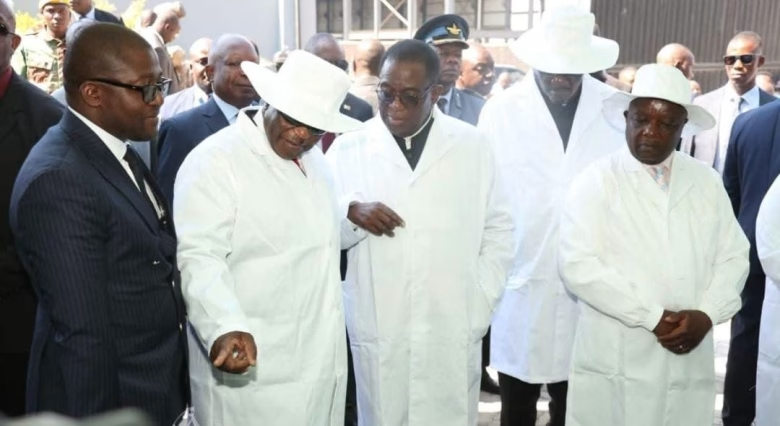
RUWA – Government has completed Phase Two of the National Oil Infrastructure Company (NOIC)’s liquefied petroleum gas (LPG) storage and handling facility in Ruwa, significantly increasing Zimbabwe’s strategic gas storage capacity as part of efforts to strengthen energy security, improve fuel availability and support the country’s transition to cleaner energy under the National Development Strategy 2 (NDS2).
The expanded facility enhances Zimbabwe’s ability to maintain adequate LPG reserves, reducing the risk of supply disruptions, cushioning the market against shortages during peak demand periods and ensuring a more reliable supply of clean cooking fuel for households, businesses and industry.
The investment comes at a time when Government is prioritising energy infrastructure as a key enabler of economic growth and industrialisation. A resilient energy sector is fundamental to achieving the objectives of NDS2, as reliable energy supplies support manufacturing, mining, agriculture, commerce and domestic consumption.
Beyond improving energy security, the project is expected to transform the LPG value chain by improving storage efficiency and strengthening nationwide distribution networks. Increased storage capacity will enable suppliers to better manage stock levels, reduce logistical bottlenecks and respond more effectively to fluctuations in demand.
The expansion also advances Zimbabwe’s clean energy agenda by making LPG more accessible and dependable. As availability improves, more households are expected to transition from firewood and charcoal to cleaner cooking fuels, contributing to the protection of forests, reduced greenhouse gas emissions and improved indoor air quality.
From an environmental perspective, the development supports Government’s commitment to sustainable natural resource management by reducing pressure on indigenous forests, while simultaneously advancing climate resilience and environmental conservation objectives.
The Ruwa facility further strengthens Zimbabwe’s strategic energy reserves, enhancing the country’s preparedness against external supply shocks and international market volatility. Maintaining adequate reserves is increasingly becoming a critical component of national energy security as global energy markets continue to experience uncertainty.
As demand for cleaner energy continues to rise alongside economic expansion, the upgraded LPG storage and handling facility positions Zimbabwe to meet future energy requirements while supporting industrial development, investment and improved service delivery.
The completion of Phase Two therefore represents more than an infrastructure project. It is a strategic national investment that reinforces Government’s commitment to building a modern, resilient and sustainable energy sector capable of supporting inclusive economic growth and the successful implementation of the National Development Strategy 2.