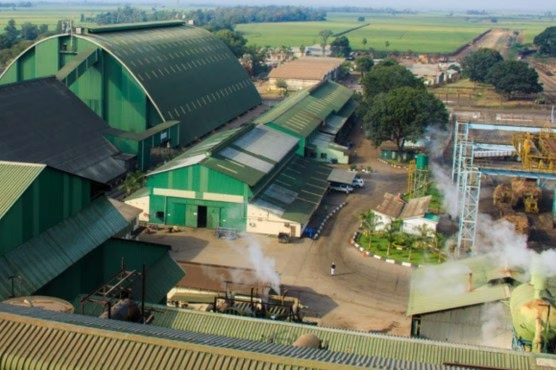
Zimbabwe’s export strategy is showing measurable results, with value-added manufactured goods pushing total export earnings up 48% and cutting the trade deficit nearly in half during the first four months of 2026.
According to new data from ZimStats covering January to April 2026, cumulative export earnings rose to US$3.57 billion, up from US$2.41 billion in the same period of 2025. The surge helped narrow the national trade deficit to US$295 million, down from US$582 million a year earlier.
Central to the performance is a 34.4% jump in value-added exports, which climbed from US$149 million in 2024 to over US$200 million in 2026. The shift signals a deliberate move away from reliance on raw commodities toward manufactured goods that can generate up to three times the profit, strengthening income for the national economy and local enterprises.
Engineering steel products led the gains, soaring 165.6% to US$77.9 million from US$29 million in 2025. The growth was driven by iron and steel bars, rods, and coils, supported by expanded local production capacity from major industrial projects, including the Dinson Iron and Steel operations.
Manufactured tobacco exports rose 33.5% to US$45.9 million, reflecting strategic investment in value chain systems to maximize returns from Zimbabwe’s golden leaf. Building and construction materials also edged up 4% to US$9.5 million, compared with US$9.1 million in 2025, with key products including unglazed ceramic flags, paving, hearth or wall tiles, and mosaic cubes.
The progress aligns with National Development Strategy 2 targets, which aim to lift the ratio of value-added exports to total national exports from a 2025 baseline of 5.5% to 18.4% by 2030.
Targeted measures in the 2026 National Budget and accompanying fiscal frameworks have sought to improve the ease of doing business, incentivize operations, and accelerate local beneficiation. One result is the rise in exports of sulfates, such as alums and peroxosulphates, which hit US$12.6 million in April 2026, up from US$357,000 in April 2025.
The growth is also tied to processed lithium. The first shipment of Fito processed lithium was recorded in April 2026, following the government’s export ban on lithium concentrates earlier in the year. The policy is designed to push beneficiation and retain more value onshore.
Value chain optimization initiatives are extending gains to smaller players. Through organizations like ZimTrade, small to medium enterprises and smallholder farmers are being equipped to develop products that meet international standards. Programs include international expert interventions, youth- and women-focused projects, and cluster development efforts.
The United Arab Emirates, South Africa, and China together accounted for 89% of Zimbabwe’s total exports in the period. The UAE remained the top destination, absorbing 50.4% of total trade at US$1.79 billion, primarily in mineral products. South Africa took second place with a 47% increase to US$830 million, overtaking China, which recorded a 35% rise to US$563 million from US$419 million in 2025.
Beyond the top three, diversification is evident. Exports to Zambia, Botswana, Indonesia, Russia, and the United States increased, rounding out the top ten export markets.
Zimbabwe’s nomination to the United Nations Security Council for the 2027–2028 term is expected to further bolster trade and market diversification. ZimTrade CEO Allan Majuru said the nomination is “a powerful catalyst” for the country’s trade ambitions.
“The UN Security Council nomination accelerates current trade initiatives aimed at growing exports by elevating Zimbabwe’s profile on the world stage, where commercial negotiations often follow global credibility,” Majuru said. He added that the enhanced standing will complement ZimTrade’s market access work.
With support from the Ministry of Foreign Affairs and International Trade, ZimTrade continues to run bilateral trade seminars, missions, and strategic market scans to expand Zimbabwe’s footprint. Recent activity includes the Zambia Services in Building and Construction mission in Lusaka, and market scans in Vietnam and Thailand to identify new trade opportunities.