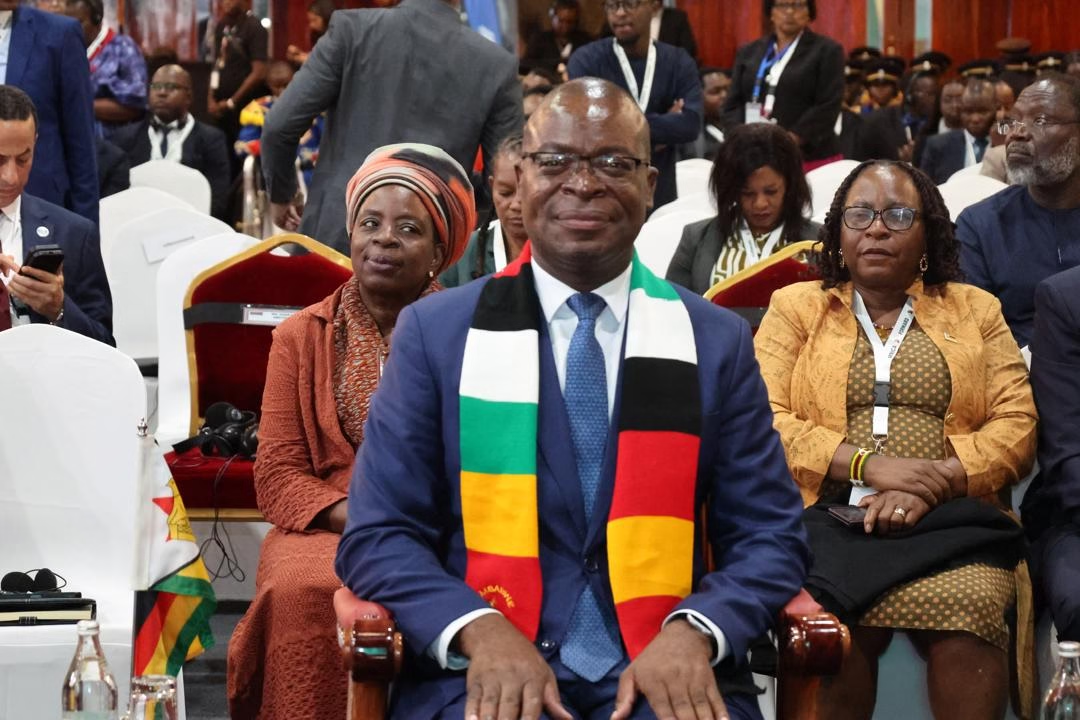
Zimbabwe reaffirmed its commitment to Africa’s collective development agenda at the Africa Forward Summit in Nairobi, where the country amplified calls for continental unity, institutional reform, and economic self determination amid shifting global power dynamics.
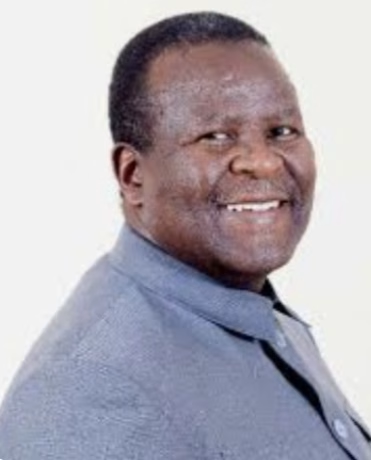
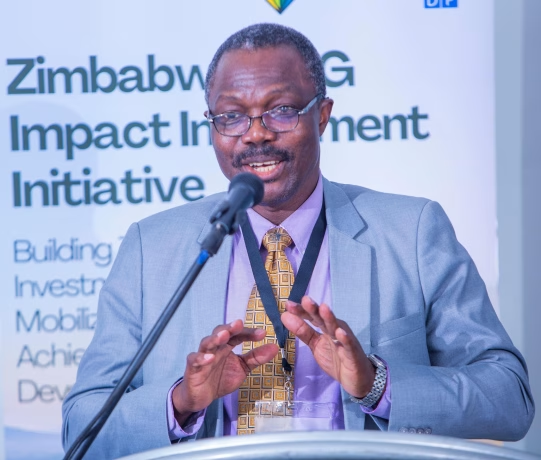
Emmerson Mnangagwa was represented at the summit by Amon Murwira, as African leaders converged to deliberate on issues increasingly shaping the continent’s future, ranging from United Nations Security Council reform and energy investment to youth demographics and restructuring of the global financial architecture.
Zimbabwe’s participation reflected a broader diplomatic posture that positions Africa not merely as a participant in global governance, but as a stakeholder demanding structural recognition and equitable influence within international institutions.
Central to Harare’s position was support for the Ezulwini Consensus, the African Union backed framework advocating for permanent African representation on the United Nations Security Council. The call highlights growing frustration across the continent over what many African states view as a global governance system that continues to reflect post World War II power arrangements while underrepresenting Africa’s demographic and geopolitical significance.
The summit discussions also underscored the strategic importance of energy investment as a prerequisite for industrialisation. African economies continue to face the paradox of abundant natural resources coexisting with energy deficits that constrain manufacturing growth and economic competitiveness. Zimbabwe’s backing of continental energy cooperation aligns with its broader industrialisation objectives under Vision 2030 and regional integration frameworks.
Another defining issue at the summit was Africa’s rapidly expanding youth population, increasingly viewed both as an opportunity and a pressure point. Leaders acknowledged that without sufficient investment in skills, innovation, and employment creation, demographic growth could deepen inequality and social instability. Conversely, effective integration of youth into productive sectors could become the foundation of Africa’s long term economic rise.
Zimbabwe also joined calls for reforms to the global financial system, reflecting wider African concerns around debt structures, access to development financing, and the unequal influence of developing economies within global financial institutions. The debate comes at a time when many African countries are seeking greater financial autonomy while navigating external debt pressures and climate related economic vulnerabilities.
Harare’s message at the summit reinforced a recurring continental narrative, that Africa’s future cannot remain dependent on external prescriptions, but must increasingly be shaped through African led solutions, institutions, and partnerships.
The country’s endorsement of Agenda 2063 further reflects this strategic orientation, positioning continental integration, infrastructure development, industrial growth, and political coordination as central pillars of Africa’s long term transformation.
Beyond diplomatic symbolism, the summit highlighted a growing shift within African political discourse, from appeals for inclusion toward assertive demands for representation, equity, and sovereignty within the international order.
For Zimbabwe, participation at the Africa Forward Summit therefore extended beyond foreign policy engagement. It formed part of a broader positioning strategy within an emerging continental movement seeking to redefine Africa’s place in global governance, economic systems, and development decision making.