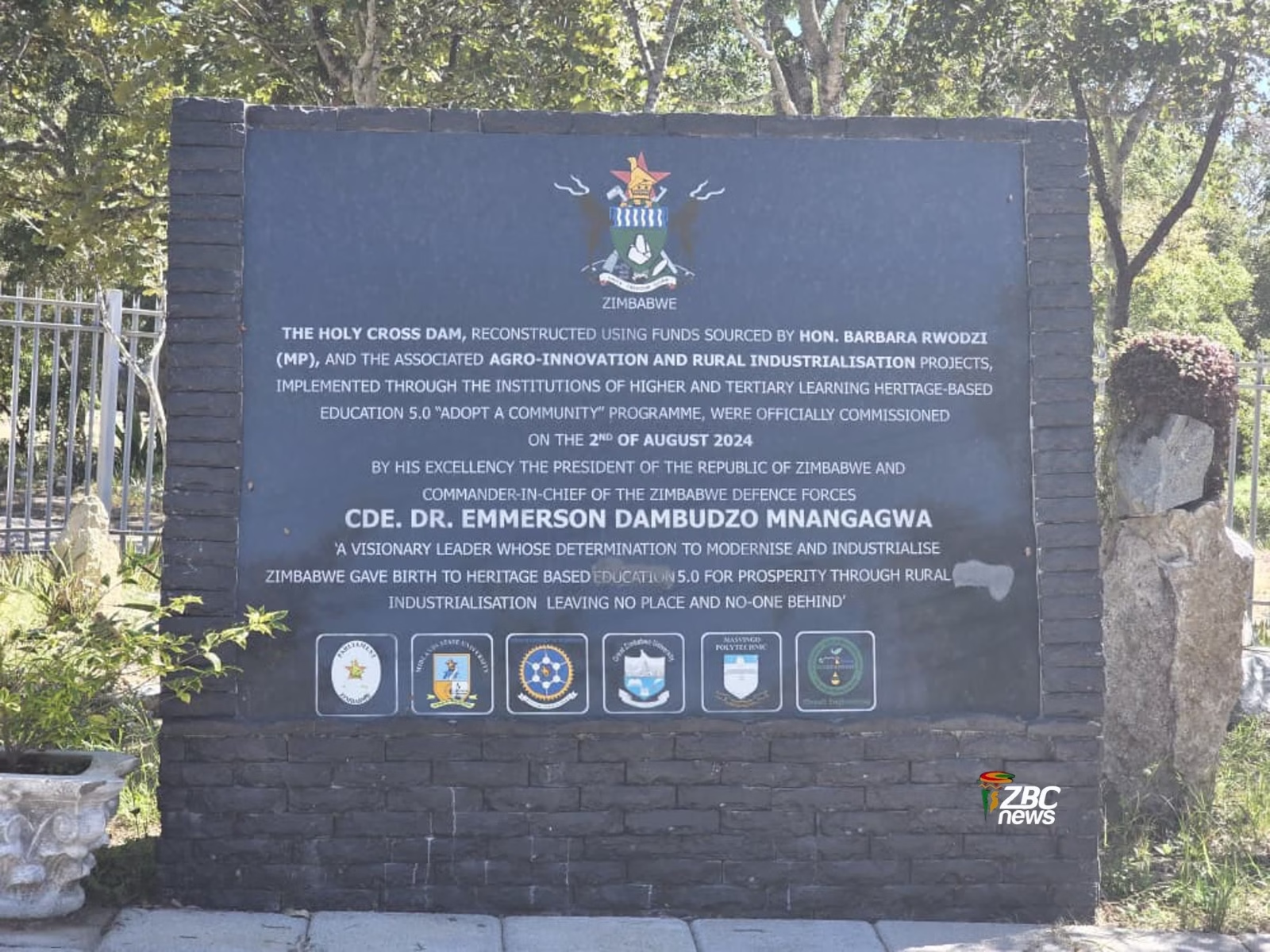
What is unfolding around the Holy Cross Dam in Chirumanzu is increasingly reflecting a broader transformation within Zimbabwe’s rural development philosophy, where infrastructure is no longer viewed as an isolated public works project, but as the foundation of an integrated economic ecosystem.
Since its reconstruction and commissioning in August 2024, the dam has evolved beyond its traditional role as a water reservoir into a multi-sector growth platform linking agriculture, aquaculture, tourism, education, and rural industrialisation under the framework of National Development Strategy 2.
At the core of the project is a 200-hectare irrigation scheme that is redefining agricultural productivity in a region historically vulnerable to erratic rainfall. During recent winter seasons, approximately 120 hectares were placed under wheat production through collaboration with Midlands State University, creating a production model that merges academic expertise with community based farming systems.
More than 800 households are reportedly benefiting from the irrigation initiative, not only through food security, but through access to stable income streams that reduce dependence on rain fed agriculture. This represents a significant policy shift from subsistence resilience toward commercially oriented rural productivity.
The deeper implication lies in how irrigation infrastructure is being repositioned. Rather than serving agriculture alone, water security is now functioning as the anchor for broader local economic activity. The dam has restored reliable water access to five surrounding wards, sustaining schools, healthcare institutions, livestock systems, and business centres that depend on stable supply.
Alongside agriculture, aquaculture is emerging as a second economic pillar. In partnership with Chinhoyi University of Technology, the project has established breeding ponds and caged fishing systems within the reservoir, with annual production targets exceeding two million fingerlings.
This introduces an important layer of diversification into the rural economy. Fisheries are not only creating alternative income streams, but also strengthening local nutrition systems and reducing dependence on external fish imports. In effect, the dam is becoming a site of integrated food production rather than single sector farming.
Equally significant is the planned establishment of a multi purpose milling plant. Historically, many rural communities have remained trapped at the lowest end of the value chain, producing raw commodities while processing and profits migrate elsewhere. By localising processing capacity, the project seeks to retain value within the district, stimulate rural enterprise activity, and generate employment opportunities beyond farming itself.
Tourism development around the reservoir adds yet another dimension to the transformation model. Plans for chalets, conference facilities, and recreational infrastructure suggest an attempt to monetise natural assets within rural settings, creating economic circulation that extends beyond agriculture.
This aligns with a growing recognition that rural economies cannot sustainably rely on farming alone. Diversified rural tourism creates secondary demand for transport, hospitality, food supply, and informal trade, broadening participation within the local economy.
Perhaps the most strategic aspect of the Holy Cross Dam initiative is the institutional framework supporting it. The involvement of universities reflects the operationalisation of Zimbabwe’s Heritage Based Education 5.0 philosophy, where higher education institutions move beyond classroom instruction into direct economic problem solving.
In this model, universities are increasingly functioning as development actors, providing technical expertise, research capacity, and innovation support directly within communities. The Holy Cross project therefore represents more than infrastructure delivery, it reflects an evolving governance model where academia, government, and communities converge around productive development.
However, the long term sustainability of the project will depend on how effectively production systems are linked to markets, financing mechanisms, and maintenance structures. Rural transformation projects often struggle not at implementation stage, but at commercial integration stage, where logistics, pricing, and operational continuity determine whether initial gains can be sustained.
Nonetheless, the Holy Cross Dam is beginning to represent a broader national template. It illustrates how water infrastructure, when strategically integrated with production, education, and enterprise development, can become a catalyst for decentralised industrialisation.
In many ways, the project reflects Zimbabwe’s gradual transition from viewing rural areas as spaces of subsistence toward positioning them as active centres of economic generation.