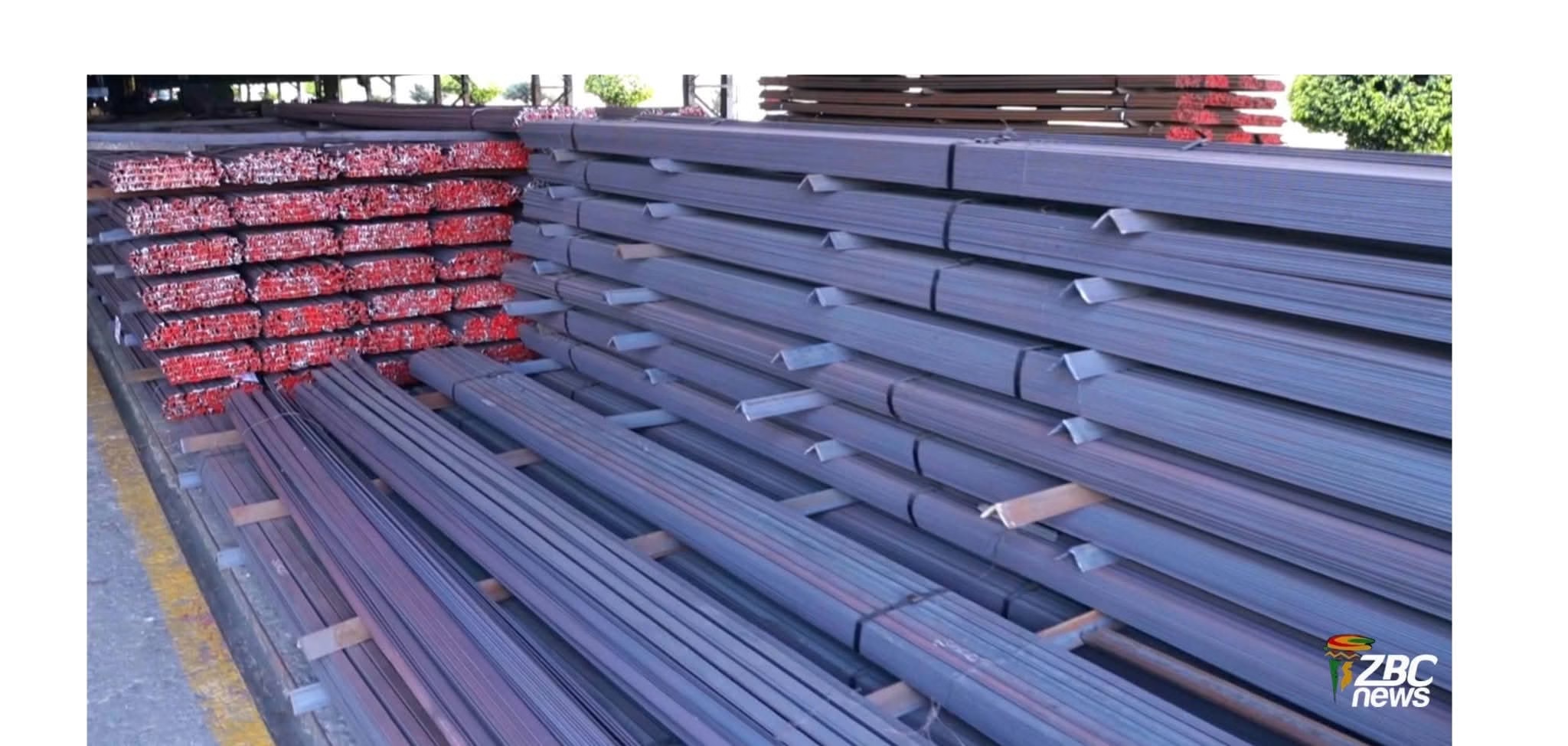
As Zimbabwe accelerates its industrialisation drive under Vision 2030, local manufacturing firms are increasingly taking centre stage in reducing import dependence and strengthening domestic production capacity. Among these, Steelmakers Limited has emerged as a key player, positioning itself as a strategic pillar in the country’s industrial growth matrix.
Operating through a fully integrated value chain, the company spans iron ore mining in Masvingo, coal extraction in Chiredzi, sponge iron production, and final steel manufacturing in Redcliff and Harare. This vertical integration is not just an operational advantage, but a strategic economic lever, enabling Zimbabwe to retain foreign currency by processing raw materials locally rather than exporting them in unrefined form.
The company’s presence at the Zimbabwe International Trade Fair 2026 reinforced its role within the broader industrial ecosystem. Showcasing locally produced steel products, Steelmakers used the platform to engage policymakers, investors and regional partners, while demonstrating the competitiveness and reliability of Zimbabwean industrial output. The exhibition also highlighted the country’s ambition to build competitive industries under the theme of connected economies.
At a national level, Steelmakers’ operations align closely with the objectives of the National Development Strategy 2, particularly in the areas of value addition, industrialisation and export growth. By producing steel domestically, the company directly contributes to import substitution, easing pressure on foreign currency reserves that would otherwise be spent on importing construction and industrial materials.
Beyond foreign currency retention, steel production plays a foundational role in infrastructure development. From housing and commercial construction to mining operations and agricultural systems, steel remains an essential input across sectors. In this regard, Steelmakers is not just producing materials, but enabling the physical development of the economy.
The ripple effects extend further. Increased steel production stimulates activity in transport and logistics, supports the growth of engineering and fabrication industries, and creates employment opportunities across multiple value chains. This multiplier effect is critical in building a resilient and diversified economy.
Looking ahead, the company’s growth trajectory signals continued expansion. With plans to scale production through strategic partnerships and potential offshore financing, Steelmakers is positioning itself to meet rising domestic demand while exploring regional export markets.
In the broader context of Zimbabwe’s industrial transformation, Steelmakers Limited represents more than a manufacturing entity. It reflects a shift toward self-sufficiency, value addition and industrial depth, key ingredients in the country’s pursuit of an upper-middle-income economy by 2030.