Zimbabwe has intensified its push to leverage diplomacy as a catalyst for economic growth, with the Ministry of Foreign Affairs and International Trade convening a high level Diplomats Forum on the sidelines of the Zimbabwe International Trade Fair in Bulawayo.
The forum brought together diplomats, policymakers and business leaders to deliberate on building connected economies and competitive industries, as the country sharpens its global re engagement thrust.
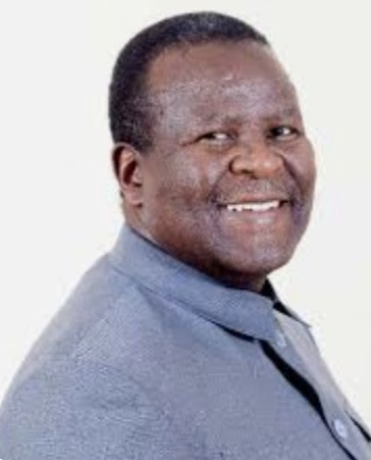
Professor Dr. Amon Murwira, who was the guest of honour, outlined Zimbabwe’s foreign policy framework and its direct link to economic transformation, positioning diplomacy as a strategic tool for production, trade and national development.
He defined a country fundamentally as an economy driven by its people, emphasizing that productivity and trade are central to achieving dignity, integrity and prosperity. He noted that a functional economy is anchored on peace, supported by sectors such as tourism, education, science, culture and innovation.
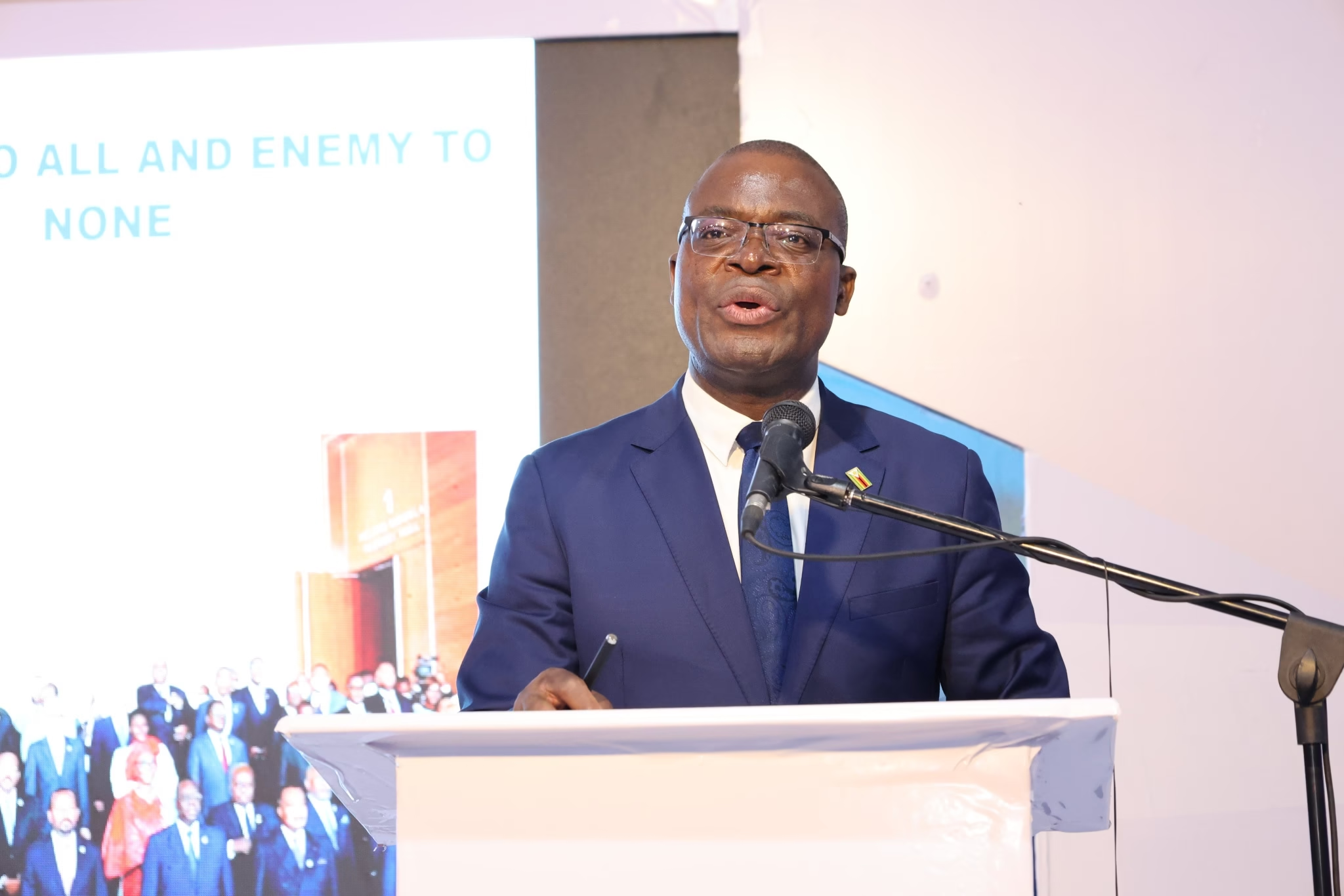
Professor Murwira underscored that Zimbabwe’s foreign policy is rooted in constitutional principles that prioritise peaceful coexistence, respect for international law and the resolution of disputes through non violent means. He reiterated the country’s guiding principle of being a friend to all and an enemy to none, while maintaining a defensive but non adversarial posture in global affairs.
He stressed that peace is not only a moral position but an economic strategy, creating a stable environment necessary for production and trade. He said Zimbabwe is deliberately choosing trade over conflict as the foundation of its international relations, reinforcing its commitment to open markets and cooperation.
The Minister highlighted that Zimbabwe is shifting away from dependency driven relations toward mutually beneficial partnerships grounded in reciprocity. He said international engagements must be based on shared value creation and joint economic opportunities.
Regional and continental integration emerged as a key pillar of Zimbabwe’s strategy, with emphasis on removing tariff and non tariff barriers through frameworks such as the Southern African Development Community and the African Continental Free Trade Area. These platforms are expected to unlock larger markets and strengthen intra African trade.
On industrialisation, Professor Murwira outlined the country’s ambition to transition from a resource exporting economy to a minerals based industrial and manufacturing hub. He stressed the importance of value addition, noting that exporting raw materials without processing undermines economic potential and limits revenue generation.
He also framed development as the capacity of a nation to meet the basic needs of its people, including food, water, health, shelter and infrastructure, highlighting the role of science and technology in accelerating sustainable growth.
Zimbabwe’s broader re engagement agenda was also reflected in its bid for a non permanent seat on the United Nations Security Council for the 2027 to 2028 term, a move seen as reinforcing the country’s commitment to peace, diplomacy and multilateral cooperation.
The Diplomats Forum comes at a critical time as Zimbabwe seeks to reposition itself within the global economy, with a focus on attracting investment, expanding trade partnerships and enhancing industrial competitiveness.
Deliberations at the forum underscored the growing intersection between foreign policy and economic strategy, with stakeholders noting that effective diplomacy can unlock tangible economic benefits.
However, the realisation of this vision will depend on sustained policy implementation, institutional efficiency and the ability to convert diplomatic engagements into measurable economic outcomes, including job creation, infrastructure development and increased export earnings.
Zimbabwe’s emphasis on peace, trade and cooperation signals a deliberate effort to build a predictable and investor friendly environment, positioning the country as an active and reliable player in regional and global economic systems.