Story by Aldridge Dzvene
Chitope Headquarters in Hwedza came alive on 14 April 2026 as thousands of Mugodhi Apostolic Church members gathered for the 2026 Passover Ceremony, one of the church’s most sacred annual events, marked by intense worship, prayer, and celebration.
From the early hours of the morning, the grounds were filled with congregants dressed in white garments, singing and praying in unison, as the event unfolded into a powerful spiritual gathering that also carried strong national and developmental significance.
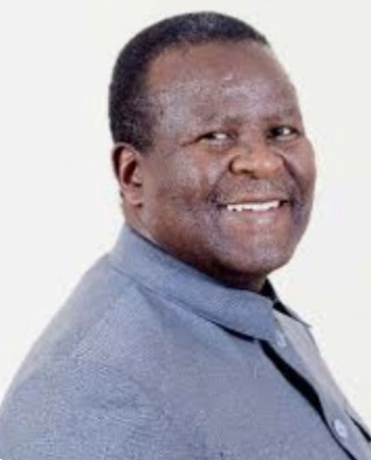
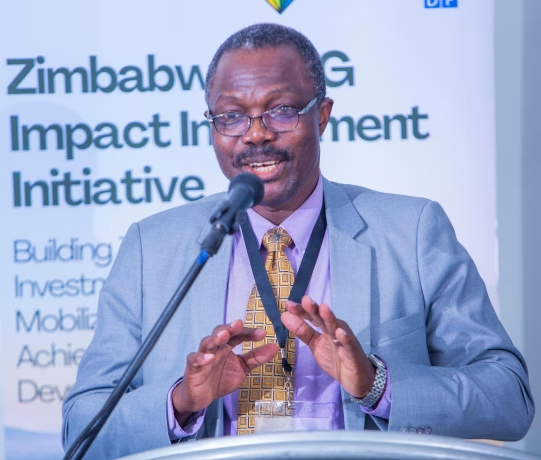
The defining presence of the day was ZANU PF Central Committee Member, Presidential Special Investment Advisor on Investments and Empowerment, and Special Envoy of His Excellency the President of the Republic of Zimbabwe, Dr Paul Tempter Tungwarara, whose arrival and participation set the tone for the ceremony.
Representing His Excellency the President of the Republic of Zimbabwe, Dr Emmerson Dambudzo Mnangagwa, Dr Tungwarara delivered a message that linked spiritual teaching with national development, drawing from biblical symbolism of the number seven as completion, and relating it to what he described as Zimbabwe’s ongoing journey of fulfilment under its national development vision.
He emphasized the role of faith communities in strengthening unity, discipline, and moral grounding, noting that development is most effective when it is anchored in community structures that directly interface with citizens at grassroots level.
The ceremony also became a platform where national issues were openly engaged, with Constitutional Amendment Bill No. 3 featuring prominently in discussions. Congregants expressed views and support within the gathering, reflecting the growing intersection between civic participation and religious spaces.
A key highlight of the event was the extensive empowerment package delivered through Dr Tungwarara, which included a truckload of mealie meal to support community welfare, a large consignment of bicycles distributed for community use across different groups, and a fully equipped public address system with television screens and complete sound infrastructure to enhance church communication and services.
In addition, financial support amounting to USD 150,000 was handed over to the church, alongside a vehicle pledged for Bishop Washington Mugodhi, strengthening both administrative and mobility capacity for church leadership and operations.
The support package was received with visible appreciation from congregants, who viewed it as a practical demonstration of community empowerment through direct intervention, reinforcing the link between national leadership structures and grassroots institutions.
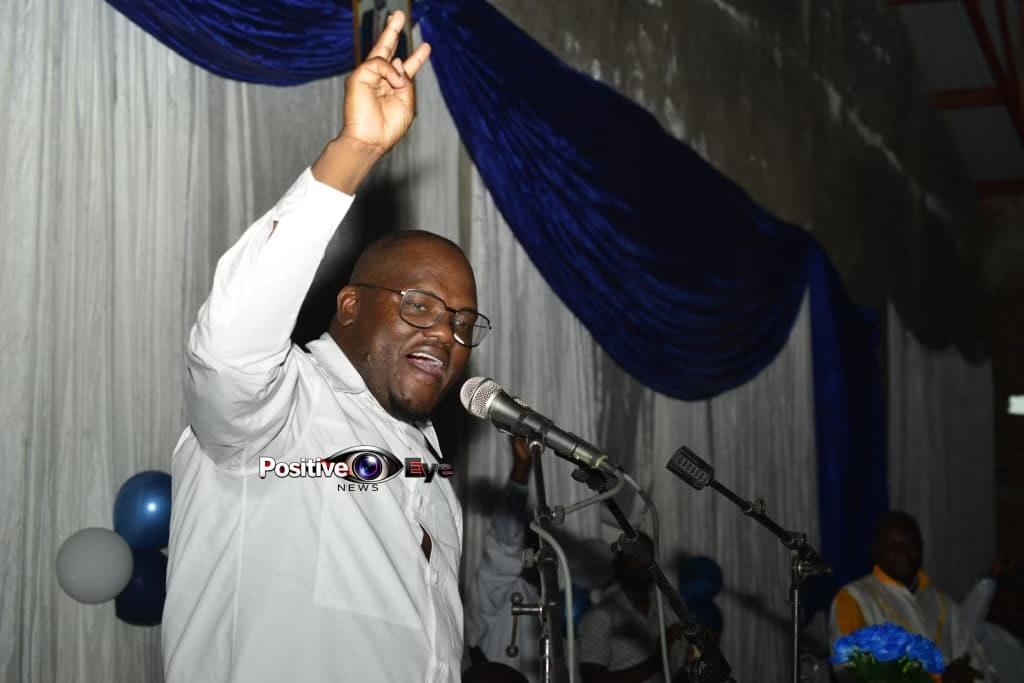
Bishop Washington Mugodhi, in his welcome remarks, expressed gratitude for the engagement, describing Dr Tungwarara’s presence as a significant moment in the church’s history. He noted that the visit reflected recognition of the church’s role within the national framework and its contribution to moral and social development.
He further expressed support for national development initiatives and Constitutional Amendment Bill No. 3, describing it as aligned with stability, unity, and the country’s long-term development direction, while reaffirming the church’s belief in divinely guided leadership.
Beyond the speeches and ceremonial aspects, the scale of the gathering and the level of engagement reflected how large faith events continue to serve as important spaces where spiritual life, community needs, and national development messaging converge.
As the Passover ceremony continued into the day, Chitope stood as a powerful illustration of how faith-based gatherings remain central to community cohesion, social support systems, and the broader narrative of national development participation.