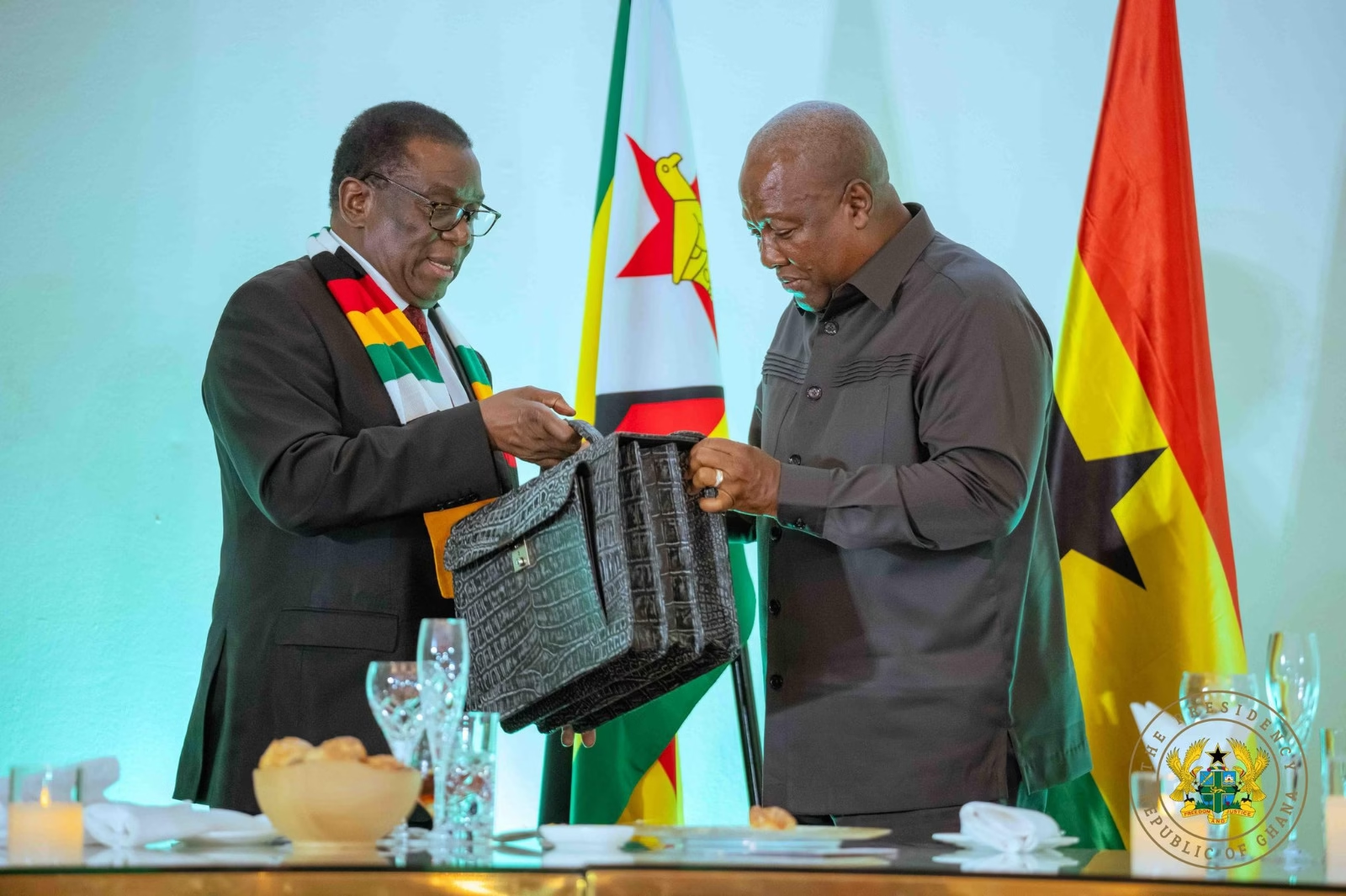
Zimbabwe and Ghana have entered a new phase of structured cooperation, with His Excellency, the President of the Republic of Zimbabwe, Emmerson Dambudzo Mnangagwa, and His Excellency, the President of the Republic of Ghana, John Mahama, witnessing the signing of ten Memoranda of Understanding (MoUs), a move that signals a decisive shift from diplomatic engagement to practical economic collaboration.
The agreements follow the inaugural session of the Joint Permanent Commission on Cooperation (JPCC), a structured institutional platform designed to translate political relations into tangible development outcomes. The establishment of the JPCC marks a deliberate effort by both nations to move beyond symbolic cooperation toward implementation-driven partnerships anchored in accountability and continuity.
The scope of the signed MoUs reflects a comprehensive and strategic approach, covering key sectors including trade, energy, health, tourism, sports, diplomatic training, archives, and environmental management. This multi-sectoral framework demonstrates a shared understanding that sustainable bilateral relations must be built on interconnected pillars that drive both economic growth and social development.
Central to the agreements is the strengthening of trade and investment linkages, particularly through cooperation between ZimTrade and the Ghana Export Promotion Authority. This partnership is expected to unlock new market opportunities, facilitate the exchange of goods and services, and position both countries to leverage the broader opportunities presented by the African Continental Free Trade Area. In this regard, the MoUs are aligned with continental efforts to boost intra-African trade and reduce reliance on external markets.
Equally notable is the inclusion of private sector collaboration, particularly in waste management, where Geo Pomona Waste Management Private Limited and Jaspong Group of Companies have entered into a partnership. This reflects a growing recognition that modern economic transformation requires the integration of private capital, innovation and technical expertise into national development strategies.
The agreements in energy, health and tourism further underscore the developmental impact of the partnership. Cooperation in energy is expected to enhance infrastructure development and improve supply reliability, while health and tourism collaborations open avenues for knowledge transfer, capacity building and increased economic activity. These sectors remain critical in driving inclusive growth and improving livelihoods.
Beyond economic considerations, the MoUs also strengthen diplomatic and institutional ties. Enhanced cooperation in political and diplomatic consultations, alongside collaboration between foreign service institutes, is set to improve policy coordination and alignment on regional and global platforms. This is particularly significant as Zimbabwe continues to expand its international engagement and consolidate support for its global ambitions.
Cultural and historical cooperation also forms part of the agreements, with initiatives such as the Museum of African Liberation reinforcing shared heritage and promoting a unified African narrative. These efforts contribute to soft power, strengthening identity and solidarity within the continent.
However, while the breadth of the agreements reflects ambition and strategic intent, their success will ultimately depend on effective implementation. Across Africa, similar agreements have often faced challenges in execution, limiting their impact. The operationalisation of the JPCC is therefore critical in ensuring that these MoUs translate into real investments, projects and measurable outcomes.
The engagement between Zimbabwe and Ghana comes at a time when African nations are increasingly seeking to build resilient, self-sustaining economies through intra-continental partnerships. By establishing a structured framework for cooperation, both countries are positioning themselves to harness shared strengths and drive mutual development.
In essence, the signing of the MoUs represents more than a diplomatic milestone. It signals a forward-looking partnership grounded in economic pragmatism, institutional coordination and a shared vision for sustainable growth. If fully realised, the Zimbabwe–Ghana collaboration has the potential to contribute significantly to regional integration and the broader transformation of the African economic landscape.