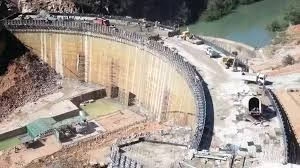
Progress at the Gwayi-Shangani Dam has entered a critical technical phase, with construction at Block 3 transitioning from quality control inspections to concrete placement, a milestone that underscores growing momentum in one of Zimbabwe’s flagship infrastructure projects under the National Development Strategy 2.
The dam wall has now surpassed the 40-metre mark, steadily advancing toward its final height of 72 metres. This stage is particularly significant for a Roller Compacted Concrete structure, where precision in layering and compaction directly determines long-term structural integrity. The successful completion of inspection protocols at Block 3 signals a disciplined construction cycle, critical for a project of this scale and national importance.
Beyond the dam wall, parallel progress on the 252-kilometre pipeline linking the reservoir to Bulawayo reflects a coordinated infrastructure strategy. Ongoing trenching and pipe-laying works are designed to ensure that once water impoundment begins, the delivery system to the Magwegwe Reservoir is fully operational, effectively closing the gap between water storage and distribution.
Equally strategic is the integration of a 10-megawatt mini-hydropower plant within the project. This component is expected to power pumping stations while contributing surplus electricity to the national grid, reinforcing the project’s multi-sectoral impact across water, energy, and industrial development.
From a broader development perspective, the Gwayi-Shangani project represents a structural response to long-standing water insecurity in Matabeleland. For decades, Bulawayo has faced recurring water shortages, constraining both urban growth and industrial expansion. The dam is poised to provide a permanent and sustainable solution to these challenges.
The project’s implications extend further into agriculture, with plans to establish a green belt supported by irrigation along the pipeline corridor. More than 10,000 hectares have been earmarked for agricultural production, positioning the region for increased food security, rural livelihoods, and agro-industrial growth.
In industrial terms, reliable water and energy supply are expected to unlock new investment opportunities, particularly in Matabeleland North, where infrastructure limitations have historically hindered economic expansion. The dam, therefore, is not merely a water project, but a catalyst for regional transformation.
The emphasis on rigorous inspection and precision at this stage reflects an understanding of the hydrological pressures the structure will face once operational. For a dam projected to become one of the largest inland water bodies in the country, structural integrity is non-negotiable.
As construction progresses, the Gwayi-Shangani Dam continues to embody a shift toward large-scale, impact-driven infrastructure development, where engineering excellence, strategic planning, and national vision converge to redefine Zimbabwe’s development trajectory.