By Aldridge Dzvene
Chipinge District, Zimbabwe — A quiet transformation is unfolding in Hakwata, where two young brothers are redefining rural livelihoods through innovation, resilience and entrepreneurship, under a programme supported by the United Nations Development Programme in partnership with the Government of Zimbabwe and the UK Government.
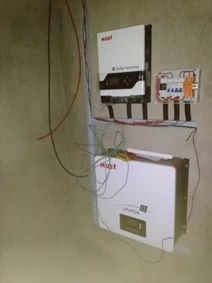
Ronald and Ralph Mashava have emerged as a compelling example of how targeted skills development can unlock economic opportunity, after successfully establishing a solar enterprise that is now sustaining their household and serving their community.
Their journey began under the Climate Adaptation Water and Energy Programme, a framework designed to strengthen climate resilience through access to clean energy and practical skills. Following a period of economic strain triggered by drought and declining sesame yields, the brothers underwent vocational training in solar installation, complemented by business development support.
Since launching their enterprise in September 2024, the Mashava brothers have generated approximately US$3,200 in their first year of operation, providing a stable income stream for their seven member household. Their business is not only meeting family needs such as school fees and food security, but is also addressing a critical gap in rural energy access.
By offering affordable solar installation services within their community, the brothers are reducing the cost burden previously associated with sourcing such services from distant urban centres. This localized solution is contributing to improved access to clean energy, while simultaneously fostering economic activity at the grassroots level.
Their success story is increasingly resonating across the district, inspiring other young people to consider skills based entrepreneurship as a viable pathway, rather than migrating in search of opportunities.
The initiative reflects a broader shift in development strategy, where climate adaptation is no longer treated as a standalone environmental issue, but as an integrated economic opportunity. Through the convergence of clean energy, vocational training and enterprise development, programmes like CAWEP are demonstrating how rural communities can build resilience while driving inclusive growth.
As Zimbabwe advances its climate and development agenda, the Mashava brothers’ enterprise stands as a practical illustration of how policy, partnerships and people can converge to deliver tangible impact, transforming vulnerability into productivity and innovation into livelihoods.