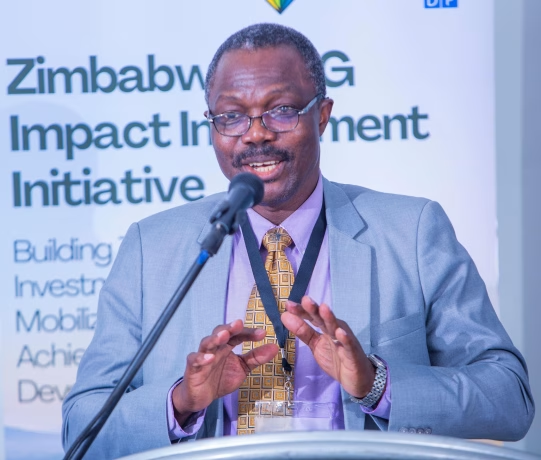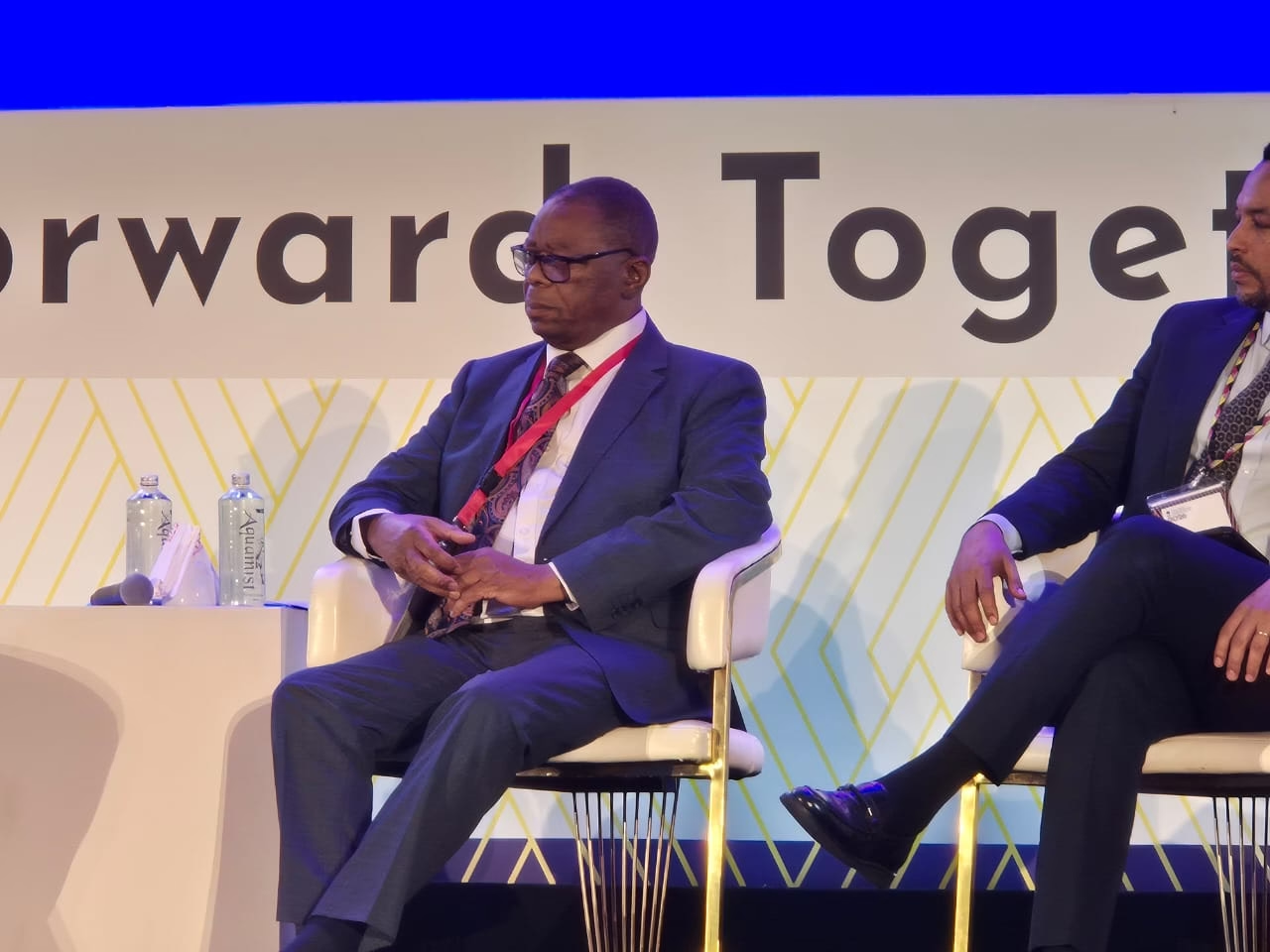
Harare – Zimbabwe is asserting its voice on the global health stage as Minister of Health and Child Care, Dr Douglas Mombeshora, leads a high-level delegation to the International Maternal Newborn Health Conference 2026 in Nairobi, a critical global platform shaping the future of maternal and newborn health interventions.
Running from 23 to 26 March 2026, the conference, convened by AlignMNH in partnership with the Government of Kenya, brings together governments, researchers, policymakers and over 1,800 global stakeholders to accelerate progress in reducing preventable maternal and newborn deaths.
Zimbabwe’s participation comes at a time when global health systems are under pressure, with progress on maternal and newborn survival slowing in many regions due to economic shocks, funding constraints and systemic inequalities.
The IMNHC 2026 platform is not merely a conference, but a strategic convergence point where countries assess progress, exchange evidence-based solutions and mobilise partnerships and financing to meet global targets by 2030.
For Zimbabwe, the engagement reflects a broader policy alignment under the National Development Strategy 2, where health outcomes are directly linked to productivity, human capital development and long-term economic growth. Maternal and newborn health sits at the centre of this equation, forming the foundation of a resilient and productive population.
The conference’s emphasis on data utilisation, innovation scaling and accountability mechanisms resonates strongly with Zimbabwe’s ongoing health sector reforms. Strengthening data systems is increasingly viewed as essential in improving service delivery, targeting interventions and ensuring efficient allocation of resources, particularly in rural and underserved communities.
Equally significant is the focus on innovation. IMNHC 2026 is showcasing practical, country-driven solutions that move beyond theory into implementation, a direction Zimbabwe has been advancing through community-based health programmes, digital health integration and capacity building within its public health system.
Zimbabwe’s presence at the conference also reflects a strategic approach to international cooperation. By engaging in global platforms, the country is positioning itself to benefit from shared knowledge, technical expertise and potential financing partnerships that can accelerate progress in maternal and child health.
The discussions in Nairobi are expected to tackle persistent challenges, including access to quality care, supply chain inefficiencies, workforce shortages and inequities in service delivery. These are issues that mirror realities across many developing countries, making the exchange of best practices critical.
Beyond technical engagement, the conference reinforces the importance of collective global action. Maternal and newborn health is increasingly being treated as a shared responsibility, requiring coordination between governments, development partners and the private sector.
For Zimbabwe, the participation of Dr Douglas Mombeshora and his delegation signals a commitment to ensuring that national health priorities are integrated into global frameworks, while also adapting international best practices to local contexts.
As the global community pushes toward the 2030 targets, platforms such as IMNHC 2026 are becoming essential in bridging gaps between policy, implementation and outcomes. Zimbabwe’s involvement reflects both a recognition of the challenges ahead and a determination to be part of the solutions shaping the future of maternal and newborn health.
In this context, the Nairobi conference is not just about dialogue, it is about defining actionable pathways that will determine whether nations can successfully safeguard the lives of mothers and newborns while strengthening the broader health systems that underpin sustainable development.